


Family
Sep. 24, 2026
Will AI be called as a witness in your divorce case?
AI agents may soon remember our marriages better than we do, creating a powerful new kind of evidence--and forcing family courts to confront what happens when the machine knows more than the witnesses.



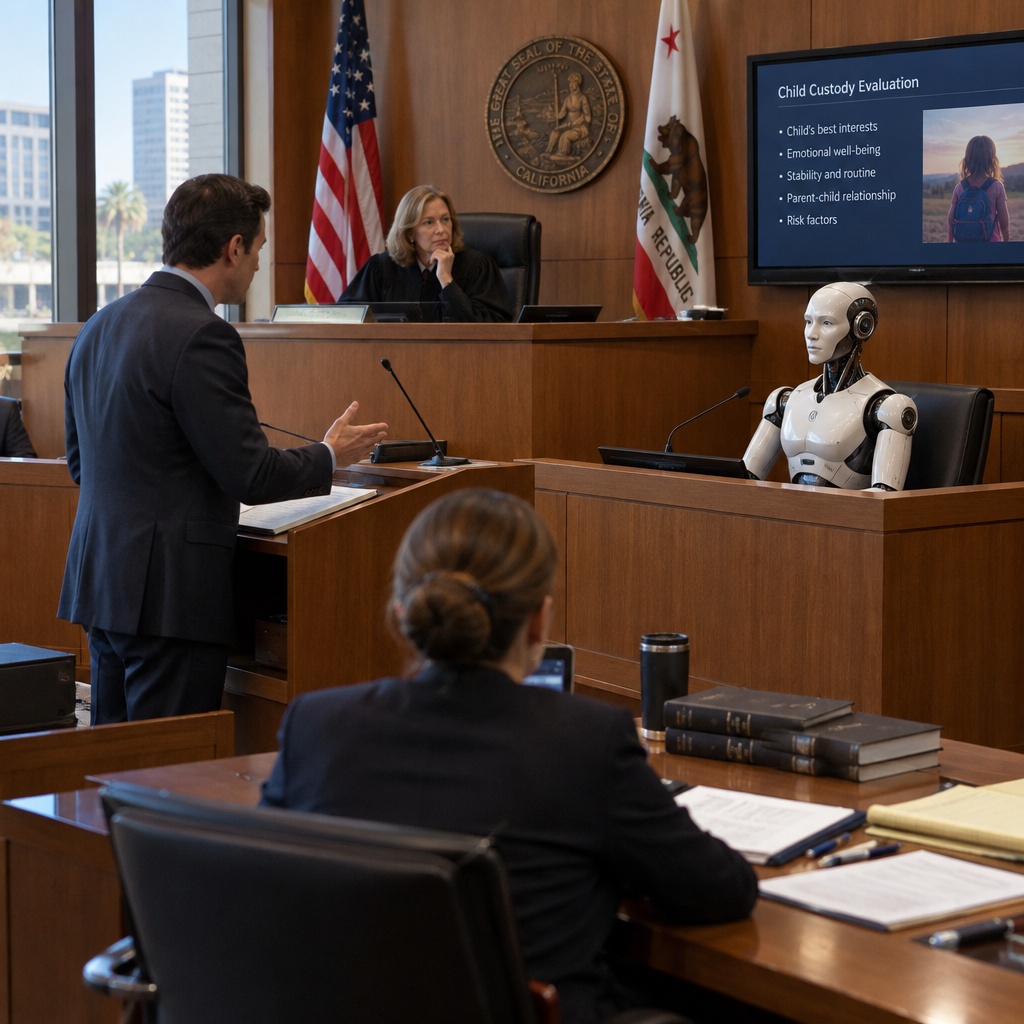
The legal system has always been designed around the limitations of human cognition because there was no alternative. For the first time, there may be. And sooner than we think.
Attorney: "Your Honor, I call the Baldwin family's AI agent, known as Bob, to the stand."
The Court: "Proceed, counsel."
Attorney: "Bob, who has been the primary caregiver of the Baldwin children?"
Bob will not need to search its memory, because this witness does not remember as we do. It will not hesitate, fumble over its words, or say, "I don't know" or "I can't recall."
Without leaving the witness stand, it will examine years of calendar entries, text messages, photographs, location data, smart-home activity, vehicle records and thousands of mundane interactions that neither spouse thought anyone--or anything--was tracking.
I know this sounds like science fiction, but it likely isn't.
I've practiced family law long enough to see technology transform the evidence that enters the courtroom. Back in the day, I relied heavily on my client's recollection, paper records and the occasional photograph. Today, my courtroom evidence includes emails, text messages, social media, Ring camera footage, location histories and more.
An enormous portion of our lives now leaves a digital trail. But AI may represent something different. It may not simply preserve the historical record. It may participate in creating it.
The witness that never forgets
I recently had a custody case where my client, the mother, testified that she historically managed the day-to-day care of their children. She got them up for school, fed them breakfast, drove them to school, prepared dinner and tucked them into bed. The father insisted they shared the responsibility equally.
I introduced my client's testimony, calendars and medical records. Our office searched years of texts and emails and contacted other witnesses. Opposing counsel had done the same. But despite all our efforts, we couldn't gather everything. Judges are often left to decide based on incomplete records and imperfect human memories.
Now imagine the same trial in the not-so-distant future.
The family uses an AI agent that helps manage the household. It orders groceries, schedules pediatric appointments, tracks the family calendar and notices who gets the children ready in the morning and who puts them to bed.
Most of us still think of artificial intelligence as something outside our daily lives. We open an app, type a question and receive an answer.
But AI is rapidly moving from assistant to agent.
An AI agent will not merely tell you where to eat dinner; it will make the reservation. It may pay bills, interact with schools and communicate with other AI agents. Like Bob, you'll probably give it a name and cultivate its personality.
Once that happens, AI crosses an important evidentiary line. It no longer merely analyzes the historical record. It participates in creating it.
The diary you never knew you were writing
There is another reason AI may become vital in divorce litigation: people tell it things--particularly things they are reluctant to reveal to a spouse, friend or attorney. Some even ask AI for personal or relationship advice. I admit I have.
We ask: How can I be a better parent? Should I leave my marriage? Am I having an emotional affair? How do I tell my husband I want a divorce? Can my wife find an account she doesn't know about?
Those conversations could become an extraordinarily detailed contemporaneous diary of our marriages, parenting decisions and finances.
One of the most fundamental questions in a California divorce--often tied to who gets what--is: "When did the parties legally separate?" Often, a significant financial event occurred near the disputed date of separation. Husband says the marriage ended in January. Wife says they were still trying to reconcile in May. A significant liquidity event occurred in April. Surprise, surprise.
Then someone discovers that in January, Wife asked AI: "I want to end my marriage. Help me figure this out."
What kind of evidence is this? What about AI's response? What if AI generated the idea rather than the spouse?
These are not simply technology questions. They are evidentiary questions. Courts will have to answer them.
"Your Honor, we call the family AI to the stand"
Suppose we actually tried to put AI on the witness stand. Our evidence rules immediately begin to strain.
A witness ordinarily needs personal knowledge. Can a machine have personal knowledge? A witness must be competent. Is software competent to testify? Can a machine take an oath? How do you cross-examine artificial intelligence?
The near-term issue may be less theatrical. Lawyers will offer AI-generated records through people, platforms, experts and established evidentiary rules. Courts will still need to ask: Is the material authentic? Who controlled the account? Is the record complete? Did the system record a fact--or infer one?
Law is human
Human beings are terrible recording devices. We forget. We misperceive and misunderstand. We rationalize. We lie.
Ask two people at the end of a 20-year marriage what happened during those 20 years, and you may--will?--receive two stories that barely resemble one another.
An AI that accompanied a family for 20 years could present the opposite problem. It might remember too much. Yikes! At some point, we will have to confront an uncomfortable question: what happens when the machine's recollection is demonstrably better than ours?
But law and justice are not the same thing.
A custody case is not simply a dataset showing which parent performed which tasks. A marriage is not merely the sum of its texts, purchases, locations and calendars. A human life may contain truths that no amount of data can capture.
Artificial intelligence may remember more than the witnesses and analyze more evidence than the lawyers. When that day arrives, the question will no longer be whether AI belongs in the courtroom.
It will already be there.
Submit your own column for publication to Diana Bosetti
For reprint rights or to order a copy of your photo:
Email
Jeremy_Ellis@dailyjournal.com
for prices.
Direct dial: 213-229-5424
Send a letter to the editor:
Email: letters@dailyjournal.com