


Judges and Judiciary
Jul. 29, 2026
Defending the judiciary's core function: J.O. v. Superior Court and our court's response
The California Supreme Court's landmark J.O. decision restores judicial oversight of bad-faith judicial disqualification challenges, leading the Los Angeles Superior Court to implement new rules protecting judicial independence and public confidence in the courts.


Stanley Mosk Courthouse
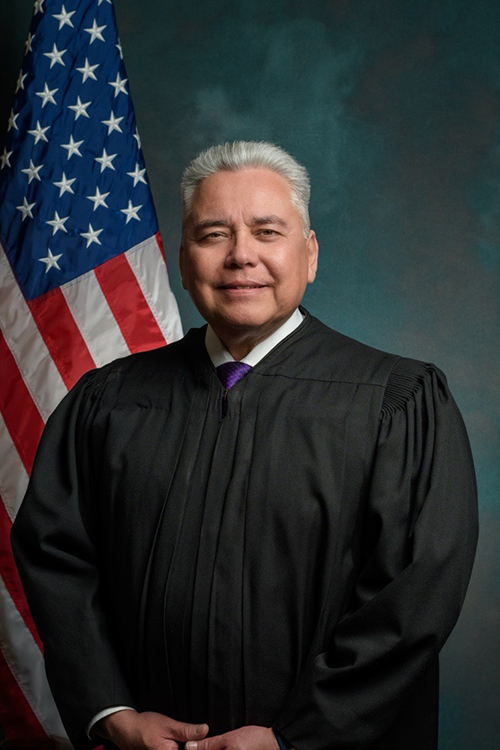
Sergio C. Tapia II
Presiding Judge
University of Iowa College of Law, 1996

"The great security against a gradual concentration of the several powers in the same department," James Madison wrote in The Federalist No. 51, "consists in giving to those who administer each department the necessary constitutional means and personal motives to resist encroachments of the others." Fittingly, the California Supreme Court opened its recent decision in J.O. v. Superior Court of San Joaquin County (2026) 19 Cal.5th 753 (J.O.) with Madison's words, because J.O. is, at its heart, a decision about the separation of powers, judicial independence and the public's right to courts that answer to the law rather than to pressure. As Presiding Judge of the Superior Court of Los Angeles County, I believe our Court has a constitutional duty to respond decisively to that mandate, and we have done so.
An extraordinary right, and its abuse
Code of Civil Procedure section 170.6 grants litigants an "extraordinary right" to disqualify a judge upon a simple declaration of prejudice. Used as intended, the statute strengthens public confidence in the courts. But as the California Supreme Court recognized in J.O., this right has too often been refashioned into a weapon. "Bad faith blanket" challenges have been deployed to remove a judge from all or most cases, often for reasons wholly unrelated to actual prejudice, like judge shopping, delay, hostility to a judge's views on the law or personality traits, retaliation for past rulings, and even racial discrimination against judicial officers themselves.
The facts underlying J.O. are a stark illustration. After San Joaquin County Judge Erin E. Guy Castillo admonished County Counsel for improper conduct, County Counsel responded by filing an estimated 325 section 170.6 challenges against her in less than four months, effectively forcing her reassignment from conservatorship calendar. Consider what that sequence teaches every judge who hears of it: rule against a powerful institutional litigant, and that litigant may erase you from your assignment. No judge should be made to weigh a ruling against the security of their courtroom, and no litigant should wonder whether the judge deciding their case is free to follow the law without fear. Castillo has since been appointed as a U.S. magistrate judge.
A constitutional injury, not an administrative inconvenience
What makes J.O. a landmark decision is the Supreme Court's recognition that bad faith blanket challenges are not merely an operational nuisance; they are a constitutional injury. The California Constitution vests the judicial power in the courts and commits judicial assignments to presiding judges. When a party can unilaterally and in bad faith bar a judge from an entire category of cases, it arrogates to itself a core judicial function, precisely the encroachment the separation of powers doctrine exists to prevent.
The stakes reach beyond any single judge or calendar. Judicial independence is not a professional courtesy extended to judges; it is a structural guarantee that belongs to the public. When blanket abuse goes unchecked, the Supreme Court observed, their mere threat can cause litigants to question the impartiality of the judicial system. A judiciary that can be intimidated is a judiciary that cannot be trusted.
The mandate of J.O.
Overruling nearly five decades of precedent under Solberg v. Superior Court (1977) 19 Cal.3d 182, the Supreme Court held that bad faith blanket abuses of section 170.6 are no longer immune from judicial scrutiny. Courts may now look beyond the affidavit or oral statement and inquire into the legitimacy of a party's assertion of prejudice. The Court outlined a burden-shifting procedure: if an objection is raised and a prima facie case of bad faith blanket abuse is shown, such as persistent strikes against the same judge or a spike in challenges following an adverse ruling, the burden shifts to the challenger to explain the good faith basis for the motion. If the court finds bad faith, it may deny the motion and return the case to the challenged judge. The message is unequivocal: the judiciary is no longer powerless in the face of an assault on its independence. Our constitutional structure requires us to act.
Our court's answer: General Order 2026-GEN-010-00
Our Court must meet this constitutional moment within our own operational landscape. The Superior Court of Los Angeles County is the largest trial court in the nation, with nearly 600 judges serving nearly 10 million residents, amid persistent fiscal constraints, recurring judicial vacancies and limited staffing, while processing more than a million filings annually. In a system this vast and this stretched, every unwarranted reassignment reverberates across countless cases and communities.
For these reasons, I signed General Order 2026-GEN-010-00 on July 28. The Order is crafted to operate precisely within the new legal landscape J.O. establishes. It creates a uniform process for all section 170.6 challenges in Los Angeles County. Attorneys and parties must provide a verified written declaration or oral attestation under penalty of perjury, listing all challenges to the same judge by that party, attorney or law firm, and the approximate number of their cases assigned to that judge in the past year. The Order mandates contemporaneous submission and timely service, so that all parties are informed and can raise objections within a reasonable time. And it sensibly exempts any party or attorney who has filed two or fewer section 170.6 challenges against the challenged judge in the preceding year, ensuring that the ordinary, good faith exercise of the statute proceeds untouched.
These requirements are not bureaucratic formalities. They are structural safeguards. Patterns of bad faith blanket challenges can only be identified, and the J.O. procedure can only function if the information revealing those patterns is before the Court and the parties.
This Order does not restrict a single legitimate section 170.6 challenge; that right remains fully intact, as the Supreme Court itself took pains to preserve. It sets clear, uniform expectations and provides the tools to distinguish good faith challenges from those that threaten the constitutional order. J.O. reaffirms first principles: the effective administration of justice is a core judicial function, judicial independence is the foundation of the rule of law, and public trust depends on judges free to decide cases without fear or favor. General Order 2026-GEN-010-00 is our answer to that mandate, a measured, practical step to ensure that section 170.6 remains a shield against prejudice, never a weapon for judge shopping, discrimination or retaliation. We invite the legal community to embrace this reform, confident that it serves justice, judicial independence and the enduring trust of the public we are privileged to serve.
Submit your own column for publication to Diana Bosetti
For reprint rights or to order a copy of your photo:
Email
Jeremy_Ellis@dailyjournal.com
for prices.
Direct dial: 213-229-5424
Send a letter to the editor:
Email: letters@dailyjournal.com