


Technology
Jul. 22, 2026
Beyond hallucinations: Is it time to recalibrate?
The legal profession's AI conversation began with fictional cases; its next challenge is defining what responsible use looks like.



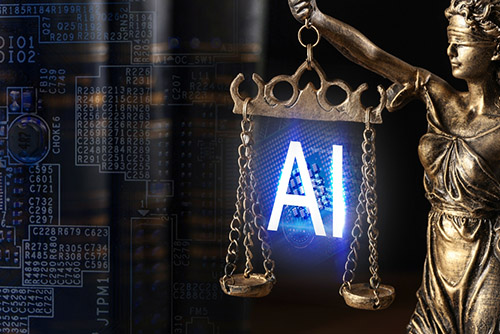
Our collective introduction to AI as a potential legal tool, at least for many lawyers and judges, can be traced to a single case: Mata v. Avianca (S.D.N.Y. 2023) 678 F.Supp.3d 443. The now-famous sanctions opinion, involving a brief that cited non-existent judicial opinions with fake quotes and citations, became the legal profession's defining first impression of AI. It generated headlines far beyond the legal press and understandably shaped how many of us thought about this new technology. The lesson was an important one: competence, candor and professional judgment cannot be delegated to a machine.
That first impression was both powerful and appropriate. But first impressions--even accurate ones--can become enduring assumptions. More than three years later, legal AI has evolved dramatically. Which raises a question: not whether Mata was correctly decided (it was) but whether a conversation that appropriately began with hallucinations should continue to be defined by them.
From my vantage point on the bench, AI has entered the courtroom, and I understand it to be here to stay. In the first six months of this year, I have encountered hallucinated authorities in briefs; peculiar authority choices; and attorneys seemingly unfamiliar with the authorities cited in their own briefs. I have watched lawyers, in the middle of oral argument, begin typing while questions from the bench remained unanswered. I do not know whether they were searching for a case, reviewing notes, consulting a colleague or using AI. The point is not what tool they were using. But these experiences raise a broader question: what does competent representation--and meaningful professional judgment--look like in an era when information and analysis are available instantaneously?
Those are not questions answered by Mata v. Avianca. Nor should we expect them to be. They are the next generation of questions.
The first wave of disciplinary decisions and ethical responses have served an essential purpose. They have established a clear ethical floor: lawyers may not submit fabricated authorities; judges may not abdicate independent judgment, and neither may blame technology for failures of competence or candor.
Indeed, nearly every reported AI discipline case to date has arisen from the same general fact pattern: fabricated authorities, nonexistent citations or similarly obvious failures of professional judgment. Collectively, these decisions tell us something important: what the profession will not tolerate. See, e.g., Noland v. Land of the Free, L.P. (2025) 114 Cal.App.5th 426 [$10,000 sanctions where, inter alia, 21 of 23 quotations in appellant's opening brief were fabrications created by generative AI tools]; Quinteros v. Harbor Distrib, LLC (2026) 121 Cal.App.5th 60 [total of $6,000 in sanctions against law firm and attorneys based on AI use by contract attorney with multiple issues, including eight fabricated quotations, and fictitious case authority]; Malkeet LNU v. Blanche (9th Cir. 2026) 177 F.4th 1014 [$2,500 sanctions imposed on each of on two attorneys: "While not inherently unethical or irresponsible, using generative AI without rigorously checking its output does present a higher risk of violating certain ethical and procedural rules. ... due to the nature of mistakes that generative AI is prone to make, at least in its current stage of advancement."]; Oneto v. Watson (N.D. Cal. 2025) 808 F.Supp.3d 974 [$1,000 sanction based on nonexistent and erroneous case citations]; see also In re Domestic P'ship of Torres Campos & Munoz (2026) 118 Cal.App.5th 1112 [trial court abused its discretion by citing fictional cases].
That body of law is necessary. It also is necessarily reactive. It has developed almost entirely from cases involving misuse of early-generation AI. It tells us what lawyers and judges must not do. It says comparatively little about what responsible use should look like as legal AI becomes more capable, more specialized and more deeply integrated into legal practice.
Much of today's discussion still treats AI as though it were a single technology with a single risk profile. It is not. Consumer large language models, retrieval-based legal research systems and domain-specific legal AI products differ significantly in design, intended use and reliability. Likewise, using AI to draft a filing without meaningful review is fundamentally different from using it to identify issues, critique an argument, organize research or prepare a preliminary draft that remains subject to careful human review.
Professional responsibility has never favored categorical thinking. We evaluate conduct in context.
As legal AI continues to mature, hallucinated authorities and quotations may become less central than a different category of error: imperfect legal analysis. (Cf. Malkeet LNU v. Blanche (9th Cir. 2026) 177 F.4th 1014, 1025 ["Fabrications are the most notorious hallucinations, but inaccuracies may prove more dangerous to our profession in the long run."].) A mature legal AI may identify the correct authorities but mischaracterize a holding, overlook a distinction, or fail to appreciate an important nuance. Those are genuine risks. They are also not unique to artificial intelligence.
They are the same kinds of mistakes that experienced associates, law clerks, and, yes, judges occasionally make. That observation does not diminish the need for careful review. It simply changes the question. Instead of asking merely whether AI was used, perhaps we should increasingly ask whether it was used responsibly.
Was the tool appropriate for the task?
Were reasonable safeguards employed?
Was independent professional judgment exercised?
Was the level of review reasonable under the circumstances?
Those are questions our profession already knows how to answer.
After all, professional responsibility has never required those with ultimate responsibility to personally redo every task performed by competent assistants. Senior partners supervise associates. Judges supervise law clerks. The standard has never been perfect replication. It has been reasonable supervision, thoughtful review and accountability for the final product.
The same principles should guide our evaluation of legal AI.
This is not a call to relax ethical standards. Quite the opposite. Our duties of competence, diligence, candor and independent professional judgment remain unchanged. What should evolve is our application of those enduring principles as the capabilities--and limitations--of legal AI continue to change.
The legal profession has faced similar moments before. Computerized legal research, electronic discovery, email, cloud computing, and remote practice all required lawyers and judges to apply longstanding ethical principles to technologies that previous generations never imagined. We did not rewrite our professional responsibilities. We recalibrated their application. Legal AI merits the same thoughtful approach.
The first generation of AI disciplinary decisions defined conduct that the profession should not tolerate. The next challenge is different. It is time to begin an equally important conversation about what responsible AI use should look like for lawyers and judges. That conversation should not be driven by fear, marketing or anecdote. It should be informed by evidence, guided by enduring ethical principles, and continuously recalibrated as the technology--and our experience with it--continues to evolve.
Our conversation about legal AI began with hallucinations. It was the right place to begin. It should not be where the conversation ends.
Author's Note: AI tools were used in the research and development of this article. The ideas are my own. All authorities have been checked by the author, and I accept full responsibility for every statement and conclusion expressed here.
Submit your own column for publication to Diana Bosetti
For reprint rights or to order a copy of your photo:
Email
Jeremy_Ellis@dailyjournal.com
for prices.
Direct dial: 213-229-5424
Send a letter to the editor:
Email: letters@dailyjournal.com