


Antitrust & Trade Reg.
Jul. 17, 2026
Paramount signals willingness to accept TRO as fight shifts to merger injunction timeline
Paramount Skydance Corp. indicated Friday it could live with a temporary restraining order delaying its $110 billion acquisition of Warner Bros. Discovery Inc., focusing instead on securing an expedited preliminary injunction hearing that would allow the companies to close the deal before steep monthly penalty payments begin. U.S. District Judge Araceli Martínez-Olguín said she will rule on the TRO by next Wednesday.


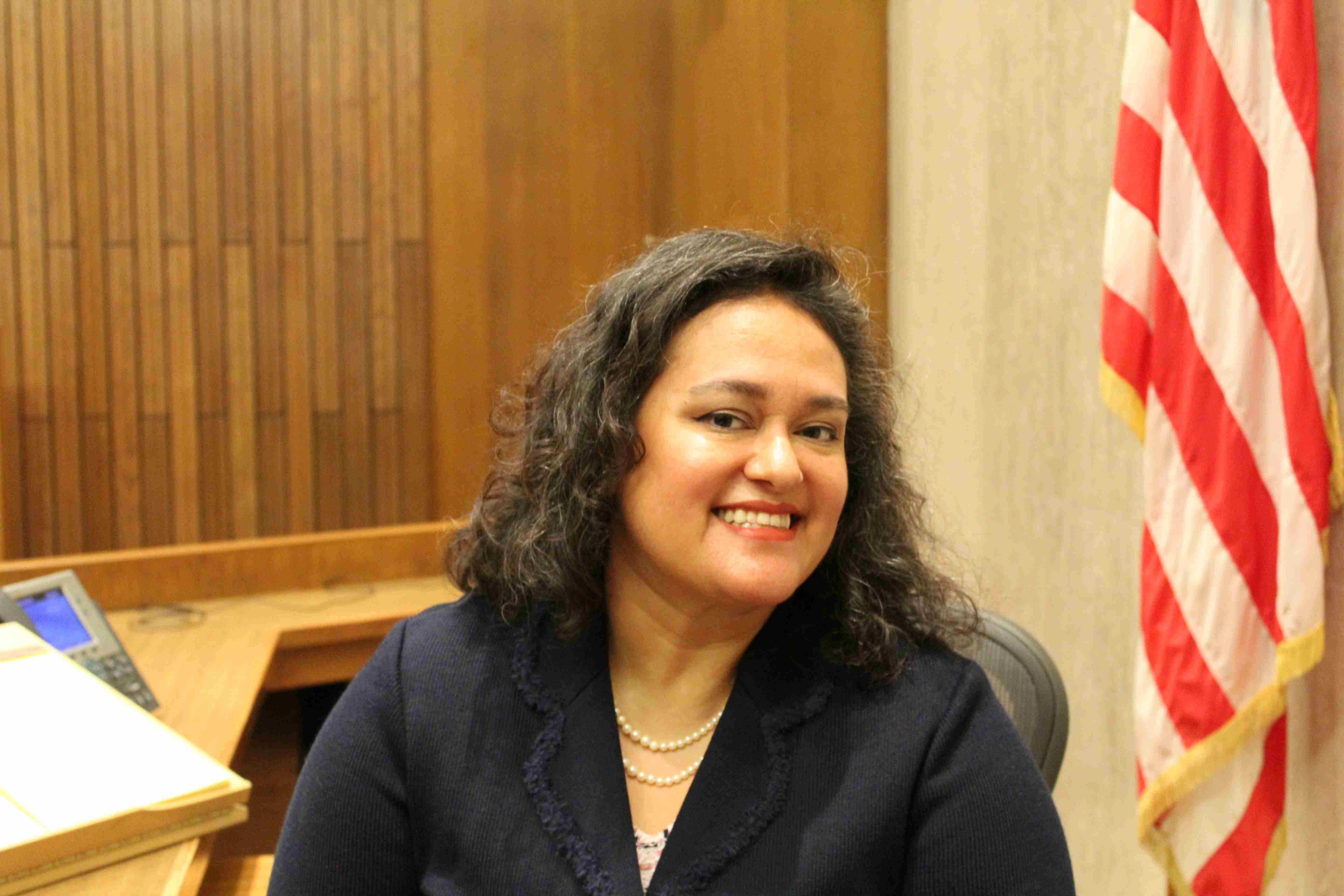
OAKLAND -- The attorney representing Paramount Skydance Corp. all but conceded at a Friday morning hearing that a federal judge would grant a temporary restraining order sought by a coalition of 12 states halting its planned acquisition of Warner Bros. Discovery Inc.
Jeffrey L. Kessler, a partner with Winston Taylor LLP who represents Paramount Skydance, focused his attention on getting an early hearing on the states' bid for a preliminary injunction that would block the merger between the two entertainment company giants.
U.S. District Judge Araceli Martinez-Olguin did not rule from the bench on the states' TRO motion and promised to rule by next Wednesday, the earliest day when Paramount Skydance could close the $110 billion acquisition if it is approved by the European Union the days before.
The deal already has been blessed by the Trump administration's Department of Justice. But the states, led by California Attorney General Rob Bonta and represented at Friday's hearing by Milbank LLP partner James H. Weingarten, are trying to stop it. State of California et al. v. Paramount Skydance Corp. et al., 26-cv-07116 (N.D. Cal., filed July 13, 2026).
While Martinez-Olguin did not say how she would rule, the judge asked Kessler if he could "point me to another district court case that found the defendant successfully rebutted the presumption [of harm to competition] at the TRO or PI stage."
"There are very few TRO or PI cases, period," Kessler responded. "Here I believe [the states] have not met the prima facie case" to block the acquisition.
Kessler and Weingarten spent a significant part of their arguments discussing the scheduling of a hearing for a preliminary injunction.
Martinez-Olguin asked Kessler if he would concede that the company would not be harmed if the deal's consummation was delayed for a few weeks, as long as they received scheduling certainty on the upcoming preliminary injunction hearing.
Kessler said Paramount Skydance is in a "unique situation," saying if the company gets a preliminary injunction ruling by early September, "that would enable us to close before the end of September when we would suffer very severe harm in terms of penalties that total $200 million a month in terms of ticking fees."
Those fees are part of Paramount Skydance's sweetened offer that persuaded Warner Bros. Discovery's directors to accept it.
But they are now a key point of dispute between Paramount Skydance, which wants a hearing on the states' proposed preliminary injunction scheduled for next month even if it means accepting a delay in closing the deal, and the states, which oppose such a quick schedule.
"This need for an emergency order is a creation of the states because they've known about this merger since January," Kessler said. "They could have filed their papers a month ago, six weeks ago."
Weingarten said Kessler was conceding the TRO and expressed little sympathy for Paramount Skydance's financial concerns.
"The proposal that your honor enter a TRO, just extend it 28 days, and then we have a hearing in the middle of August or the end of August to suit the defendants' needs to avoid a payment they negotiated to make is beyond the pale," he told the judge.
"It's unprecedented, it's unfair, and frankly it's completely unhelpful to the court," Weingarten added. "We also don't have time to get documents from all the third parties, all the data. It will be a hearing that will have no function for your honor."
Weingarten said the judge could decide the TRO, and the preliminary injunction, on the papers, as Chief Judge Troy L. Nunley of the Eastern District of California did in granting an injunction blocking Nexstar Media Group Inc.'s acquisition of fellow local TV channel owner Tegna Inc.
Nexstar has appealed Nunley's preliminary injunction to the 9th U.S. Circuit Court of Appeals. DirecTV LLC et al. V. Nexstar Media Group Inc. et al., 26-2490 (9th Circ., filed April 22, 2026).
During the remainder of Friday's hearing, Kessler and Weingarten debated the substantive merits of whether the merger should be approved.
Kessler argued that the merger of two of the five major film studios is not too significant because plaintiffs are not counting other competitors and their blockbuster films, such as Apple Inc.'s F1 and the horror film Obsession, produced independently for less than $1 million that has made $428 million worldwide.
Weingarten countered that the vast majority of "tentpole" film releases are made by major film studios and noted that F1 was distributed by Warner Bros.
"We meet our standard very clearly to get a temporary restraining order and a preliminary injunction," he told the judge.
The lawyers also argued about the impact of the merger on cable television companies, with Kessler touting the benefits of streaming while Weingarten countered that there has not been a new cable channel in 60 years.
On Thursday, Martinez-Olguin denied a request by consumer plaintiffs for a preliminary injunction to block the Paramount-Warner Bros. acquisition while taking the companies' motion to dismiss the lawsuit under submission. Faust et al. v. Paramount Skydance Corp. et al., 26-cv-3790 (N.D. Cal., filed April 30, 2026).
The states' Clayton Act complaint was filed in the Northern District of California, where Bonta prefers to file when he has cases in the state because the venue is comprised almost entirely of judges appointed by Democratic presidents - all but eliminating the possibility that the case would have drawn a judge appointed by a Republican.
The Central District of California, where the companies are based, includes more Republican appointees.
Martinez-Olguin, an appointee of President Joe Biden, related all three Clayton Act lawsuits filed against the merger earlier this week: the state attorneys general lawsuit, Faust, and a separate complaint filed by the Writers Guild of America.
Craig Anderson
craig_anderson@dailyjournal.com
For reprint rights or to order a copy of your photo:
Email
Jeremy_Ellis@dailyjournal.com
for prices.
Direct dial: 213-229-5424
Send a letter to the editor:
Email: letters@dailyjournal.com