


Immigration
Jul. 10, 2026
Les Misérables, Aujourd'hui: Trump immigration policies create the 'scofflaws' they condemn
Trump administration immigration policies are not merely enforcing the law--they are reshaping immigrant behavior in ways that reinforce longstanding stereotypes, creating the very conditions critics have long condemned.



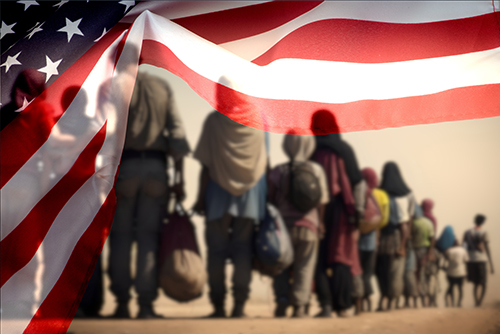
In Les Misérables, society makes Jean Valjean wretched with oppressive parole terms, pushing him to exist as a pariah, then views him with contempt for that wretchedness. Trump administration policies similarly compel immigrants to exist as exiles within society, pushing them to become the "scofflaws" that detractors have long accused them of being. The following are examples of allegations that current policies are turning into self-fulfilling prophecies.
Allegation: Undocumented immigrants don't pay taxes.
Reality: Studies consistently indicate that undocumented immigrants do indeed pay taxes. "Study says undocumented immigrants paid almost $100 billion in taxes," Alabama Reflector, Aug. 2, 2024. The IRS facilitates tax filings by undocumented immigrants who lack Social Security numbers through Individual Taxpayer Identification Numbers, or ITINs. IRS Topic No. 857. Additionally, federal law provides for the confidentiality of tax filings and strictly limits the sharing of tax information. 26 USC § 6103. However, under the Trump administration, the IRS and ICE entered into a Memorandum of Understanding (MOU) in which the former agreed to share information with the latter regarding suspected undocumented immigrants. The MOU is the subject of litigation. Center for Taxpayer Rights, et al. v. IRS, et al., 1:25-cv-00457-CKK (DDC), Document 31-1, p. 45; "IRS-DHS Data Sharing Execution Questioned by Appeals Court," Bloomberg Tax, May 12, 2026. Needless to say, the new policy disincentivizes immigrants from filing and paying taxes.
Allegation: Undocumented immigrants exacerbate poverty.
Reality: The majority of undocumented immigrants work and pay taxes, as indicated above. Some immigrants have removal orders that were issued long ago. After the issuance of those orders, many remained in the U.S., establishing families with U.S. citizen spouses and children. Because the outstanding removal orders can be readily enforced, those immigrants are the most vulnerable to mass deportation policies. In order to induce those non-citizens to self-deport, the Trump administration devised policies aimed at impoverishing them. A rarely enforced 1996 law permits the government to impose civil penalties of $500 daily for a non-citizen's failure to depart after a removal order. 8 USC § 1324d. Using that law, the Trump administration began assessing massive fines, adjusted for inflation, of $998 per day, resulting in fines of more than $1.8 million per person. "A $1.8 million fine and 15 days to pay: the unaffordable penalties Trump uses to harass migrants," El Pais, May 28, 2026. The administration intends to enforce those assessments through collection action by the Treasury Department, wage garnishments and confiscation of savings, homes, vehicles and other property. 90 FR 27439; 90 FR 20357, § 3. The administration has also taken steps to cut off undocumented immigrants from the nation's banking institutions, directing regulators to look for individuals using ITINs to open accounts and obtain loans or credit cards. 91 FR 30479, §§ 1 & 3(vi). The massive civil penalties are the subject of litigation, and it remains to be seen if they will be upheld, particularly under the Eighth Amendment's Excessive Fines Clause. Maria L. v. Mullin, 1:25-cv-13471 (D Mass). For the time being, these policies threaten to impoverish immigrants through asset seizures, as well as potentially relegating them to a cash-only existence without access to banks or credit lines.
Allegation: Undocumented immigrants entered and are here illegally.
Reality: Many immigrants entered the U.S. through humanitarian parole. Others were granted status after entering the U.S. unlawfully under programs such as Temporary Protected Status, or TPS, which can be designated when a country is affected by circumstances such as civil wars or natural disasters. 8 USC § 1254a(b)(1). However, the Trump administration has been terminating such designations en masse, causing over a million immigrants to be present without status. "Limiting migration led to 1.6 million losing legal status in 2025," NPR, Dec. 22, 2025. Affected non-citizens have little recourse, as on June 25, 2026, the Supreme Court (SCOTUS) held that the administration has unrestrained power to terminate TPS designations. Mullin v. DOE, 609 US _ (2026). In another ruling that day, SCOTUS allowed the administration to prevent migrants from requesting asylum. Federal law generally allows any person who is physically in the U.S. to apply for asylum. 8 USC § 1158(a)(1). However, SCOTUS upheld a policy whereby guards positioned on the border in front of ports of entry impede would-be asylum seekers from setting foot on U.S. soil, thus preventing them from requesting asylum. Mullin v. Al Otro Lado, 609 US _ (2026). Consequently, migrants seeking asylum in the U.S. will be incentivized to first enter the country unlawfully at a place other than a port of entry.
Allegation: Immigrants abscond after entering the U.S.
Reality: Undocumented immigrants encountered at the border are generally placed in removal proceedings before the Immigration Court. Most are also placed under ICE orders of supervision requiring them to report to the agency periodically. The vast majority of those individuals, more than 80%, comply with court and ICE reporting requirements. "11 Years of Government Data Reveal That Immigrants Do Show Up for Court," American Immigration Council, Jan. 27, 2021. Enter the Trump administration under which ICE has arrested countless non-citizens in Immigration Court hallways and at ICE appointments. Courthouse arrests are currently the subject of litigation. "Federal judge rules ICE can't make arrests at immigration courthouses," Courthouse News Service, June 23, 2026; "ICE and ISAP Check-Ins," ASAP, April 17, 2026. Suffice it to say, these arrest policies incentivize immigrants to forgo court appearances and ICE appointments.
Allegation: Undocumented immigrants are here for years without fixing their status.
Reality: Many non-citizens are ineligible for status due to the severity of immigration law. Others face waiting periods of several years or even decades before becoming eligible to seek legal status. Such eligibility frequently depends on shifts in personal life--like marrying a U.S. citizen or having a child reach the age of 21--or external changes in agency policies, regulations, laws or new TPS designations. 8 USC §§ 1151(b)(2)(A)(i), 1255(a) & (c). However, if a non-citizen is eligible for status, the Trump administration has made applying a high-risk endeavor. U.S. Citizenship and Immigration Services (USCIS) has made application approvals more difficult to obtain. USCIS PM-602-0199. USCIS has also become an enforcement agency, with its personnel authorized to carry firearms and make arrests. 90 FR 42797. Additionally, ICE under Trump began arresting applicants at USCIS interviews. "ICE traps immigrants at green card interviews," Axios, Dec. 23, 2025. Moreover, USCIS now issues Notices to Appear (NTA) when applications are denied. USCIS PM-602-0187. An NTA initiates removal proceedings before the Immigration Court where a non-citizen's case will become more costly, relief options are limited and an application's denial will result in a removal order. Clearly, these policies serve to deter non-citizens from filing immigration applications.
The Trump administration's policies, by design, have instilled terror in the immigrant community. Non-citizens are being pushed into a miserable underground existence or to abandon their lives and families in this country. As sung in the epilogue of Les Misérables, "Even the darkest night will end and the sun will rise." May that sunrise come in the 2028 election when a new administration returns us to just and humane policies.
Submit your own column for publication to Diana Bosetti
For reprint rights or to order a copy of your photo:
Email
Jeremy_Ellis@dailyjournal.com
for prices.
Direct dial: 213-229-5424
Send a letter to the editor:
Email: letters@dailyjournal.com