


Technology
Jul. 9, 2026
Vibe lawyering
If AI delivers a brief faster and cheaper, why do we need the lawyer at all? One litigant has already decided we don't.


A few months ago, I wrote about a lawsuit called Nippon Life v. OpenAI, answering "What does an AI do once it passes the bar?" with a line I liked more than I should have. "It hangs out a shingle." The piece was about the unauthorized practice of law. The worry was that a machine with no license had done a lawyer's work.
I want to go back to that case because I aimed the worry at the wrong thing.
Here is what happened. Graciela Dela Torre settled a disability claim against Nippon Life in early 2024. She signed a release. The case was dismissed with prejudice. Some months later, she uploaded the correspondence with her own attorney into ChatGPT and it told her she had been gaslighted. So she made the machine her lawyer instead.
It did the things a lawyer does. It researched. It built arguments to reopen a closed case under Rule 60(b). It drafted the motions and subpoenas, more than 40 filings in all, and sent her into federal court to file them herself. One of the cases it cited for her did not exist. The court denied the motion. The settlement held. This spring Nippon sued OpenAI and asked a court to declare that the machine had practiced law without a license.
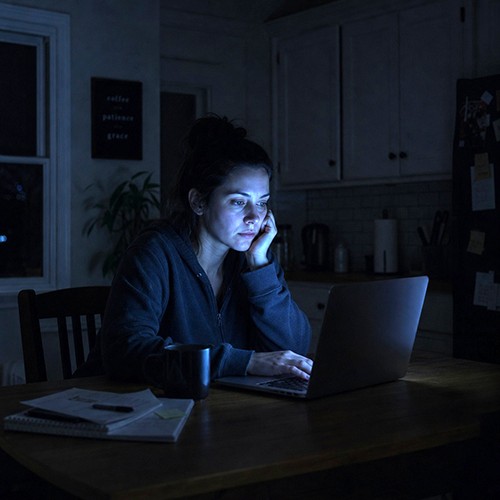
I pictured that machine hanging out a shingle. I had the picture wrong. It needs no shingle, no office, no name on a door. There was a woman at a kitchen table with a grievance and no one left to ask, and a window on a screen that answered every question with complete confidence and never once said it might be wrong. Somebody received something shaped like the full service of a lawyer without ever retaining one.
Before we comfort ourselves that this is a problem for desperate litigants who cannot afford counsel, look at what the licensed bar is doing on its own. The count of filings caught citing fake, AI-generated authority has passed 1,000 by one researcher's tally, hundreds of them in American courts, and the line on the graph still points up. These are not pro se litigants at kitchen tables. Many are admitted lawyers who signed the filings. The machine did not slip past the wall. The lawyers held the door.
I call this vibe lawyering.
The term comes from software, where vibe coding names a now-common practice. You tell the machine what you want the program to do, it writes the code, you adjust by feel, you ship it. I vibe coded the game Asteroids in a few minutes and was rudely reminded that my hand-eye coordination is not what it once was. I told myself practice will bring it back.
Vibe coders reach the result by recognition rather than construction. It works well enough, until it breaks, and then the coder cannot find the fault, because they never built the thing that failed. When my ship sporadically flew through asteroids without harm, I had no idea how to fix it.
Vibe lawyering is the same move in our rooms. Facts in, desired outcome in, argument out. Read, refine, file.
We might allow it for instrumental writing. The form contract, the routine demand letter, the motion in limine filed for the 17th time in its 17th variation. These are tools, and the only question they raise is whether they work. No one's soul is at stake in the phrasing of a force majeure clause.
Then there is the other kind. The brief that makes an argument no one has made in quite this way, where the cases do not line up and you have to build the logic yourself, sentence by sentence, finding out what you think as you write toward it. The letter that carries bad news and forces you to work out what the client needs to hear as against what they want to hear. Here the writing and the thinking are a single act. You are not transcribing a conclusion reached beforehand. You are reaching it now, in the prose, under the pressure of saying something a hostile reader will test for the weak joint.
Last month, I argued that this matters, and not because good prose is pretty. Good legal writing was always a kind of evidence. Not evidence for the client. Evidence of the lawyer. A brief that was clear, well built, and honest about its own soft spots could only have come from someone who had done the thinking, because there was no shortcut that produced one. The writing was expensive to make, and that expense was exactly what made it worth reading as proof. A judge holding a strong brief was holding proof of a strong mind behind it.
AI cuts that link. The writing and the thinking used to arrive together. Now the writing can arrive alone, clean and confident and standing for nothing. The brief still looks like proof. It has stopped being proof of anything.
A hallucinated citation is the ship flying through the asteroid. Anyone who checks will see it. A cite-check will not catch the brief that gets every citation right but never passed through a lawyer's judgment.
A brief written by a lawyer who inhabited the problem carries the marks of the work. The sentence that took three tries because the idea was hard. The concession made not because anyone forced it but because an honest reading of the record left no way around it. The vibe brief has none of these marks. It is smooth in a way that thinking rarely is. The words are all there. The thinking that should have produced them is missing.
This matters most not at the desk but at the podium. When the judge asks the hard question, the one that goes at the assumption holding the third argument together, the vibe lawyer is standing outside their own reasoning. They remember the paragraph. They cannot rebuild it. They recognized the argument when the machine produced it, and recognition is no help now, because they were never inside the thing they are being asked to defend.
There is a simple way to know which kind of writing you are doing. Before you open the machine, write the argument in your own words. Badly is fine. A single paragraph will do. The machine can sharpen what already exists; it cannot supply what was never there. If you cannot write the argument first, if the thinking has not happened yet, then what you are about to produce is not your draft. Call it the pre-prompt test. It costs 10 minutes. It tells you whether you are using the machine as a chisel or as a substitute for the thinking you have not done.
A lawyer whose briefs win may ask why it matters whose reasoning produced them. The answer is in the question no one in the profession much wants said out loud, the one Richard Susskind has pressed in earnest for a decade. If outcome is all that counts, and the machine delivers better outcomes faster and cheaper, why do we need lawyers at all?
Dela Torre already answered it. She decided she didn't.
Disclaimer: The views expressed in this article are solely those of the author in their personal capacity and do not reflect the official position of the California Court of Appeal, Second District, or the Judicial Branch of California. This article is intended solely to contribute to scholarly dialogue and does not represent judicial policy, administrative guidance, or any indication of how the author would approach these issues in any legal proceeding.
Submit your own column for publication to Diana Bosetti
For reprint rights or to order a copy of your photo:
Email
Jeremy_Ellis@dailyjournal.com
for prices.
Direct dial: 213-229-5424
Send a letter to the editor:
Email: letters@dailyjournal.com