


Technology
Jul. 6, 2026
I lied
AI's growing role in the courts, including efforts by Chief Justice Guerrero and Presiding Judge Tapia to draft ethical AI guidelines.


Arthur Gilbert
Justice (ret.)
UC Berkeley School of Law, 1963
Arthur's previous columns are available on gilbertsubmits.blogspot.com.
Notice the title I picked for this, my July column. Have to admit, it's a "grabber." It has to do with the title of my previous June column. What? ... You don't remember the title? ... You did not read my June column? Oh! The title was "Enough is Enough or Alternative Intent." Get it? "Enough is Enough" means we had enough. Enough of what? Notice the first letter of the two words "Alternative Intent?"
I promised not to constantly harangue you with my harping about AI. But the title of this July column is a bit harsh. How could I soften it? Of course, I turned to my buddy ChatGPT. It suggested several options: "I wasn't completely honest, I wasn't entirely truthful, I misspoke, I gave the wrong impression, I wasn't upfront about it, I didn't tell you the whole truth, I wasn't being completely transparent, I stretched the truth, I wasn't accurate, I wrote something that wasn't true." These are good, but I picked, "I wasn't completely honest with you and I'm sorry." I was impressed, particularly when ChatGPT posed this question "The best choice depends on whether you want to acknowledge a deliberate deception, an omission or an honest mistake."
The problem AI poses is how does it or can it "know" the undercurrents of irony that mark the style of some writers? One of my critics who heads an arbitration service that uses AI writes that the Court of Appeal is not the place to hone one's literary style. Really? I thought it was. I do agree that pedestrian cases in which the briefs may be the product of AI may warrant an AI response that is carefully checked. Time and prompt access to justice require this. And it is being used in more complex cases. Courts throughout the country are grappling with the technical and ethical issues AI presents.
This includes our capable Chief Justice Patricia Guerrero, who has formed a committee to draft rules that will help justices on our high court, the courts of appeal and their staff on the ethical use of AI without compromising the creative human component. Presiding Judge Sergio Tapia, who leads the gargantuan Los Angeles Superior Court, is working with his task force to formulate ethical rules and standards to guide judges and staff in the use of AI. The Chief and Judge Tapia have one of the most important tasks ever facing the courts. They are both thoughtful and insightful, the right people for the job. I wish them well and all my fellow judges throughout California. It is my hope that these rules will aid lawyers in the appropriate use of AI in their motions and appellate briefs.
I do not have to harangue my readers with further examples of AI problems in our schools, businesses and society in general. Just tune into the news. Allow me just one example. In one of my past columns, I mentioned the novel "Lord Jim." AI summarizes it in a paragraph or two. I am not sure students even read the summaries. Yikes! Nevertheless, I trust in our ingenuity to solve the problem.
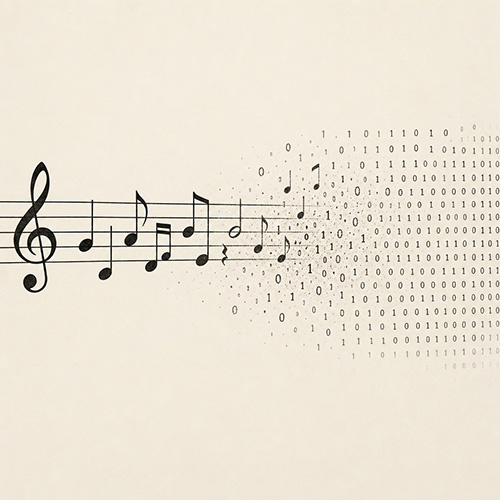
This is a good transition into AI vs. the arts. An article in the New York Times, June 14, 2026, caught my attention. The incomparable jazz artist Saxophonist Sonny Rollins recently passed away. Musician, composer Ned Rothenberg quoted the words of Rollins: "Technology is no savior. We can eat, sleep, look at screens, make money--all aspects of our physical existence--but that doesn't mean anything. Art is the exact opposite. It's infinite, and without it, the world wouldn't exist as it is (or was). It represents the immaterial soul; intuition, that which we feel in our hearts. Art matters today more than ever because it outlives the contentious political veneer that is cast over everything." Right on, Sonny.
Now what? It's July. It's vacation time. Think I will take some time off and celebrate this column as my shortest ever.
Submit your own column for publication to Diana Bosetti
For reprint rights or to order a copy of your photo:
Email
Jeremy_Ellis@dailyjournal.com
for prices.
Direct dial: 213-229-5424
Send a letter to the editor:
Email: letters@dailyjournal.com