


Technology
Jun. 1, 2026
Enough is enough or alternative intent
Although AI may transform--and even threaten--the future of human work and decision-making, it cannot replace the distinctly human qualities that define justice, creativity, music, and meaningful connection: empathy, listening, interpretation, patience, and soul.


Arthur Gilbert
Justice (ret.)
UC Berkeley School of Law, 1963
Arthur's previous columns are available on gilbertsubmits.blogspot.com.
In my spare time I write columns. I currently sit pro tem in Division Two of the Second Appellate District of the Court of Appeal where I try not to create havoc. I also play the role of a jazz pianist in Gary Greene's Big Band of Barristers. Obligatory plug: We will be performing at Disney Hall, along with the LA Lawyers Philharmonic, also under the direction of Maestro Greene, on Sat., June 20 at 7 p.m.. Get tickets. (LALawyersPhil.org, (323) 525-1800.)
What else have I been doing? Oh yes, I have been writing annoying columns about AI, or if you prefer Gilbert on AI ad nauseum. I have been viciously attacked for merely suggesting the dangers of AI. Even when I have enlisted the aid of AI to criticize AI, I have been labeled "wrong" for what AI wrote. Oh dear, there is no patience for even a simple caution.
A May 3, 2026, New York Times Sunday Opinion article, "Silicon Valley Is Bracing for a Permanent Underclass" by Jasmine Sun, caught my attention. Sun writes that people building AI fear we may be entering the final years of human innovation. She also cites analysts, including economist Anton Korinek of the University of Virginia and the Anthropic Institute, who argue that no job is safe in the long run if AI can outperform humans at everything. Economists generally acknowledge that technological progress can create short-term disruption, but what often goes unsaid is that the short term can last a lifetime. The article adds that even elite workers--those accustomed to automating others rather than being automated themselves--are now confronting the possibility of becoming obsolete. We may not need judges anymore.
This does not mean we should not use AI. With the hundreds of AI briefs flooding superior courts, I suppose we must fight technology with... technology. Presiding Judge of the Los Angeles Superior Court Sergio Tapia is certainly up to the task of managing this seemingly intractable problem. I wish him well. But I caution those who extoll the virtues of AI. It is not like strategizing with research attorneys as argued by AI proponents. Research attorneys are human beings with whom we talk, argue and discuss. To equate them with AI, a database that does not reason as a human being, is sheer nonsense. As Elie Mystal argues in the May 2026 edition of The Nation in an article titled, "When Your Honor Is a Robot," "A.I. does not reason, it does not judge credibility by overserving facial expressions, or tone, it's probability is based on vast quantities of data."
Time for a hypo. Assume the vehicle code prohibits vehicles in the park. That makes sense. Do I have to spell it out? Children play in the park, they run everywhere, cars are dangerous, gas vehicles emit harmful exhaust. The vehicle code also includes electric run wheelchairs as vehicles. The maximum speed of these "vehicles" is about one mile an hour. An elderly person in a wheelchair is speeding along at a mile an hour in the park. An officer gives him a ticket. Wonder how AI would decide the case?
I previously alluded to my being in a band, a practice (pardon the expression) currently in vogue by doctors, lawyers, nuclear scientists and stockbrokers. In jazz we often play riffs, which AI defines as "a short catchy and repeated musical phrase in or pattern in jazz, rock and pop music ...." AI goes on to define riff in another context. "The term also informally refers to a humorous, extended monologue on a specific subject as 'riffing.'" Looks like I have been doing both lately.
The California Judges Association recently posted a morning mindfulness aphorism that reminds us to do what widens and makes our souls shine. I have written about how the arts give us insights that enhance our lives but also how they broaden our depth of understanding as judges.
This takes me to insightful thoughts expressed by my good friend and colleague, the talented Justice Helen Bendix. For many years she has played the viola in Gary Greene's LA Lawyers Philharmonic. On May 5 she was awarded the LA County Bar's Inaugural ADR Section's Distinguished Service Award. (See "Justice Bendix honored by L.A. County bar's ADR section," Daily Journal, May 7, 2026.) Like me, she was struck by the Monday morning Judges Association's aphorism, "Do what makes your soul shine." What follows are excerpts of beautifully expressed comments Justice Bendix made at the ADR awards ceremony and on other occasions. Here for example is her inspiring etude of words.
On judicial participation in settlements:
"Interesting enough, these endeavors have a lot in common. -- Beautiful musicmaking is not just about the printed notes. It requires active listening to interpret those notes. It requires generosity in sharing the musical spotlight; it requires education to understand the context of the work; and it requires great patience. --Successful ADR shares these attributes. For example, knowing the law and the record, just like the printed notes, is the foundation. Unlocking what is driving the parties' dispute in the first place requires interpretative skills also akin to musicmaking. Counsel, the parties and the neutral must actively listen to discern the key to settlement. They must be generous. They must put aside the need to be "right" and instead, be an ally in the settlement process. Like playing in a string quartet, participating in settlement processes requires patience and creativity.
It was a privilege of working with excellent trial counsel and of bringing peace to parties who otherwise would have been in a war they did not want. I also had the privilege of working with tough but collaborative insurance representatives, who are the unsung heroes of settlement negotiations. I will not tell war stories, but I have brought something with me that exemplifies how ADR makes my soul shine: An asbestos plaintiff knitted these booties for me after I settled her case and before she died. She included a handmade card with a viola she had painted on it. There are no words for such kindness.
Picasso described painting as "a form of magic designed as a mediator between this strange hostile world and us."
How being a musician has informed my work as a judge
Making music and serving justice are related. Both thrive on beauty of expression. Both serve aesthetic and moral goals that are unique to our species.
Being on an appellate panel of four is not dissimilar from playing in a string or piano quartet. Both require active listening for what is not explicit, or in musical parlance, 'the rests are as important as the notes.' Both start with a baseline of learning rules. In music, that is reading music and playing in tune, all in the context of changing rhythms and dynamics. For justices, the baseline is knowledge of ever-changing law and procedures to implement the law. The magic, however, happens in the expressive communication among musicians and justices that produces a convincing performance or opinion. A memorable performance or opinion rests on four players learning their respective parts, patiently listening to other members' interpretations, and being open to differing ideas and aesthetic values.
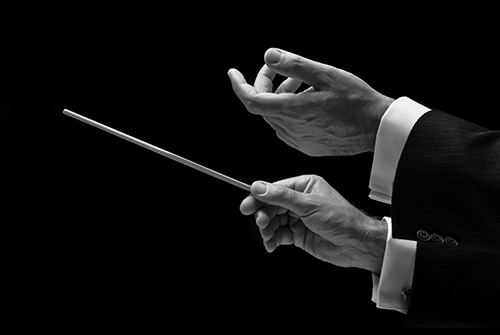
The same is true in the trial court. A jury trial can be aesthetically beautiful and at the same time, further justice if the participants follow lessons one learns as a musician. Sometimes counsel has the solo, and sometimes only a minor part. At all times, however, counsel must listen attentively to opposing counsel; counsel must perceive what is not said (the rests) and the arguments themselves (the notes and rhythms). Like the sharing of a musical phrase among members of a quartet, counsel responds to the themes being developed during the trial. Counsel must also use all his or her senses to discern how the jury is responding to the performance and to be responsive to the cues counsel is receiving. The trial judge, like a conductor, is responsible for the tempo or tempi of the trial and enforcement of the rules. Absent the judge's active listening and control, the trial would be dissonant and out of step."
Submit your own column for publication to Diana Bosetti
For reprint rights or to order a copy of your photo:
Email
Jeremy_Ellis@dailyjournal.com
for prices.
Direct dial: 213-229-5424
Send a letter to the editor:
Email: letters@dailyjournal.com