


Law Practice,
Constitutional Law
Jun. 30, 2026
From quill to AI: How law practice has changed over 250 years
See more on From quill to AI: How law practice has changed over 250 years


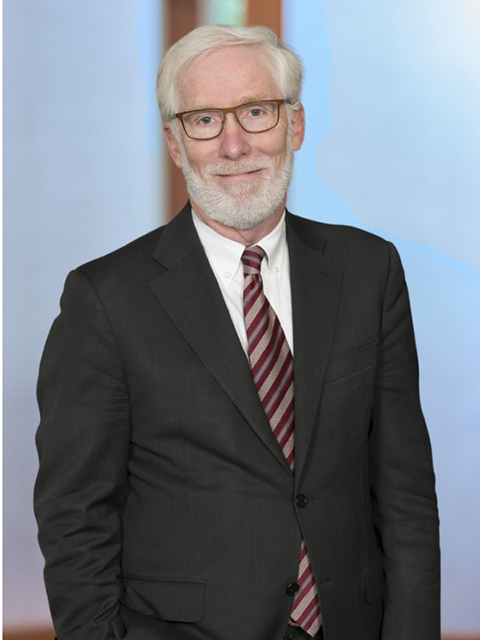
James Wagstaffe
Trial Lawyer and Partner
Adamski Moroski Madden Cumberland & Green LLP
UC Hastings COL; San Francisco CA
There's one thing about practicing law for 45 years and being a law school professor for over three decades: your young colleagues and students do view you as old, but, with any luck, they also think you're wise. And, yes, there's eye-rolling when you reference the movie Casablanca; but the younger generation still seems to listen with respectful attention when you wax eloquent about "the good old days."
As a threshold matter, there's no substitute for understanding the challenges of today by examining them through the lens of history. Like in many professions, in the earliest days of our country, being a lawyer derived mostly from saying you were one, demonstrating to clients a skill in providing effective advocacy and obtaining business solely by word-of-mouth referrals. Think of Anglo-Saxon origins, powdered wigs and quills for penning documents and you get the picture.
Significantly, however, until near the end of the 19th century, legal education in this country took place almost entirely by apprenticeship and self-directed reading. We are all familiar with the stories of Thomas Jefferson and, later, Abraham Lincoln obtaining their "legal education" by candlelight, reading law books and apprenticing to practicing lawyers. (Some 16 U.S. presidents practiced law without ever going to law school.) It was only in the late 19th century that a law school education seemed relevant at all, first, simply as part of "law departments" of various colleges, and thereafter by obtaining degrees from stand-alone law schools, including at Harvard and Yale.
Tellingly, it was not until 1893 that the American Bar Association adopted a resolution creating a Section on Legal Education. And then it was not until 1921 that Section Chair Elihu Root proposed what became adopted as the ABA resolution supporting the practice that every candidate for admission to the bar should give evidence of graduating from a law school providing a minimum of two years of focused legal education. (But note that earlier in the century, Franklin Delano Roosevelt passed the New York Bar Exam and briefly practiced law, though he never graduated from law school.)
Today, more than 100 years later (almost half of which I've witnessed since the seemingly "modern" time when I graduated law school), very much has changed. And it's not just getting from apprenticeships and circuit-riding to e-discovery and artificial intelligence. It has involved a virtual revolution across the board in the way law is taught and practiced in this country.
For starters, law practice is almost universally preceded by attorneys obtaining a formalized law school degree followed by passage of state-sponsored bar exams. The professor-student ratio was almost 40-1, until just in recent years when that ratio has dropped below 10-1. Due in large part to Chief Justice Burger's famed 1973 lecture delivered at Fordham, law schools across the country have provided training in litigation skills, the art of oral advocacy and other clinical skillsets. Certainly, the former days of the "Paper Chase" and random terror of Socratic examination have largely given way to the kinder-gentler classroom style of law professors "collaboratively" teaching in a student-centric era.
So, what characterizes today's practice of law that my late father, Gerard (Santa Clara Law School '40, SBN 17331), would not even come close to recognizing? Well, let's begin with hourly billing. The "fee for service" model of his age has gone the way of the dodo bird, with lawyers spending their entire career marking time in "point one's" (that is 6-minute intervals) while practicing in large, specialized law firms eschewing any notion of a "general practice of law." And, given the enabling case law on lawyer advertising, perhaps he would inexplicably be turning in his grave enduring the ubiquitous presence of lawyer billboard ads, television commercials and radio testimonials.
Now, to be clear, my dad once told me (shortly upon graduating from law school) that the fax machine was the "end of the practice of law" --because, in his words, it "eliminated time for required deliberation." For in those days, it was expected a lawyer would respond in 24 hours, and today, with email and texting, it's more like 24 minutes (and God forbid, it's 24 seconds). "It's a different world," I'd say to him ... to say nothing of the highly valuable reality that some 50% of my law school classes are now populated by female students, leading to the diversity-enhancing and essential presence of women practitioners.
With my dad in mind, I used to think I was so "in touch with modern times" as I "tamed the beast" of electronic discovery and routinely engaged in telephonic court appearance. So quaint. Now, "Zooming" is routine, knowledge of technological developments is mandated by State Bar ethics rules, and if you don't know the "in's and out's" of artificial intelligence, you're a non-virtual dinosaur. The fact is, as they say, that "if you're through changing, you're through." Just be sure to avoid "hallucinations" and fake citations and evidence.
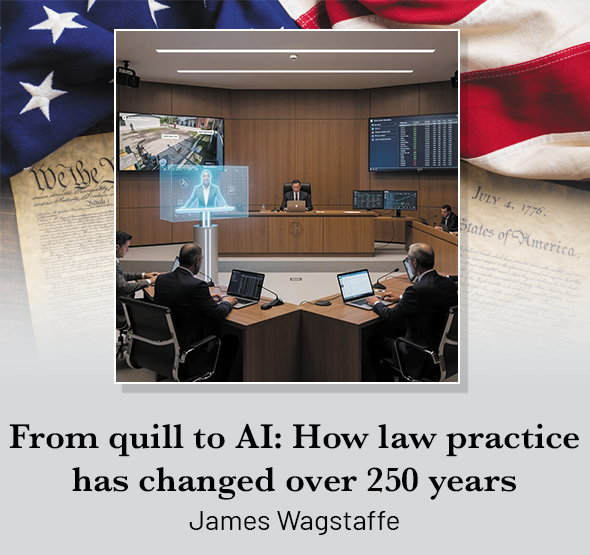
Some 25 years ago, I presented a CLE program entitled "The Courtroom of 2020." Oh, I predicted computer screens in the courtroom and presentation of evidence by Elmo. I should have --but didn't --imagine virtual testimony (soon to be holographic, I predict) and AI-generated cross-examinations and timelines.
To be sure, today's CLE presentation as to "The Courtroom of 2050" will suffer the same infirmities, as we can only speculate about the future. And, despite my utter commitment to change (even at my age), I recognize that over a century ago, Oscar Wilde probably got it right when he wrote: "With age comes wisdom, but sometimes age comes alone."
James Wagstaffe is a partner at Adamski Moroski Madden Cumberland & Green LLP. He has practiced trial law since his 1980 graduation from UC Law SF (formerly "Hastings College of the Law"), where he has taught civil procedure for over 30 years. Wagstaffe is also the principal author of two widely-used, 3-volume practice guides published by LexisNexis respectively on federal and California civil procedure before trial.