


Law Practice
Aug. 7, 2026
The Gates Foundation's Epstein probe has a scope problem
WilmerHale's review of the Gates Foundation's ties to Jeffrey Epstein illustrates how a narrowly scoped investigation can produce technically accurate findings while leaving the central questions about personal conduct unresolved.


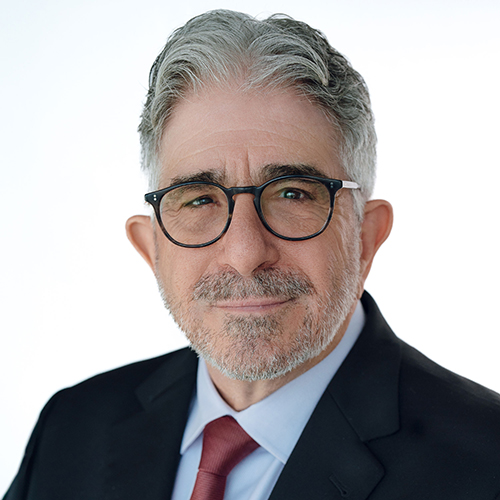

Susan Woolley
Susan Woolley is an attorney in private practice in Pasadena, California and a former AWI board member.

The most important part of the law firm WilmerHale's review of the Gates Foundation's connections to Jeffrey Epstein may be a footnote.
In it, WilmerHale, which was commissioned to investigate the foundation's ties to Epstein, confirms it did not have access to Bill Gates's personal communications and did not review his personal interactions with Epstein. That limitation matters.
The law firm's three-page summary emphasizes what its investigators did examine: a five-month investigation involving more than 50 interviews, including one with Gates, and an extensive review of written materials with the cooperation of the foundation's legal department.
WilmerHale concluded that, based on the information it collected, there was "no evidence" that the foundation participated in or knew about "Epstein's ongoing sex trafficking operations or criminal activities."
But then comes the footnote: "WilmerHale did not have access to Mr. Gates's personal communications and did not review Epstein's interactions with Mr. Gates in a personal capacity," it states. The investigation also did not examine other entities associated with Gates, including Gates Ventures and the Gates Foundation Trust.
Those exclusions go to the heart of what the investigation was capable of finding.
Scope is a critical element of any credible investigation. It determines the questions investigators may ask, the witnesses they may interview, the records they may examine and, ultimately, the conclusions they may reasonably draw.
What issues are investigators authorized to pursue? Which witnesses and documents are available? Are any people, organizations or categories of evidence off limits? Those decisions define the universe of the investigation.
That is why a narrow scope can produce technically accurate findings that still leave the most important questions unanswered. An investigator may fairly conclude that there is "no evidence" of wrongdoing within the material examined. But that is different from concluding that no such evidence exists.
For an organization facing scandal, a properly designed independent investigation can be enormously valuable. Skilled investigators given broad access to relevant people and records can establish facts, identify institutional failures, recommend reforms and restore public confidence.
A constrained investigation can do the opposite. It can create the appearance of accountability without resolving the central questions that created the controversy. The colossal investigations of the abuses at the Abu Ghraib prison in Iraq and the collapse of Enron provide historical context for what can go wrong.
As we can see with widespread allegations involving ICE agents more recently, public confidence suffers when government investigations into serious matters are opaque or narrowly drawn. There is understandable skepticism that follows when the public is asked to accept conclusions without sufficient visibility into the evidence, methodology and independence behind them.
The same principle applies here. The decision not to examine Gates's personal communications or relationship with Epstein is especially significant because the foundation's own summary acknowledges a connection between the two worlds. Epstein, the report says, was introduced to Gates and the foundation by an adviser who "held a dual role at the foundation and in Mr. Gates's personal office."
That fact does not establish wrongdoing by Gates or the foundation. But it illustrates why drawing a bright line between Gates's personal dealings and the foundation's activities may prevent investigators from understanding how the relationship actually operated.
Gates is a major donor and chair of the foundation's governing board. Questions about his relationship with Epstein therefore have obvious relevance to public confidence in the institution. The limitation also sits uneasily beside the foundation's stated commitment to transparency. Commenting on the investigation, Gates said, "We are committed to ensuring trust and transparency are never compromised."
Transparency, however, requires more than announcing conclusions. It requires allowing people to understand what investigators were permitted to examine--and what they were not.
That leaves several unanswered questions. Who decided that Gates's personal communications would be outside the investigation? Why were they excluded? Were potentially relevant communications preserved? Did investigators request access and get denied, or were those materials outside the assignment from the beginning?
Those questions become particularly important as Congress and other authorities consider further inquiries into Epstein's relationships with prominent business and political figures.
The next round of investigations should learn from the limitations of this one.
Congressional investigators should define their scope publicly and broadly enough to follow the evidence wherever it leads. They should obtain relevant personal and institutional communications, examine affiliated entities when evidence crosses those lines and require investigators to disclose material limitations on their access prominently, not bury them in footnotes.
They should also distinguish carefully between two very different conclusions: that investigators found no evidence of wrongdoing and that investigators had sufficient access to determine whether such evidence existed. That distinction is fundamental.
Investigators should have access to relevant emails, text messages, calendars, financial records and other communications; authority to interview witnesses without institutional interference; and the ability to pursue evidence involving affiliated organizations or personal offices when it bears on the central questions under review.
The public should eventually be told not merely what investigators concluded but how they reached those conclusions. Any final report should describe the scope of the inquiry, the evidence examined, significant evidence investigators could not obtain and the reasons for those limitations.
The Gates Foundation can take an important step now by releasing the full WilmerHale report, with appropriate redactions to protect legitimate privacy interests. That would allow donors, policymakers and the public to judge the investigation on more than a three-page summary. It should also reveal who established its scope and why significant categories of information were excluded.
The foundation should then commission a genuinely independent follow-up investigation with authority to examine the full relationship between Epstein, Gates and the foundation, including relevant personal communications and affiliated entities.
That is not an argument that wrongdoing occurred. It is an argument that serious allegations require an investigative process capable of answering serious questions.
The broader lesson extends well beyond Gates, Epstein or any one institution.
An investigation should not be judged by the number of interviews conducted, the months spent working or the prestige of the law firm hired to perform it. Those things may demonstrate effort. They do not establish completeness.
The better questions are simpler: Did investigators have access to the people and evidence most likely to reveal what happened? Were they free to follow that evidence? And were the limits of their inquiry made clear to the public?
As Congress and others undertake investigations that will follow continuing disclosures surrounding Epstein, those questions should be settled before the first witness is interviewed.
Investigators cannot find evidence they are not allowed to see. And no investigation should be permitted to claim more certainty than its scope can support.
Submit your own column for publication to Diana Bosetti
For reprint rights or to order a copy of your photo:
Email
Jeremy_Ellis@dailyjournal.com
for prices.
Direct dial: 213-229-5424
Send a letter to the editor:
Email: letters@dailyjournal.com