


Constitutional Law,
Civil Rights
Jun. 25, 2026
Huntington Beach tentatively ordered to adopt ranked choice voting
A tentative ruling finds Huntington Beach's at-large election system violates the California Voting Rights Act, rejects the city's reliance on the U.S. Supreme Court's recent Callais decision and orders ranked choice voting as the remedy.


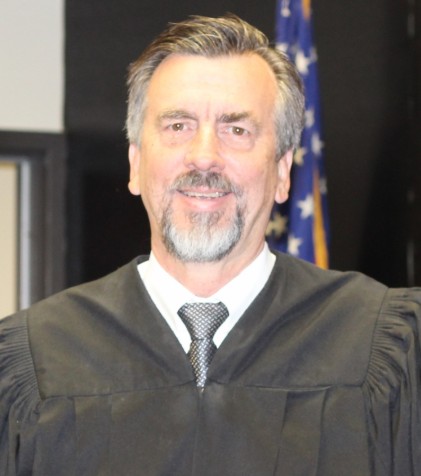
An Orange County judge has tentatively ruled that Huntington Beach's at-large City Council election system violates the California Voting Rights Act, ordering the charter city to adopt ranked choice voting and concluding that a recent U.S. Supreme Court decision narrowing the federal Voting Rights Act does not limit claims brought under California's broader voting rights statute.
Judge Craig L. Griffin's tentative ruling and proposed statement of decision addresses a question likely to shape voting-rights litigation statewide: whether Louisiana v. Callais, the Supreme Court's recent 6-3 decision reinterpreting Section 2 of the federal Voting Rights Act and the Thornburg v. Gingles framework, applies to claims under the California Voting Rights Act. Griffin concluded it does not. Southwest Voter Registration Education Project et al. v. City of Huntington Beach, 30-2024-01397379-CU-CR-NJC (O.C. Super. Ct., filed May 3, 2024).
Huntington Beach City Attorney Michael J. Vigliotta said in an email that city officials are reviewing the decision with outside counsel that litigated the case and determining the next steps.
Kevin I. Shenkman of Shenkman & Hughes in Los Angeles, who represents the plaintiff in the matter, praised the ruling and said the court-ordered changes would finally give Huntington Beach's Latino community a voice in local government long denied to them.
"The change to Huntington Beach's elections ordered by the court should finally give the Latino community the voice in local government they have been denied for decades and enable the residents of Huntington Beach more generally to bring some sanity to a city council that has repeatedly demonstrated its bigotry," he said.
Callais was decided 20 days after Griffin took the case under submission, prompting him to seek supplemental briefing on its impact. He agreed with the city that the decision is a "blockbuster," writing that it "effectively overruled 40 years of VRA jurisprudence, imposing far greater burdens on plaintiffs seeking to enforce the statute." Had the plaintiffs sued under federal law, he added that their "case would fail miserably."
But the plaintiffs sued under the CVRA, and Griffin found that distinction controlling. He wrote that the federal act derives its authority from the 15th Amendment and is limited by it, while the CVRA arises from the California Constitution and the Legislature's plenary authority.
Citing Palermo v. Stockton Theatres, Griffin reasoned that when the CVRA incorporated portions of the federal Voting Rights Act, it adopted them as they existed at the time of enactment, not as later federal decisions might reinterpret them. He also noted that the CVRA expressly disclaims any requirement to prove intent, foreclosing Callais' requirement of a "strong inference" of intentional discrimination.
On the merits, Griffin found that "racially polarized voting has regularly occurred in Huntington Beach elections."
Plaintiffs relied on statisticians Drs. Kousser and Clelland, who analyzed 11 elections using ecological regression, Bayesian ecological regression and ecological inference. The city's experts offered no competing analysis and instead challenged the plaintiffs' methodology, including the use of "voters" rather than "votes" as the denominator. When the experts recalculated the data using votes, Griffin noted that "the ultimate results did not" change.
Griffin found the plaintiffs' experts "more credible" and their analyses "more reliable." He overruled the city's Kelly/Frye and Kennemur objections to the recalculated analyses and gave little weight to the testimony of the city's lead expert, Johnson, observing that courts "have repeatedly rejected" his opinions "and sometimes not too gently."
Addressing other probative factors, Griffin pointed to a refuse transfer station across the street from Ocean View Elementary School, where 90% of students are Latino. "The Court was astonished to learn that Latino elementary school students for decades have been forced to endure foul odors and to dodge seagull droppings at recess," he wrote, adding that the facility would never have been located near a school with a "persistent 90 percent non-Hispanic white student body." He also cited the treatment of City Council candidate Oscar Rodriguez, who was called an "anchor baby" and "brown supremacist."
On vote dilution, Griffin found that Latinos comprise 16.4% of Huntington Beach's eligible voters, exceeding the 12.5% "threshold of exclusion" for a seven-seat council under cumulative, limited or ranked choice voting. He also credited a seven-district illustrative map prepared by David Ely, whose proposed District 1 was 33.9% Latino, finding it constituted a permissible "influence district."
Rejecting the city's racial gerrymandering argument, Griffin distinguished race-conscious redistricting from race-based redistricting. He wrote that requiring a CVRA plaintiff to draw a qualifying district without considering where Latino communities live "would require the map drawing skills not of David Ely, but of David Copperfield."
As a remedy, Griffin selected ranked choice voting rather than district elections, calling it "less drastic" and noting that it preserves the at-large system required by the city charter while protecting the voting power of Huntington Beach's similarly sized Asian population.
He ordered the city to implement ranked choice voting for the November 2026 election, or by November 2028 if the Orange County registrar is unable to support the system sooner. Griffin also ordered the city to consolidate the council's staggered terms, a change that will shorten some four-year terms to two years.
Whatever remedy is adopted, Griffin wrote, "some charter eggs will be broken in the making of this omelet."
The ruling remains tentative. The parties have 15 days from notice to file objections, and plaintiffs must submit a proposed judgment.
Anthony R. Taylor, an equity partner at Aleshire & Wynder, and of counsel Norman A. Dupont, along with Andrew Kornoff of the city attorney's office, appeared for Huntington Beach.
Griffin wrote that he would retain jurisdiction to ensure the remedy is implemented.
Douglas Saunders Sr.
douglas_saunders@dailyjournal.com
For reprint rights or to order a copy of your photo:
Email
Jeremy_Ellis@dailyjournal.com
for prices.
Direct dial: 213-229-5424
Send a letter to the editor:
Email: letters@dailyjournal.com