


Law Practice,
Civil Litigation
Jun. 24, 2026
We came to be plaintiff lawyers
The Uber ballot war we were ready to fight was called off last week in a private deal. Here is what it taught the next generation of plaintiff lawyers.


Every law student gets the same question from a skeptical relative: why this, and why now? The ones who came to do plaintiff's work give the same answer. We came because somewhere in the law there is a place where a single person with no money and a true claim can stand as an equal to a corporation with everything. We came for that.
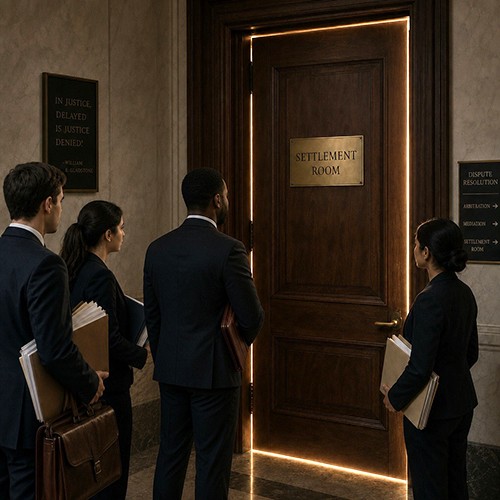
Last week, we were ready to defend it at the ballot box. Instead, it was settled in a room we were not in.
On June 17, two competing initiatives became eligible for California's November ballot. One was Uber's. It would have effectively capped plaintiff contingency fees at 25% in automobile-accident cases by requiring victims to retain at least 75% of their recovery, limited certain medical-expense recoveries to Medicare, Medi-Cal and commercial-insurance benchmarks, and barred certain financial-interest referrals and kickbacks between attorneys and medical providers. The other, backed by the trial lawyers, would have expanded rideshare liability for sexual misconduct against riders or drivers and imposed new background checks, reporting and notice rules. Both sides had poured tens of millions into the fight and papered Los Angeles with billboards.
It lasted one day.
On June 18, Uber and the Consumer Attorneys of California announced a deal to scrap both measures and avert one of the most expensive ballot fights of the November election. Uber would strengthen safety measures and drop its fee cap; the trial lawyers would drop their sexual-misconduct measure and accept limits on lien-based medical claims in rideshare crashes. "Both sides agree: Californians deserve a system that's safe, fair, and accountable," they said in a joint statement. The deal holds only if it becomes law within the week. Otherwise, both measures return.
So the cap that threatened the work I am training to do is shelved, for now. I should feel relief. I feel something more complicated.
I work as a litigation law clerk at a plaintiff's firm. I spend my days inside these cases: the intake notes, the records, the liens. So, I know what got traded away in that room.
A medical lien is how many injured people get treated when they cannot pay up front: a doctor provides care now and is paid later, out of the eventual recovery. For many clients whose files cross my desk, the uninsured, the underinsured, the out-of-network, it is the only practical way they get treated at all. The deal does not erase liens; as reported, it would cap especially expensive lien recoveries unless a judge finds the treatment necessary, specialized, or rare. That is a real check on real abuse. But the same instrument bad actors pad is the one that gets ordinary people who cannot pay into a doctor's chair, and a cap drawn too tightly lands on them.
That is what stays with me. The fee cap was a frontal assault we all saw coming. This was quieter: one piece of how people who cannot pay get care, negotiated away by our own side as the price of making a bigger threat disappear.
Here is what last week taught us. This is how these fights get resolved. Not in the clean morality play we outline for class, where the better argument wins, but when two well-funded sides decide a deal is cheaper than a war and settle it privately, a day after qualifying, before a single vote is cast. The contingency fee survived this round not because justice prevailed but because leverage found its equilibrium. The injured riders, the patients, the students ready to knock on doors, none of us were at the table. We read about it like everyone else.
The other side deserves a hearing. A negotiated deal probably beats a brutal campaign of mutual distortion. Uber is right that lien-based billing can be abused and that referral mills are real. Trading away the sexual-misconduct measure is a genuine loss to survivors' advocates, but reasonable people preferred a bill to a billboard war. The plaintiff's bar is not a chorus of saints, and I will not pretend it is.
But a deal struck in private, over the heads of the people it affects, is not the same as a problem solved. It is leverage reaching a price. And in an injury case, leverage is the entire game.
The measure that would have rewritten my future is shelved, at least until we see what survives the drafting. I am also paying closer attention now because last week showed me the threat to this work does not always arrive as a billboard. Sometimes it arrives as a handshake.
We came believing the work mattered, that representing the injured is a calling, not a racket, and that the contingency fee is the quiet machinery keeping the courthouse open to everyone. We were ready to defend that in public. We were not given the chance.
So we will defend it the other way: by reading the bill as closely as a statute, by watching who gives up what when the cameras leave, by becoming the kind of lawyers who are in the room next time. The fight Uber picked and then called off may be the most useful thing that happened to us in law school. It told us, before day one, exactly what kind of lawyers this moment is going to require. We intend to be them.
Submit your own column for publication to Diana Bosetti
For reprint rights or to order a copy of your photo:
Email
Jeremy_Ellis@dailyjournal.com
for prices.
Direct dial: 213-229-5424
Send a letter to the editor:
Email: letters@dailyjournal.com