


U.S. Supreme Court,
Constitutional Law
Mar. 1, 2019
Looking back at the high court’s landmark campaign finance rulings
In fact, the Supreme Court’s most important campaign finance decision came down more than 40 years ago.


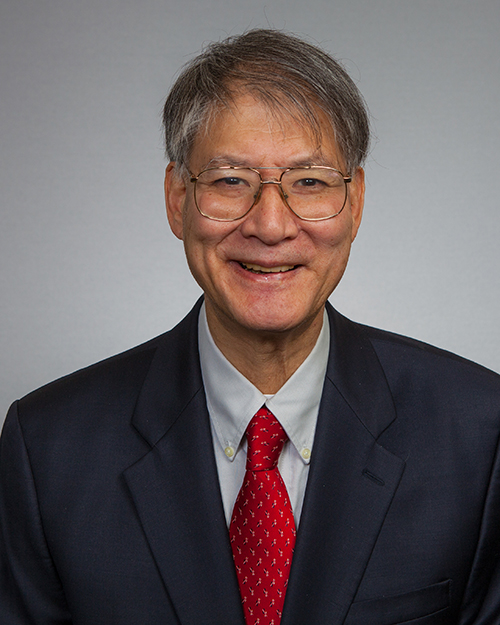
William K.S. Wang
Emeritus Professor
University of California College of Law, San Francisco
Some people mistakenly believe that the narrowly decided Supreme Court case, Citizens United v. Federal Election Commission, 568 U.S. 310 (2010), allowed unlimited campaign contributions. Actually, the Supreme Court has never held that the First Amendment precludes limits on campaign contributions to individual candidates and parties.
Citizens United gives First Amendment protection to corporate (and labor union) political spending independent of the candidate's campaign. Many Americans think that Citizens United should be overturned.
In fact, the Supreme Court's far more important campaign finance decision came down more than 40 years ago. In Buckley v. Valeo, 424 U.S. 1 (1976), the court ruled that the First Amendment forbids restrictions on independent campaign spending by an individual or group. Only one justice dissented from this view. Another justice did not participate, and the remaining seven, liberal and conservative alike, endorsed this holding.
In Citizens United, no justice questioned Buckley. Indeed, the dissent in Citizens United argued that the availability of political action committees undermined the need to give corporations the right to make independent expenditures directly. In short, were Citizens United overruled, Buckley would remain.
What prompted Buckley 's holding shielding independent expenditures?
First, the Supreme Court recognized that spending is integral to political speech. Publication through flyers, advertisements, mailings, pamphlets, periodicals, books, videos, films, etc. all costs money. If the federal, state or local government prohibits spending that money (or more than a certain amount), the government restricts speech.
Second, Buckley said that, if an individual or group supports or opposes a candidate but spends genuinely independently of the candidate's campaign, the danger of corruption is less.
Third, the seven justices stated: "It is argued ... that the ... governmental interest in equalizing the relative ability of individuals and groups to influence the outcome of elections serves to justify the limitation on express advocacy of the election or defeat of candidates .... [T]he concept that government may restrict the speech of some elements of our society in order to enhance the relative voice of others is wholly foreign to the First Amendment." In one cited decision, Mills v. Alabama, 384 U.S. 214 (1966), the Supreme Court held that the First Amendment voids a state statute that criminalized election-day newspaper editorials that urged people to vote a certain way.
To illustrate Buckley, I shall alter the facts of a 1986 Supreme Court decision, Federal Election Commission v. Massachusetts Citizens for Life, Inc., 479 U.S. 238. Assume that the defendant was an association (rather than a corporation) that had widely distributed a "newsletter" urging readers to vote "pro-life" in an upcoming election and listing about 400 candidates as either for or against the organization's views (with 13 photographs of certain "pro-life" candidates). Buckley would shield the association and its members from penalties regardless of the dollar amount spent.
One of the seven justices in Buckley who protected independent expenditures was Justice Thurgood Marshall, a liberal with an earlier long affiliation with the NAACP. Maybe, he had in mind something like the following hypothetical situation:
To prevent the "purchase" of an election, a small town has an ordinance forbidding the spending of more than $X to support or oppose a candidate for elective office. During arrests, the sheriff kills some unarmed African-Americans. An African-American candidate runs for election against the incumbent sheriff.
The day before the election, independently of the campaign, a leader in the African-American community organizes a meeting to call for the African-American candidate's victory. The community leader spends more than $X of her own money for posters and/or flyers publicizing the meeting and condemning the sheriff's killings.
The incumbent wins the election and arrests the community leader.
Despite the town's concern about the wealthy having a disproportionate influence, the First Amendment must shield at least some independent spending by the community leader. What is the protected dollar amount relating to the election of this level official in this particular community? Justice Marshall might have decided to avoid the daunting task of determining how much independent spending to protect for each specific office in every political unit in the United States. Instead, allow unlimited independent spending, and let the marketplace of ideas flourish.
At least until relatively recently, the constitutionality of campaign finance restrictions was not an issue of liberal against conservative. The question was one of freedom of expression and association versus decreasing the danger of corruption in politics. Over 40 years ago, the Supreme Court weighed these two competing values. Because of concern about unintended consequences, seven justices, both liberal and conservative, voided restrictions on genuinely independent campaign spending by individuals or groups.
What about Citizens United? In the small town hypothetical above, suppose the state, county or town has a law criminalizing a corporation's spending any amount of money (even independently of the candidate) to support or oppose the election of any candidate for elected office.
On the eve of the election for sheriff, an incorporated local newspaper publishes an editorial decrying the brutality of the sheriff and urging a vote against him or her.
Alternatively, assume that during the election campaign, CBS or CNN produces and broadcasts a documentary about the sheriff's brutality.
Suppose, during the campaign, some local residents form a corporation to produce and disseminate a documentary about the sheriff's brutality. This last example somewhat resembles the facts of Citizens United.
Perhaps, the First Amendment protects only certain types of corporations: educational, research, think-tank, religious, issue-advocacy, political-advocacy, media, etc. Among the many problems with this approach is that, with today's communications technology, the category "media corporation" encompasses virtually any company that produces video or print matter for distribution through the internet or other means.
After a series of inconsistent Supreme Court decisions on which types of corporations receive First Amendment protection for independent political speech, Citizens United decided to protect such speech by all corporations (and labor unions).
Professor Wang would like to thank the following law professors for their valuable comments: Larry Alexander, Joel Gora, Joe Grodin, Zach Price, Nadine Strossen, and Jim Weinstein.
Submit your own column for publication to Diana Bosetti
For reprint rights or to order a copy of your photo:
Email
Jeremy_Ellis@dailyjournal.com
for prices.
Direct dial: 213-229-5424
Send a letter to the editor:
Email: letters@dailyjournal.com