

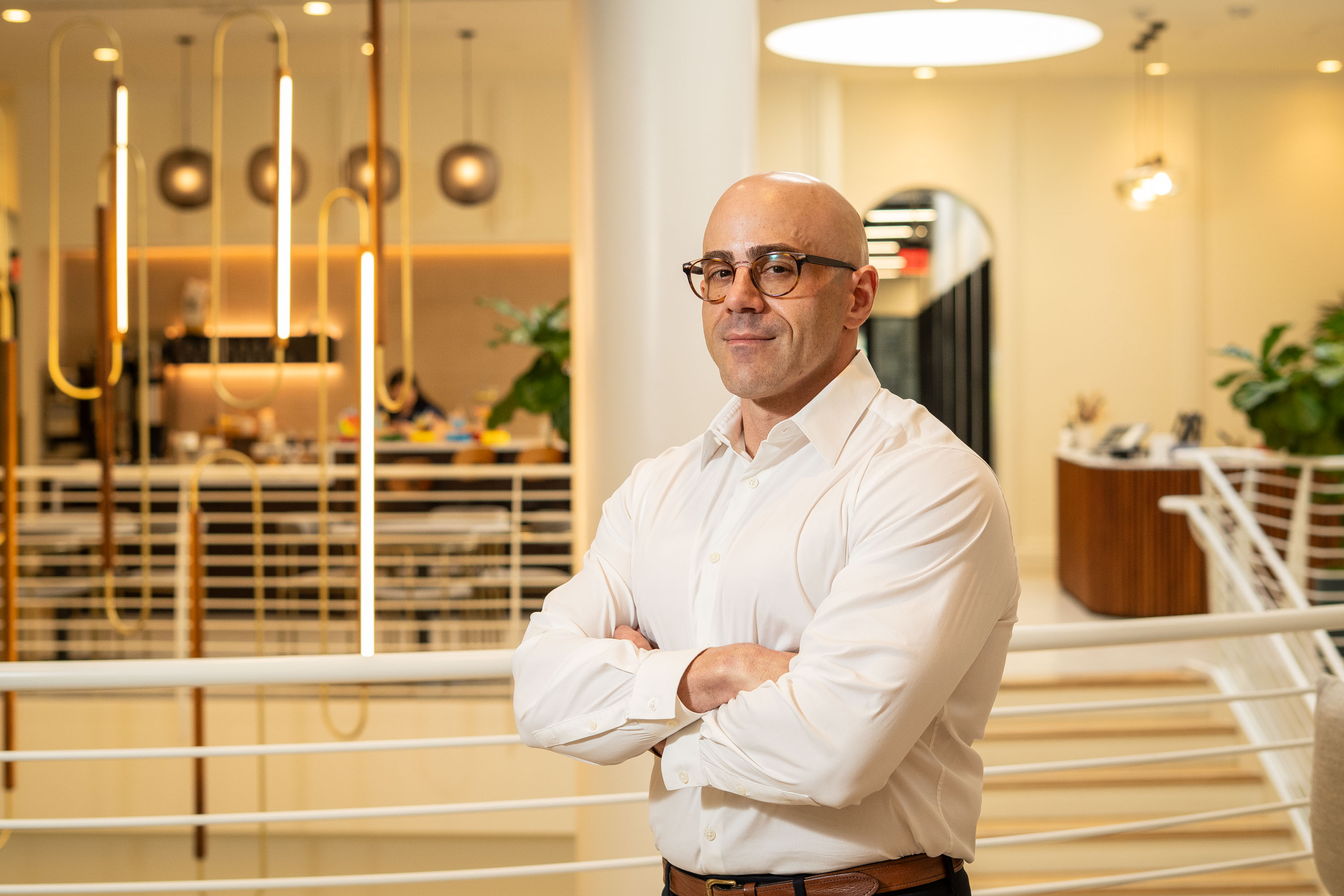
Joshua White has no interest in becoming the face of his law firm.
The founder of Laurel Employment Law would rather build the platform than stand in the spotlight.
"I'd gladly be the most anonymous person in the city of Los Angeles," White said, before quickly acknowledging the irony of him doing media interviews like the one for this article. "I'd rather people think, 'Laurel is an incredible place to practice law,' than know who I am."
That philosophy helps explain the meteoric rise of Laurel Employment Law, a plaintiffs employment firm White launched in March 2024. In less than two years, the firm has grown to more than 30 attorneys and roughly 150 employees, all working remotely while representing California employees in discrimination, harassment, retaliation, wage-and-hour, and wrongful termination cases.
White doesn't describe himself as a managing partner or even primarily as a lawyer. On LinkedIn, his title is "Founder, Builder, CEO, Attorney."
"My job is to build a platform and an architecture for the success of the people who work here," he said. "I spend my time thinking about systems, processes, tools and human beings so they can become the best lawyers they can be."
That business-first mindset is unusual in the legal industry, where firm leaders often identify first as practicing attorneys. White said he sees his role in reverse.
Before launching Laurel, White spent more than a decade as general counsel and head of strategy for a rapidly growing product manufacturing company, helping transform it from roughly $20 million in annual revenue into a $400 million business. Earlier, after graduating from UCLA School of Law, he practiced commercial litigation at Enenstein Pham Glass Gutenplan & Bolling, before leaving private practice for the corporate world.
The experience convinced him that many law firms excel at practicing law but neglect the business of running one.
"I'd been a consumer of legal services for over a decade," he said. "I was always underwhelmed as a customer. They seemed technology-averse, not particularly well run, and people didn't seem especially happy practicing there."
Those observations shaped Laurel from its inception. White built the firm as a remote-first organization with an AI-driven technology platform and an emphasis on culture as a competitive advantage. Every attorney litigates California employment cases, and the firm does not refer trial work to outside counsel. He recalled a colleague recently calling him from Colombia, where she was working remotely. "I'm like, 'Sweet. Make sure you make your [remote] hearing tomorrow.'"
"We want to earn a reputation that we're ready, willing and excited to take cases to trial," he said.
Technology is central to that strategy. Laurel was designed around artificial intelligence from its earliest days and continues to invest heavily in emerging AI tools. White said he believes firms must continually rebuild their technology rather than become attached to any one platform.
"We're looking for competitive advantages in every area of the business," he said.
Just as important is the firm's culture.
White rejects the notion that practicing law must be joyless. He said he encourages a workplace that is highly competitive but also optimistic and lighthearted.
"I genuinely believe it's entirely possible for it to be fun to practice law," he said. "Take the work very seriously, but don't take yourself too seriously."
That philosophy extends to hiring. White says Laurel looks first for attitude, curiosity, and work ethic, believing legal skills can be developed more easily than mindset.
He also credits his years as an in-house lawyer with shaping how Laurel approaches employment disputes. Rather than focusing solely on compliance, he said he believes successful employers treat employees with respect and empathy.
"Ultimately, what creates problems is feelings," White said. "People get angry because they feel disrespected and mistreated. If you deal with people well on a human level, you mitigate a lot of risk."
Even as Laurel continues its rapid expansion, White insists he spends little time worrying about competitors. His focus remains on building an enduring institution rather than a personality-driven practice.
His wife named the firm after the laurel wreath, a symbol of victory in ancient Greece.
"I've never been enamored with the branding of law firms named after a partner," he said. "It strikes me as wildly uncreative. There's a reason they don't call Nike Phil Knight's shoe company."
He points to firms like Quinn Emanuel Urquhart & Sullivan LLP as examples of brands that became larger than any individual lawyer.
"The brand needs to be bigger than me," he said. "If, years from now, people think Laurel changed the way employment law firms operate, and I'm somewhere in the background with my wife and kid, I'll be thrilled."