

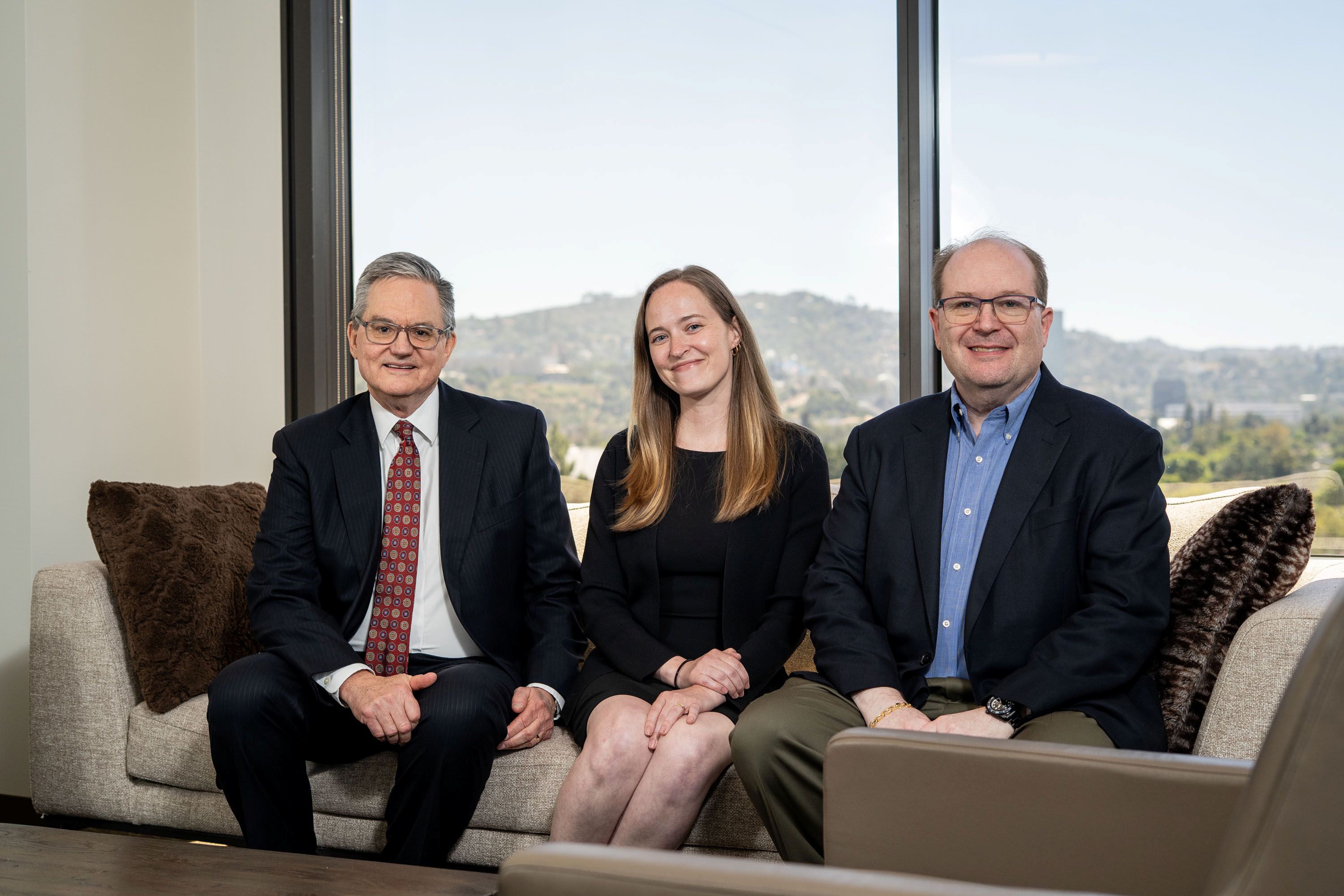
For more than 50 years, Horvitz & Levy built its reputation handling appeals. Today, however, one of the firm's fastest-growing businesses begins long before a case reaches a reviewing court.
Driven by a surge in so-called nuclear verdicts--jury awards reaching into the hundreds of millions of dollars--corporate defendants, insurers and trial lawyers are increasingly turning to appellate specialists before and during trial rather than after a loss. Horvitz & Levy has emerged as one of the leading beneficiaries of that shift, expanding a trial consulting practice that embeds appellate lawyers alongside trial teams to help shape legal strategy, preserve issues for appeal and resolve complex legal questions as they arise.
"We're at a point where we've seen tremendous growth in both our appellate practice and our related trial consulting practice," partner David M. Axelrad said. "Clients increasingly understand that appellate lawyers can add value before and during trial, not just after a verdict."
The trend reflects a broader transformation in high-stakes litigation. As verdicts have grown larger and more unpredictable, appellate lawyers have become strategic advisers throughout the life of a case rather than specialists called in after judgment.
"I've never seen anything like it," said Jeremy B. Rosen, who heads the firm's San Francisco office. "Five years ago, a verdict in the tens of millions would have been shocking. Now clients are facing nine-figure verdicts with increasing frequency."
Founded by appellate pioneer Ellis Horvitz, the firm helped establish the modern appellate boutique. Today, with more than 40 lawyers in Burbank and San Francisco, Horvitz & Levy remains one of the nation's largest firms devoted solely to appeals. Firm leaders say its recent growth has been driven as much by trial consulting as by traditional appellate work.
Twenty years ago, appellate lawyers were often called only after a verdict. Today, Horvitz & Levy attorneys routinely become involved months or even years before trial, working with trial teams on dispositive motions, motions in limine, jury instructions, verdict forms and other legal issues that can shape both the outcome at trial and the prospects for a successful appeal.
"It's become a significant part of our practice," partner John A. Taylor Jr. said. "Clients recognize that with the size of verdicts we're seeing today, they need appellate lawyers helping shape the record before a case ever reaches a court of appeal."
That collaborative model is one reason prominent trial lawyers continue to bring Horvitz & Levy into high-stakes cases. Marty Singer, whose firm, Singer Weinsten Wolf & Jonelis LLP has partnered with Horvitz & Levy on several appeals, said the relationship works because the appellate lawyers integrate with trial counsel rather than attempting to take over a case.
"They're excellent," Singer said, referring to Rosen and his team. "They work together with our firm--we're the trial lawyers. Jeremy doesn't have a big ego. He's really smart, has great analysis and has done very well on the cases we've worked on together."
Singer said one of the firm's greatest strengths is its willingness to tell clients when an appeal is unlikely to succeed. "He'll convince you not to appeal and tell you it's a waste of money and a waste of time," Singer said. "He's very pragmatic. He'll tell you what your chances are, focus on the strongest issues and not just tell you to appeal because that's the work."
The firm's model resembles a rapid-response legal resource during trial. Attorneys in the courtroom can relay legal questions to lawyers in the office, who conduct research and provide authorities within hours--or sometimes minutes. Decades of institutional appellate experience and research resources allow the firm to respond quickly to issues that arise in fast-moving trials.
The firm's reputation extends beyond its clients. Dennis M. Perluss, the retired presiding justice of the California 2nd District Court of Appeal, Division Seven, said Horvitz & Levy's work stood out during his years on the bench.
"We knew that when we had a brief from Horvitz & Levy, the record citations were reliable, the arguments were always powerful--even when we didn't ultimately agree with them--and the advocacy, both in writing and orally, was superb," Perluss said. "It was uniformly top quality. It was always a pleasure."
Tricia Bigelow, retired presiding justice of the 2nd District, Division Eight, said, "They were fabulous lawyers, very articulate, and it was always nice to have them in my courtroom."
Retired Chief Justice of California Tani Cantil-Sakauye said, "I think their appellate work is top notch," before adding praise for David Ettinger, of counsel at the firm, who writes the must-read blog "At the Lectern" about the California Supreme Court.
"At the Lectern is so on point at times that I joked he must have had a listening device hidden at the court," Cantil-Sakauye said.
Growth at the firm has come geographically. The firm's San Francisco office, opened in 2019, has expanded to 13 attorneys, placing lawyers closer to the California Supreme Court and 9th U.S. Circuit Court of Appeals while broadening the firm's recruiting reach.
"There are outstanding lawyers who want to be in Northern California for family or professional reasons," Rosen said. "Having a San Francisco office significantly expands the talent pool available to us."
Taylor said the firm's reputation has made it increasingly attractive to lawyers with federal appellate clerkships, major law firm experience and strong academic credentials.
Much of Horvitz & Levy's identity centers on a collaborative structure that differs from the traditional large-firm model. Clients belong to the firm rather than individual partners, cases are assigned centrally based on experience and workload, and attorneys routinely work across offices and seniority levels.
"We don't have attorneys guarding clients as their personal property," Axelrad said. "The client belongs to the firm."
That philosophy is reinforced by the firm's lockstep compensation system, which does not reward attorneys for originating clients. Several lawyers said the absence of origination credit encourages collaboration and allows matters to be staffed based on experience rather than business considerations.
Perhaps no aspect of the firm's culture receives more emphasis than attorney development. Associates receive substantial responsibility early in their careers, often serving as the primary attorney on appeals while working closely with experienced mentors.
"We think the person who wrote the brief is the best person to do the argument," Taylor said.
Rebecca G. Powell, who joined the firm after clerking on the 9th U.S. Circuit Court of Appeals and the Utah Supreme Court, said associates are expected to communicate directly with clients, develop legal strategy and argue appeals far earlier than at many large firms.
"As soon as associates join, they're the lead attorney on their cases," Powell said.
Each matter typically includes both a lead attorney and a supervising attorney, while lawyers across the firm regularly provide feedback on briefs, strategy and oral arguments. Attorneys also participate in internal appellate training programs and substantive legal education designed to develop specialized appellate skills.
That emphasis on collaboration and early responsibility has contributed to unusually low turnover, firm leaders said. Taylor has spent more than three decades at Horvitz & Levy, while Rosen is approaching 25 years.
As appellate lawyers continue to move closer to the front lines of high-stakes litigation, firm leaders said they expect demand for trial consulting to continue growing. For Horvitz & Levy, the same appellate expertise that built its reputation over the past half-century has become increasingly valuable long before an appeal is ever filed.
"The message has gotten through that you need your appellate counsel available before and during trial," Axelrad said.