

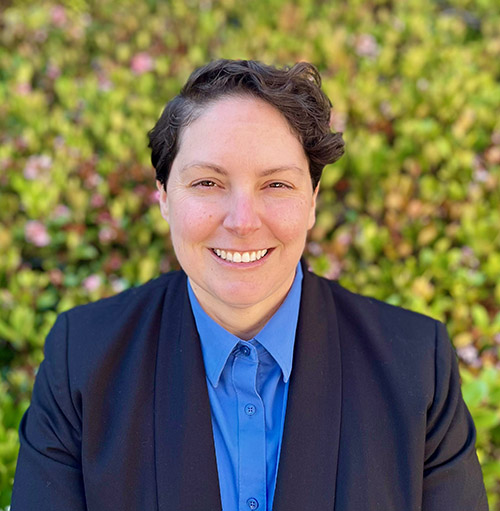
Shelly Caterino
Shelly Caterino represents parents in juvenile dependency proceedings and has extensive experience in specialty courtrooms, including DREAM Court. Beyond litigation, she has advocated for policy reforms affecting DREAM Court and the county's dependency drug court. She serves on local and statewide committees, including the Judicial Council's Advisory Committee on Providing Access and Fairness. Caterino began her legal career representing clients in consumer protection, mass tort and class action matters.
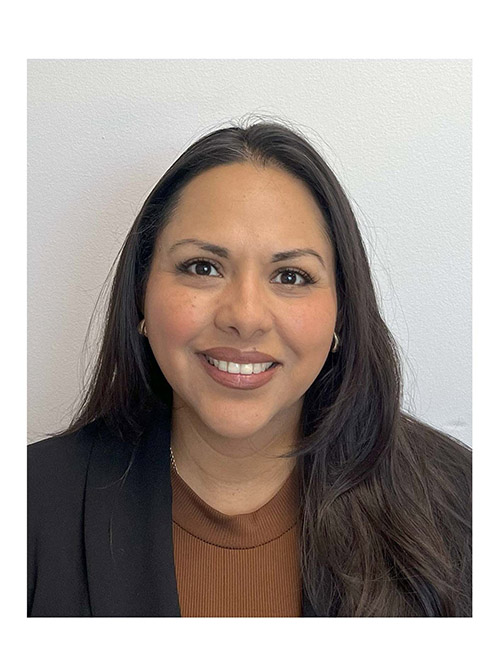
Maria Blanco
Maria Blanco serves as deputy county counsel for Los Angeles County, representing the Department of Children and Family Services in DREAM Court. Her practice incorporates trauma-informed approaches aimed at protecting the rights of vulnerable youth involved in commercial sexual exploitation cases. Previously, she represented parents in child welfare matters, including specialized work involving the Indian Child Welfare Act, ensuring compliance with tribal law and protecting family integrity.
California has made great strides in addressing commercial sexual exploitation of children (CSEC), not only implementing programs to support children who have been exploited but changing how we think and talk about this complex issue.
In 2014, with SB 855, the California legislature changed how the child welfare system handles CSEC. The law amended the Welfare and Institutions Code to allow the court to take jurisdiction when parents are unable to protect their children from exploitation and created the CSEC Program, which funded counties to develop multidisciplinary responses.
Even then, an exploited child could be prosecuted for prostitution--treated as a criminal, rather than a victim. In 2016, with SB 1322, the California legislature decriminalized prostitution for minors and mandated that authorities instead refer exploited children to child welfare agencies. That same year, Los Angeles County launched DREAM Court, a specialty courtroom at Children's Court in Monterey Park that serves youth who have experienced exploitation.
A collaborative courtroom with a shared goal
Children who are exploited experience not only serious psychological trauma but are at risk for death or serious injury due to the abusive and inherently dangerous circumstances in which exploitation occurs. Media coverage might capture moments in these children's stories--the prosecution of an exploiter or a heroic story of a child's recovery. But their lives begin long before reporters arrive and they need support long after the media's interest fades.
That is where DREAM Court steps in. Every day, social workers, court staff, attorneys and the judicial officer help children and their families find safety and healing. This work is possible due to a concerted effort between the court and several agencies. Social workers with the Department of Children and Family Services (DCFS) work directly with children and are represented in court by County Counsel. The Children's Law Center of California (CLC) represents the youth and Los Angeles Dependency Lawyers (LADL) represents parents. While these professionals represent different parties, who may at times have opposing interests, they work together toward the overarching goal of eliminating child exploitation.
DREAM Court is unique in the juvenile dependency system because these children can be subject to court supervision even if their parent is not at fault. Court supervision over children typically requires abuse or neglect. However, Section 300(b)(4) of the Welfare & Institutions Code permits the court to intervene when a parent was unable to protect their child, even if they have done all they could. Altering the child welfare lens to avoid blame allows for a more supportive space for families to receive services to help their children.
DREAM Court also takes a uniquely trauma-informed approach, where the judge and attorneys strive to create an environment that feels safe and welcoming. All the professionals who work in DREAM Court receive specialized training, such as how to avoid words that might bring up past trauma and the importance of using a calm tone of voice. Snacks and coloring books are available, and, on some days, you might even see a specially trained dog to provide comfort to youth during the hearing.
When the courtroom is less intimidating, children and parents are more likely to fully participate in the process. A child or parent who feels safe in court might also be more willing to reach out to their attorney or social worker during times of crisis, providing a much-needed lifeline.
A holistic approach
Each agency has a unique role in DREAM Court. Specially trained social workers in DCFS's DREAM unit are on the front lines focusing on immediate child safety, while directly linking families with services. DCFS is represented by County Counsel, who advise the court of the social worker's recommendations and collaborate on creative solutions.
Attorneys with the CLC work with youth in court to craft unique programs that meet their specific needs. Counsel can request referrals to traditional and non-traditional therapy or can connect youth with pro-social activities like dance lessons, art classes or gym memberships.
LADL attorneys advocate for parents' legal rights while also helping them understand the programs available to them. The Parent Empowerment Program, for example, provides education to give parents a better understanding of their children's experience and the tools to help them, in addition to a support group so parents don't feel alone.
A difficult journey
While the goal is always to prevent a child from experiencing harm, a child's journey to safety is not always direct. Due to the complexities of exploiters' grooming and control tactics, in addition to overlapping issues like drug addiction, a child may experience exploitation while participating in services or be exploited again after a period of safety. In DREAM Court, attorneys recognize that they must celebrate a child's successes, support families through challenging times, and provide ongoing support as their physical and psychological scars heal.
In the last ten years, DREAM Court has served over one thousand children and families. The success of DREAM Court could not be possible without the efforts from all the agencies coming together for a shared goal: to end child trafficking. To recognize these efforts, the Los Angeles County Board of Supervisors is honoring DREAM Court at its July 28, 2026 meeting.
Looking forward, DREAM Court will continue to grow and evolve to meet the needs of the children and families. Hopefully, one day, it will no longer be needed.