


Technology
Nov. 25, 2026
The SB 574 disclosure requirement: This product may contain traces of AI
What if AI found the cases you cited or added a sentence and a comma to your brief? Let's look at when you need to tell the court.


Tani G. Cantil Sakauye Courthouse
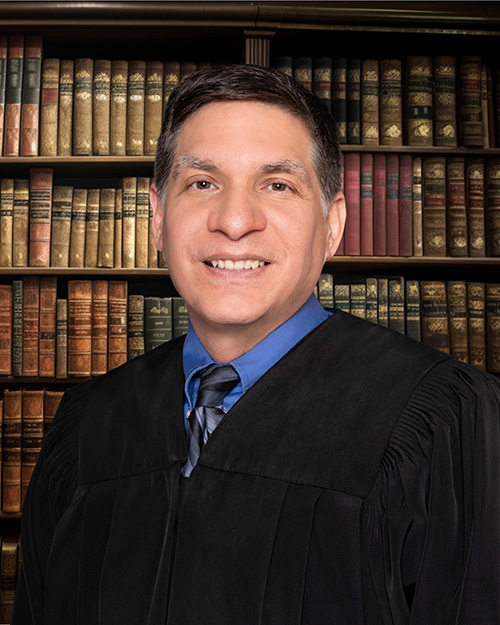
George A. Acero
Judge
Trial; Fee Waivers, Hrgs, Minor's Comp
UC Berkeley SOL; Berkeley CA

Senate Bill 574 is effective Jan. 1, 2027. Among the provisions in this enactment is Business and Professions Code 6068.1(a)(3)(C). This subsection provides that an attorney "who uses generative artificial intelligence to assist in the practice of law" shall:
"Disclose the use of generative artificial intelligence to the court for all documents submitted to the court and consider whether to disclose the use of generative artificial intelligence if it is used to create content provided to the public."
Many people have told me they have questions about the scope of this law. Let's delve into a philosophical analysis and try to answer some questions about its scope.
First, attorneys must only disclose the use of "generative artificial intelligence." What is generative AI? Business and Professions Code 6068.1(b)(1) defines "[g]enerative artificial intelligence" as "an artificial intelligence system that can generate derived synthetic content, including text, images, video and audio that emulates the structure and characteristics of the system's training data." I Googled "non-generative artificial intelligence" and was told: "Non‑generative AI focuses on decision-making, not content creation. It learns boundaries and patterns in data to produce specific outputs such as labels, predictions, or scores. Unlike generative AI, it does not produce new text, images, audio, or code."
Now, let's go through a few scenarios of the use of AI in your litigation practice....
If you throw the moving papers of a motion in some AI program and ask it to write an opposing brief for you, the provision clearly applies. AI "generated" the whole opposition for you. You need to disclose that. That was an easy one!
What if you ask AI to do a research memo and then you cut and paste one sentence from the memo? Again, the memo was generated by AI. Then, you put that "synthetic content" in your brief. You need to disclose.
What if you write a brief and run it through a generative AI program and ask it to make edits? AI still generated content for you in that scenario too. Even if generative AI just added a couple of sentences and a comma, it still generated some "synthetic content" that you used in the brief--disclose!
How about if you ask AI to do a research memo and you use the case law it cited to guide you in your brief? No cutting and pasting was involved. Does it matter if you double-checked whether these cases actually exist? Since AI wrote a memo for you, you clearly used generative AI. The question then is whether this use of generative artificial intelligence was "for ... documents submitted to the court." I would say yes. The generative AI content contributed to the document you submitted to the court. In other words, the whole purpose of you using generative AI was to assist you in making this brief better. I think that triggers the requirement.
What if you used Westlaw or Lexis to do some case law research? It does not appear, from what I could tell, that doing "basic" case law searches on these platforms uses generative AI. I contacted Westlaw, and the representative indicated that any Westlaw feature that uses generative AI is marked as an AI-powered search or related symbol. No disclosure is required for doing basic case law searches (at least on the current versions of these programs). If you use Westlaw CoCounsel or Lexis Protégé, then you are using the AI-powered tools from these companies. Using those tools creates a written summary for you, so there is generative content and, therefore, a duty to disclose.
How about if you wrote the document "all by myself" like Celine Dion, with no use of generative AI memos, with no use of AI-assisted legal research, but used spell check right at the end? I asked Google's AI-powered Gemini and it responded: "Yes, modern spell check and writing features in Microsoft Word use AI and machine learning...." Then, I went to the source and asked Microsoft Copilot. I got an "it depends" answer. It stated, in pertinent part: "Traditional spell checking relies on a simple rule-based dictionary and string-matching loops ... This basic function has existed since the 1990s and does not require AI." You are safe using spell check!! Grammar check might be a different story: "Grammar checking uses more advanced natural language processing to understand sentence structure and suggest corrections. This is closer to AI, though much of it predates modern large language models." I take that as a "maybe." Then Copilot added: "Microsoft Editor (the proofing engine in current Microsoft 365 versions of Word) uses AI and machine learning to provide grammar, clarity, conciseness, inclusiveness and style suggestions." That last one is a "yes."
Now that we have some grasp of when to disclose, what type of disclosure do we need to make if one is required? Again, we need to look at Business and Professions Code 6068.1(a)(3)(C). That provision simply states the attorney must "disclose" the use of generative AI. No specificity is provided. This provision does not seem to require an attorney to identify what type of AI was used or how much content was AI-generated. It seems to be, in true computer form, a binary "1" or "0." If AI was used, then print("yes"). If not, end the function.
It appears that a simple disclaimer, even in a footnote at the end of the document, is all that is required: "Generative artificial intelligence was used in the drafting/preparation/making of this document." If you want to give the court something more reassuring, you can certify that you checked all citations for accuracy. That does not appear to be required under this law, but as judges, we would much appreciate the gesture.
In the end, the requirement is like a warning on a food label: "This product contains AI." It seems more and more practitioners are using AI. Maybe by the end of 2027, this may just be standard in most filings and be of watered-down significance. In this regard, keep in mind that the duty of candor under Rule of Professional Conduct 3.3(a)(1) does not permit parties to automatically put the disclaimer on all documents "just in case" or to make an indefinite, vague statement like "This document may contain traces of generative artificial intelligence."
This provision does not ask much of counsel. Just a simple disclaimer. It does not give the court much useful information. However, it does show the Legislature gave the issue some thought and became the first Legislature in the country to take action. It is a step in the right direction. I end with my own disclaimer: This article is just the opinion of one judge; feel free to advocate for any reasonable interpretation of this law.
Submit your own column for publication to Diana Bosetti
For reprint rights or to order a copy of your photo:
Email
Jeremy_Ellis@dailyjournal.com
for prices.
Direct dial: 213-229-5424
Send a letter to the editor:
Email: letters@dailyjournal.com