


Judges and Judiciary
Nov. 24, 2026
Court funding and the limits of filing fees
The Superior Court of Los Angeles County faces a widening gap between funding and workload, but it cannot raise filing fees or retain their proceeds. Meaningful relief must come from the state.


Stanley Mosk Courthouse
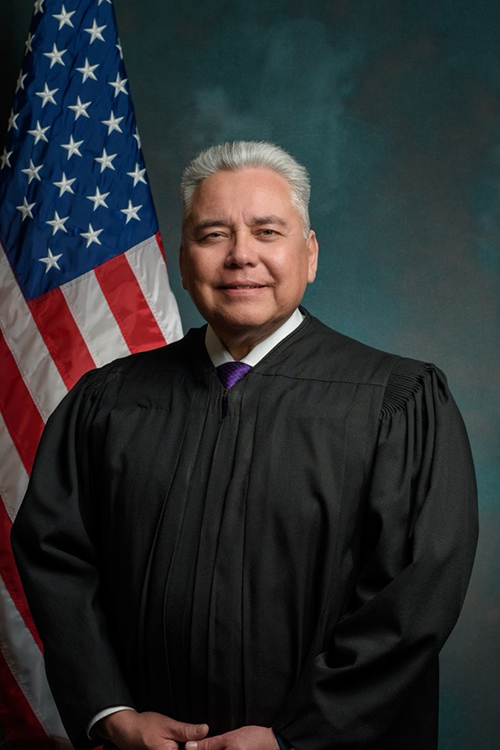
Sergio C. Tapia II
Presiding Judge
University of Iowa College of Law, 1996
The courts are where the promises of our Constitution become real for ordinary people. A tenant facing eviction, a parent seeking custody, a worker owed wages, a person accused of a crime, a victim seeking justice-- each comes to the courthouse trusting that the door will be open and that someone will be there to hear them. That trust is the foundation of the rule of law. It is also, increasingly, underfunded.
As the Superior Court of Los Angeles County confronts a significant budget shortfall, some have offered what sounds like a simple fix: raise filing fees and let court users close part of the gap. The record on this point should be clear. Our Court cannot do that. State law, not the Court, sets filing fees and decides where each dollar goes. We cannot raise a fee, and we could not keep the money if we did.
A crisis years in the making
Every year, the cost of running a court rises: vendor costs, county-provided services, custodial and other critical operations, and the salary increases we negotiated with our employees. This fiscal year, those increases exceeded the inflation funding in the state budget by approximately $9.1 million. We began the year with a structural deficit.
This is not a one-year problem. Since FY 2020-21, the governor and Legislature have consistently funded less than the inflation amounts they themselves calculated for the trial courts. Year after year, the shortfalls have compounded. Measured against our actual cost increases, the Court now stands roughly 13.1% behind.
The deeper gap lies in what it takes to do the work itself. The Judicial Council of California calculates what each court needs to handle its caseload. For the 1.3 million filings that come to our Court each year, we are $233.7 million short. We are funded at 76.77% of our need, the lowest level since 2021. In raw dollars, it is the largest shortage since the current Workload-Based Allocation and Funding Methodology was adopted in 2013. That sum is roughly what 1,900 staff positions cost in a year. One more number tells the story. We have 582 courtrooms, but we are allocated staff for only 511. To keep the other 71 open, we must take staff from other parts of the Court.
What happens to filing fees
Higher filing fees would not close these gaps, because a fee does not belong to the court that collects it. When a litigant pays a civil filing fee in Los Angeles, state law divides it among several recipients. Portions go to two local recipients: LA Law Library and the Los Angeles County Dispute Resolution Program. Other portions support statewide purposes, such as the State Court Facilities Construction Fund and the Equal Access Fund for legal aid. The remainder goes to the statewide Trial Court Trust Fund.
State law splits fines in criminal and traffic cases in a similar way. In FY 2024-25, the Court distributed nearly as much revenue as it took in, as explained in this fact sheet.
The Court has little authority to redirect any of these dollars to its own operations. This is, in part, a deliberate and principled choice by the Legislature. Courts should generally be funded by the General Fund, not on the backs of the people who come before them. Justice is a public good. It should not carry an admission price.
Who decides what the court receives
Our funding comes directly from the state. Each year, the Legislature and the governor set the budget for California's trial courts, and the Judicial Council divides that budget among the 58 trial courts. That money comes mainly from two sources: the Trial Court Trust Fund and the General Fund. Some of the fees and fines that courts collect do flow into the Trial Court Trust Fund. However, that revenue has been shrinking, and General Fund dollars make up the difference.
In practice, the General Fund support from the Legislature is the primary factor in how much the trial courts receive. Even the fee revenue that reaches the Trial Court Trust Fund enters a statewide pool. The Judicial Council allocates that pool largely by workload, not by which court collected the money. Collecting more in Los Angeles would not raise our funding dollar for dollar.
What we can control
Because the state sets our funding, fee amounts and fee distributions, we must keep our focus on the costs within our control.
One way to do that is the Voluntary Separation Incentive Program we announced in September. Eligible employees who apply and are accepted by management receive a one-time $35,000 payment. We then eliminate the positions they leave, which reduces ongoing salary costs. The 2024 program produced approximately $4 million in ongoing budget reductions. We have also delayed or eliminated projects and are reviewing other expenditures.
We have taken these difficult steps to stabilize operations and to avoid layoffs or furloughs. They are not painless. Fewer staff mean longer wait times, slower call center service and delayed documents for the public. More significantly, we do not take the departure of our dedicated and valued family of employees lightly.
As presiding judge, I welcome the legal community's advocacy for adequate court funding. Access to justice is protected only when a court's funding matches its workload. The Legislature determines court funding levels, establishes filing fee amounts and directs how fee revenue is distributed. Meaningful solutions must therefore come from the Legislature and the governor.
We look forward to working with policymakers and stakeholders to ensure that California's courts have the resources to serve the public effectively and fairly. The promise of the courthouse door belongs to everyone. Keeping it is a responsibility we share.
Submit your own column for publication to Diana Bosetti
For reprint rights or to order a copy of your photo:
Email
Jeremy_Ellis@dailyjournal.com
for prices.
Direct dial: 213-229-5424
Send a letter to the editor:
Email: letters@dailyjournal.com