


Slideshow,
Community News
Nov. 17, 2026
Taiwanese American legal leaders confront threats to democracy amid Huang controversy
California Supreme Court Justice Goodwin Liu and Rep. Ted Lieu emphasized the importance of democratic institutions and the legal profession's responsibility to defend them, while San Francisco City Attorney David Chiu addressed the controversy surrounding Nvidia CEO Jensen Huang.


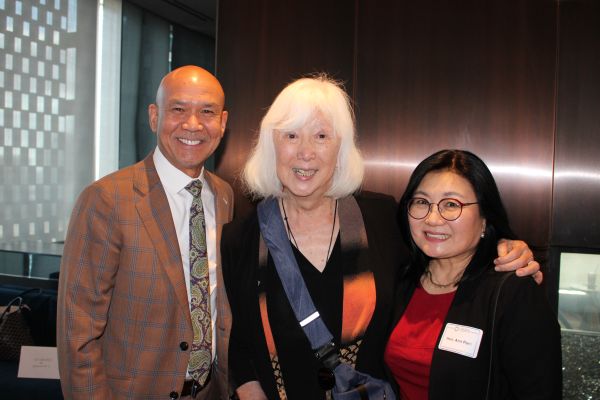
Los Angeles County Superior Court Assisting Presiding Judge Ricardo R. Ocampo, Mia F. Yamamoto of Law Office of Mia F. Yamamoto and Superior Court Judge Ann H. Park
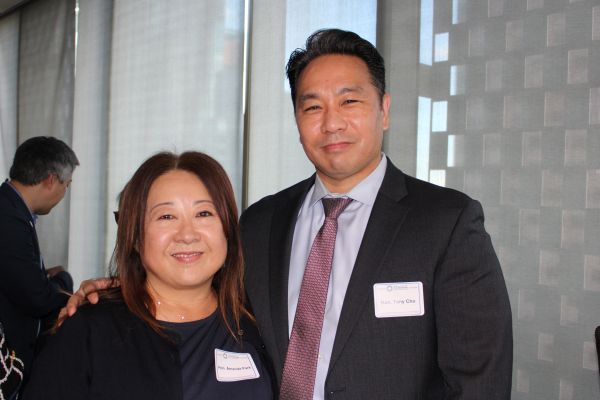
Los Angeles Superior Court Judges Amanda S. Park and Tony Cho
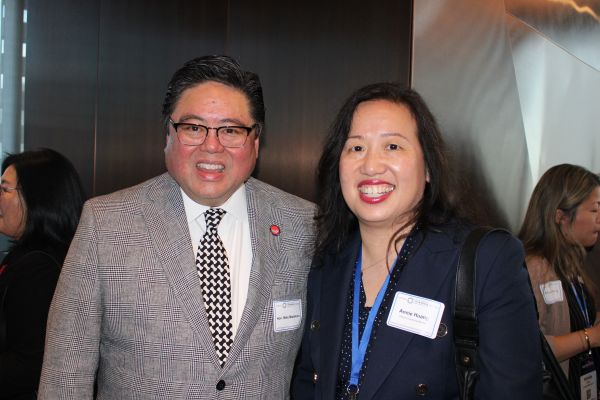
Superior Court Judge Mike H. Madokoro and Annie Huang of Robins Kaplan LLP (New York)
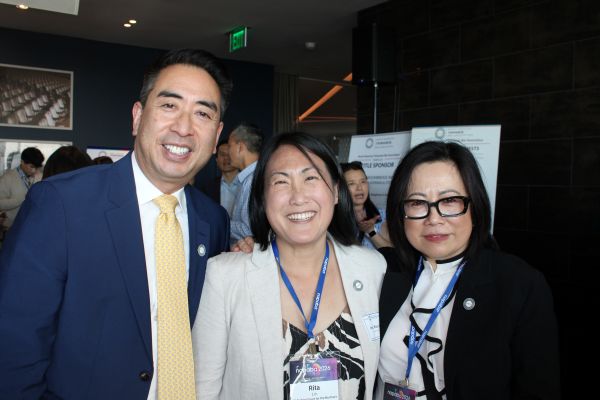
NATBA's Governing Board Member-at-Large David J. Tsai of K&L Gates LLP, U.S. District Court Judge Rita F. Lin and Commonwealth Court of Pennsylvania Judge Stella M. Tsai
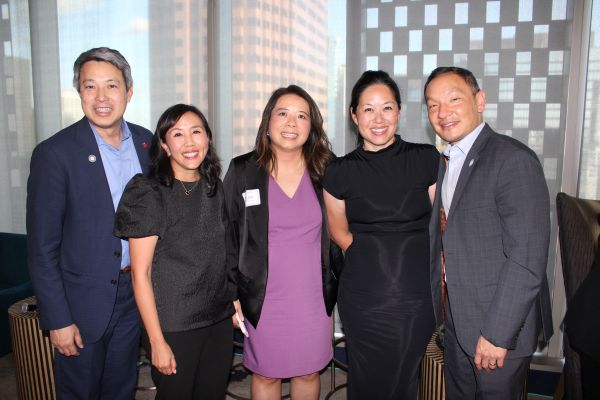
NATBA's Vice President of Government Affairs Enoch Chang, Board Chair and President Audrey Jean of Washington DC, Vice President of Communications and Regional Lead Laison Ann Chen, Board Member-At-Large Superior Court Judge Helen H. Yang and Vice President of Community Affairs Nicholas C. Huang
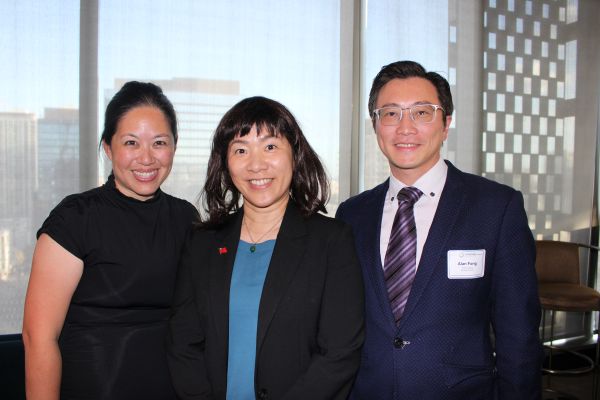
NATBA's Board Member-At-Large Superior Court Judge Helen H. Yang, Taiwan's Deputy Director General Sara Chen and Alan C. Fong, Political Division Director of Taipei Economic and Cultural Office (Los Angeles)
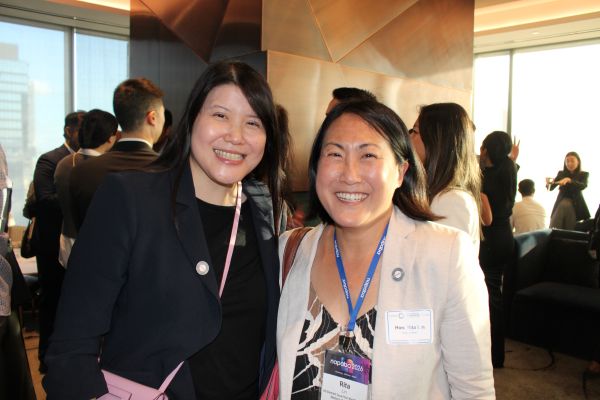
Catherine Y. Lui of Orrick Herrington & Sutcliffe LLP and U.S. District Court Judge Rita F. Lin
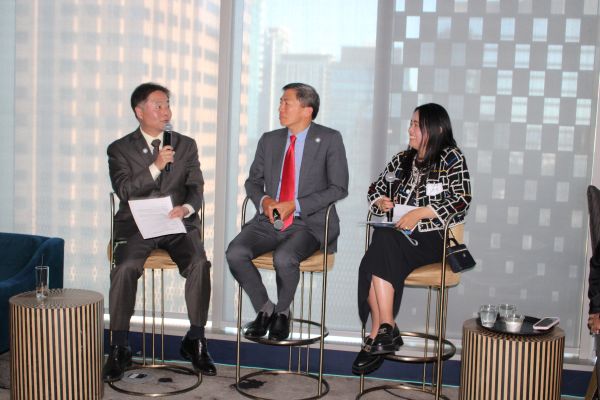
U.S. Rep. Ted Lieu (D-Torrance), California Supreme Court Justice Goodwin H. Liu, and NATBA's Board Member and moderator Jennifer H. Wu of Groombridge Wu Baughman & Stone LLP (New York)
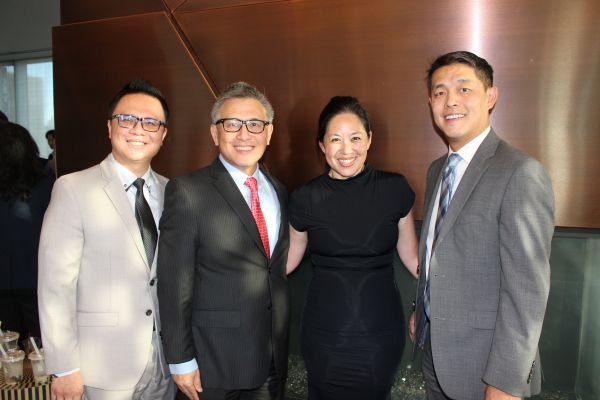
Santa Ana Immigration Court Judge Jonathan C. Huang, 33rd Treasurer of California John Chiang, Los Angeles Superior Court Judge Helen H. Yang and Riverside County Superior Court Judge Jerry Yang
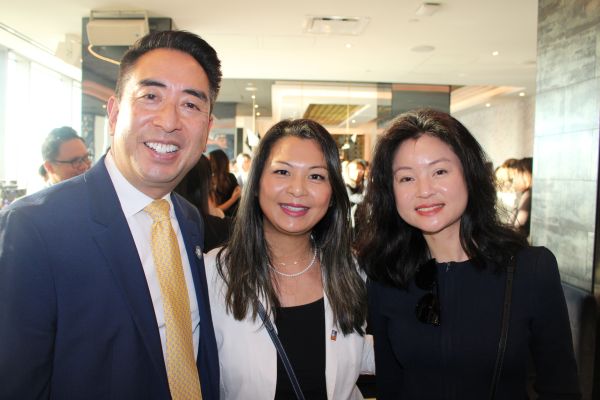
NATBA's Governing Board Member-at-Large David J. Tsai of K&L Gates LLP, Angel L. Garrett of Littler Mendelson PC and Joyce Chen of Chen & Foundry
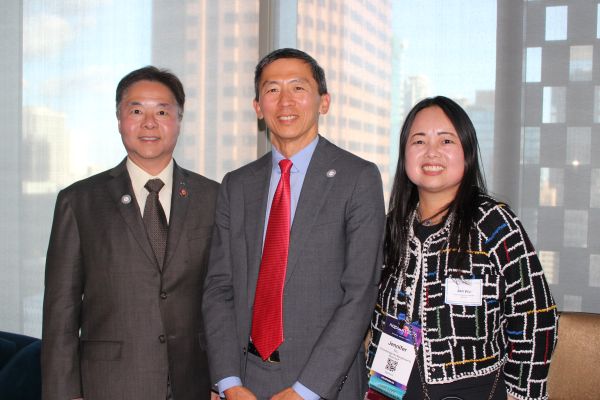
U.S. Rep. Ted Lieu (D-Torrance), California Supreme Court Justice Goodwin H. Liu, and NATBA's Board Member and moderator Jennifer H. Wu of Groombridge Wu Baughman & Stone LLP (New York)
LOS ANGELES -- Looming over serious conversations Saturday about the future of Taiwan and the legal professionals who defend its democratic institutions at the inaugural national reception of the North American Taiwanese Bar Association in Los Angeles was the fate of one man: ousted Nvidia Corp. CEO Jensen Huang.
Huang, an American citizen born on the island, co-founded the company in 1993 and has been a source of pride in Taiwan as Nvidia became a driving force behind the chips powering the artificial intelligence boom.
San Francisco City Attorney David Chiu referred to the week's news that Huang had stepped down as head of Nvidia after being accused of having an affair with a suspected Chinese spy and a subordinate, along with allegations that his company sold advanced chips to the People's Republic of China, as a moment of reflection for the community.
"The news of this week with Jensen Huang? We're all reflecting on it. We all have a feeling," Chiu said.
He drew laughter with a reference to Huang's signature wardrobe.
"Most of us don't think we can ever wear our black leather jackets," Chiu said.
But Chiu quickly shifted to a more serious point about the public perception of Asian American leadership and the importance of developing future generations of executives. He urged those attending not to allow the controversy surrounding one prominent business leader to define the community's accomplishments or aspirations.
"We need to make sure, because of this network, that he is not the last prominent Taiwanese American CEO," Chiu said.
He encouraged attorneys to pursue leadership roles in government, describing public service as another arena in which Taiwanese Americans have made significant advances but remain underrepresented.
Chiu described the reception that was held in downtown Los Angeles as the largest gathering of Taiwanese American legal professionals in the country's history. The event included California Supreme Court Justice Goodwin H. Liu and U.S. Rep. Ted Lieu, D-Torrance, who addressed the responsibilities of Taiwanese American lawyers at a time of heightened geopolitical tensions and political uncertainty.
The importance of those responsibilities was reinforced in a prerecorded message from Taiwan Vice President Hsiao Bi-khim, who framed the association's inaugural gathering as part of a broader relationship between two democracies confronting challenges to their institutions and values.
Drawing on her upbringing in Taiwan and the United States and her experience in public service, Hsiao emphasized that the relationship between the two countries depends on more than economic cooperation or strategic interests.
"Bridges and lasting partnerships rely on shared values, not just mutual interests," she said.
Hsiao described democracy, freedom, human rights and the rule of law as central to Taiwan's identity. The island's transition from authoritarian rule to democracy, she said, demonstrated both the importance of those freedoms and the need to safeguard them.
She also emphasized that international relationships are sustained by individuals and professional communities, not simply agreements between governments.
"Your work proves that international partnerships are driven by dedicated communities and not just formal diplomacy," Hsiao told the attorneys.
Her remarks provided a broader geopolitical context for the evening's discussions, which repeatedly returned to the role of lawyers and independent institutions in preserving democratic government.
Liu, speaking during a fireside conversation, drew a similar connection between Taiwan's democratic development and the institutions that sustain constitutional government.
"I think it's no accident that when we have discussion on Taiwan, in the same breath as Taiwan, is always uttered democracy, rule of law, freedom," Liu said. "These words, it is all like one sentence."
Asked what concerned him most about Taiwan's future, Liu emphasized the importance of civil society rather than focusing on any particular military or diplomatic threat.
He recalled a February 2020 visit to Taiwan during which he met with then-President Tsai Ing-wen, a former law professor. Their discussion, he said, focused in part on the importance of nongovernmental organizations in sustaining democracy.
Such organizations provide opportunities for citizens to express their concerns, participate in public affairs and learn to negotiate differences, Liu said.
"That's also how people learn how to make compromises," he said, describing the importance of collaboration across political and social divisions.
Taiwan, he added, has a particularly vibrant civil society, supported by freedom of speech, freedom of association and institutions that operate independently of government control -- freedoms that carry particular significance given the continuing threat from the People's Republic of China.
Liu suggested that elected officials and courts share responsibility for preserving the space in which those institutions can operate, allowing people with competing views to participate in public life.
The comments from Hsiao and Liu underscored a recurring theme of the evening: that the legal profession has a responsibility not merely to participate in democratic institutions but to help preserve them.
Lieu, speaking in a separate fireside discussion, offered a more pointed assessment of the political climate in Washington.
The congressman criticized the Trump administration's approach to constitutional government and argued that attorneys have an important role in challenging what he characterized as violations of the rule of law.
Lieu said the Democratic Party's gains in the midterm elections reflected public dissatisfaction with corruption and the administration's conduct. He also expressed disappointment with federal legal officials whom he accused of placing loyalty to the president ahead of their constitutional responsibilities.
He emphasized that government lawyers swear an oath to the Constitution, not to the president, and said attorneys working outside the federal government have opportunities to challenge unlawful actions.
Lieu pointed to the independence of state legal officers and the ability of private attorneys to participate in pro bono litigation as important safeguards.
"I think there's ample ways for lawyers to get involved to fight for the rule of law," Lieu said.
Chiu, who chairs an organization bringing together Asian American and Pacific Islander elected officials, also recalled the early months of the COVID-19 pandemic, when Asian American officials across the country began hearing reports of sharp declines in business at neighborhood establishments before the first confirmed U.S. cases.
The experience, he suggested, demonstrated the value of networks connecting elected officials and community leaders across geographic boundaries.
The reception marked a milestone for the North American Taiwanese Bar Association, which began organizing in 2018 but was holding its first national reception.
Audrey Jean, the association's board chair and president, said its founders believed Taiwanese American attorneys were far more numerous and accomplished than their visibility within the profession suggested.
The association, she said, was intended not simply to bring together lawyers with a common cultural heritage but to encourage them to exercise influence within the institutions that shape American society.
"We're not just here together to share a unique identity, but we're part of the legal framework," Jean said. "We're part of the power structures."
Los Angeles County Superior Court Judge Helen H. Yang, a member of the association's board, introduced incoming Presiding Judge Ricardo R. Ocampo, who congratulated the organization on its national launch.
Ocampo, who is set to become the first Asian American presiding judge in the history of the Los Angeles County Superior Court, emphasized the importance of professional organizations in mentoring attorneys and preparing future judicial leaders.
"Organizations like NATBA strengthen our justice system by fostering relationships, creating opportunities for professional development, and helping prepare the next generation of legal leaders," Ocampo said.
Ricardo Pineda
ricardo_pineda@dailyjournal.com
For reprint rights or to order a copy of your photo:
Email
Jeremy_Ellis@dailyjournal.com
for prices.
Direct dial: 213-229-5424
Send a letter to the editor:
Email: letters@dailyjournal.com