


Technology
Nov. 13, 2026
Is farmer digital sovereignty trending?
As farms move from the analog past to the digital future, right-to-repair developments and agricultural data protections offer hope for farmers to regain control over their operations.



Shaun G. Jamison
Shaun Jamison is the associate dean of academics and a professor of law at Purdue Global Law School, the nation's first fully online law school. His areas of expertise and interest include law and technology, modern law practice skills and rural access to justice.
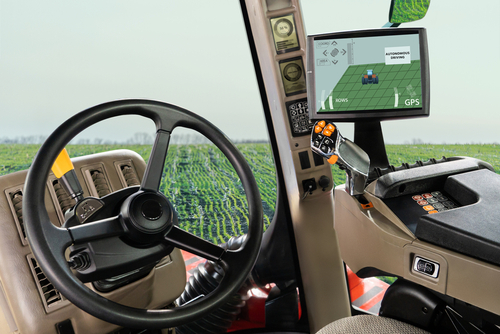
Farmers will be feeding up to 10 billion people by 2050. In order to feed the world in the best possible way, farmers need a level of sovereignty or control over their own operations. We are not there yet, but the seeds have been planted.
There are two major recent developments in farmers' right to self-determination or sovereignty. One is the Deere & Company "right to repair" settlement and the other is Nebraska's Agricultural Data Privacy Act.
Agriculture equipment companies and 'right to repair'
In years past, farmers would often repair their own equipment. This makes sense since farms are, by their nature, remote, making it difficult and time-consuming at times to get a repair job done by someone else. But technology has become more complex over time. Ever since agriculture (ag) equipment companies attached GPS technology to a tractor, "connected" technology on the farm just grew from there.
The challenge is that ag equipment companies have been requiring farmers to have implements serviced through their dealerships. Much like the iPhone, you did not have the right to "unlock" access to the programming of the farm implement to make repairs. The requirement to use the dealership for repairs can be onerous and, in fact, there has been some growth in the non-computerized tractor market as a consequence of the costs of maintaining the highly computerized equipment and the delays in obtaining repairs from authorized dealers. Yes, some of the motivation for limiting access to repairs is quality control, but the impact on farmers is burdensome.
Farmers claimed the lack of access to proper tools, digital information and authority to do repairs for farmers and independent repair shops was unreasonable. They sued in Illinois federal court. They obtained a monetary settlement, and companies agreed to provide repair tools to make it possible to repair the highly advanced implements. The Federal Trade Commission and a few state attorneys general also obtained a settlement for the same outcome as far as access to repair tools and will be supervising the settlement for the next 10 years.
No doubt some farmers would still want ag equipment companies to do most maintenance work and repairs. However, it is important that farmers get to choose who repairs their equipment and not be restrained by agreements that make it impossible for anyone but the dealership--which could be many miles away and very expensive--to do the repairs.
Nebraska's Agricultural Data Privacy Act
How does Nebraska's Agricultural Data Privacy Act (ADPA) apply to California? Although California does not appear to have an agricultural data privacy act in the works, several states are discussing the possibility of an act. California is the nation's top agricultural producer and the leader in privacy laws. California is well positioned to lead on this issue.
What is Nebraska's ADPA? It is the first law in the world that makes farmers the owners of their own data. It became law this year and although other states have tried to pass similar laws, none have been successful. The ADPA protects agronomic data, including data on climate and weather, land, livestock, management and sustainability.
Why would farmers care about data? As established by looking at the ag equipment settlement, farm equipment is highly electronic and software-driven in the modern era. Beyond that, equipment tends to be highly connected and to gather data. That data is very valuable to the farmer (agricultural producer), agricultural technology providers (ATPs) and other interested parties, who may or may not have good motives for accessing the data.
Data gathered on the farm, combined with other topical data, can provide the farmer with insight into choices as to crops, irrigation, fertilizing and pricing. Precision farming that is data-enabled can empower farmers to water only where they need to and in the amount needed. You can imagine the savings in resources if water, fertilizer and pesticides only went where they were needed and in the amount they were needed. This could also help reduce the negative effects of agricultural runoff. Importantly, it can mean better crop yields at a time when weather and water issues are challenging.
But like any business, a farmer doesn't want their sensitive information available to just anyone. They want that information to be secure. Data that is obtained can be used in ways adverse to the farmer's interests. The ADPA requires the ATPs to keep that data secure. Not only that, they cannot sell the data without first getting separate express written consent from the farmer.
Unfortunately, there are limitations. There is no private right of action, which means farmers cannot sue on their own behalf under the ADPA. Aggregated data where an individual farm cannot be identified is excluded. Likewise, derived data which is data that is transformed into insights or AI models is not protected. ATPs naturally retain the right to utilize data to support the farmer and this law does not apply to public government information.
Other states may look at enabling private right-of-action lawsuits and giving farmers the opportunity to share in the economic benefits of transformed data, such as AI models derived from farm data.
You might wonder if it is a good idea to have a federal ADPA rather than having ATPs try to comply with laws in various states. Such a bill has indeed been introduced in Congress. It is very similar to the Nebraska law and was introduced by U.S. Sen. Pete Ricketts (R-Neb.). It is currently in committee. Unfortunately, we have been waiting many years for a comprehensive federal privacy act, so it is hard to be optimistic about a federal agricultural privacy act.
Tying it all together
As farms have moved from the analog past to the digital future, farmers have lost a certain amount of sovereignty over their data and equipment. There is hope for farmers with the ag equipment companies' settlement and the ADPA to regain greater control over their operations. This will ultimately help farmers feed a growing population by putting the control in the hands of those who know the land and agriculture the best.
Submit your own column for publication to Diana Bosetti
For reprint rights or to order a copy of your photo:
Email
Jeremy_Ellis@dailyjournal.com
for prices.
Direct dial: 213-229-5424
Send a letter to the editor:
Email: letters@dailyjournal.com