


Ethics/Professional Responsibility
Nov. 11, 2026
Used AI on your brief? California wants the court to know
SB 574 requires lawyers to disclose generative AI use in court filings beginning Jan. 1, 2027. The statute is clear that disclosure is required. It is far less clear what the disclosure will tell anyone.



Kevin Collins
Partner
Sterlington PLLC
Litigation Practice
He has tried dozens of cases to verdict or award before juries, judges and arbitrators over 30 years of practice.
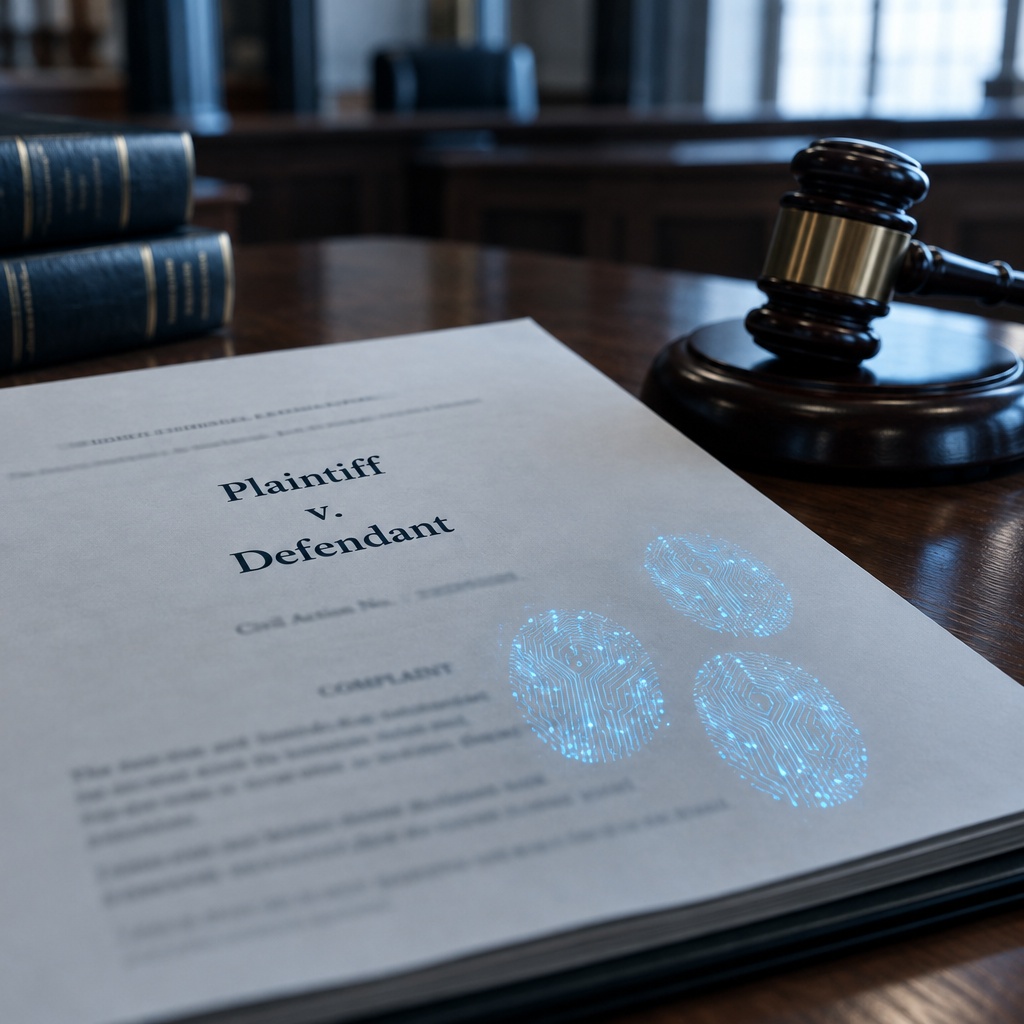
Beginning Jan. 1, 2027, those who use AI in connection with court filings will face a new question: when must that use be disclosed, and what must the disclosure say?
Gov. Newsom signed Senate Bill 574 on Sept. 30. The law adds section 6068.1 to the Business and Professions Code and amends section 128.7 of the Code of Civil Procedure.
The verification and confidentiality provisions are sensible and largely codify what careful lawyers already do. The disclosure provision is a different matter. As written, it permits the same bare disclosure whether the machine drafted much of the brief or merely fixed a comma, and it leaves to the individual lawyer the question of whether fixing the comma counts. It does not even clearly limit the disclosure to filings where AI was actually used.
A disclosure requirement without a threshold
Section 6068.1 provides that an attorney who uses generative AI to assist in the practice of law must disclose that use "to the court for all documents submitted to the court." Nothing in the statute limits disclosure to filings where AI drafted a substantial portion of the document, and it contains no exceptions for editing, formatting, summarizing or other limited uses. A lawyer who writes a brief and uses an AI tool only to tighten several sentences or summarize a deposition transcript cannot tell from the text whether disclosure is required. Read literally, it probably is.
The second ambiguity is easier to miss. Most lawyers will assume the rule is simple. If you used AI on the brief, disclose it on the brief, and if you did not, don't. That is probably what the Legislature meant. But the statute says a lawyer who uses AI in her practice must disclose that use "for all documents submitted to the court." Read literally, that means every filing, whether or not AI had anything to do with it. Courts will likely read the provision the sensible way, but nothing in the text requires them to do so.
A disclosure without content
SB 574 requires disclosure but does not prescribe its form. There is no requirement to identify the product, produce prompts or quantify the degree of involvement. Pending guidance from the Judicial Council or individual courts, a disclosure could be as simple as the following sentence.
Counsel used generative artificial intelligence to assist in the preparation of this filing.
That sentence satisfies the statute. It is also nearly useless. If the same sentence appears on a brief largely generated by AI and on a brief written entirely by a lawyer except for a minor formatting change, the court learns nothing about the role AI actually played. The likely result is that cautious firms will put the sentence on everything. It also means the disclosure may become boilerplate within a year.
Personal verification of citations
The amendment to section 128.7 is on firmer ground. A brief, pleading, motion or other paper filed in court may not contain citations that the attorney responsible for submitting the filing has not personally verified. The provision expressly includes citations supplied by generative AI, but it is not limited to them. Research and drafting may still be delegated. Verification may not. The responsible attorney cannot rely on another lawyer, a paralegal, a research platform or an AI system to establish that a citation is accurate.
The statute refers to "an attorney responsible for submitting" the filing. It does not say whether that is the lawyer who signs it, the associate who prepared it or both, or whether verification by one of them is enough. For citation-heavy motions and appellate briefs, where review has traditionally been spread across several people, many firms will find that their current procedures do not produce personal verification by anyone, even if they feel as though they do.
Confidentiality and responsibility
Section 6068.1 also bars an attorney from entering confidential, personal identifying or other nonpublic information into a generative AI system unless access is restricted to the attorney and persons the attorney authorizes who are bound to protect it. A properly secured enterprise platform may satisfy this provision. It does nothing for the disclosure requirement, which is an independent obligation, and a closed or proprietary system is not exempt from it.
Finally, the statute prohibits an attorney from delegating the practice of law to generative AI and requires reasonable steps to verify and correct AI output. It does not define where assistance ends and delegation begins. Whatever tools are used, responsibility for the legal work stays with the attorney. That is not a new principle. It is now a statutory one.
What comes next
SB 574 directs the Judicial Council to revisit Standard 10.80 of the California Standards of Judicial Administration in light of developments in generative AI. The Council would do well to address the disclosure provision directly, either by defining a threshold below which disclosure is not required or by specifying what a disclosure must actually say. Until then, California lawyers know that using generative AI can require disclosure to the court. What remains unclear is how much use is enough, and what the disclosure is supposed to accomplish.
Consistent with the new law, and somewhat ahead of schedule, generative AI assisted in the preparation of this article. How much, you have no way of knowing, which is the point. The author drafted most of it, personally verified the citations and remains responsible for the result.
Submit your own column for publication to Diana Bosetti
For reprint rights or to order a copy of your photo:
Email
Jeremy_Ellis@dailyjournal.com
for prices.
Direct dial: 213-229-5424
Send a letter to the editor:
Email: letters@dailyjournal.com