


Ethics/Professional Responsibility
Nov. 4, 2026
The cornerstones of an ethical flat fee agreement
CTAPP compliance reviews put flat fee agreements under scrutiny, making clear terms, proper handling of unearned fees and compliance with those terms essential.


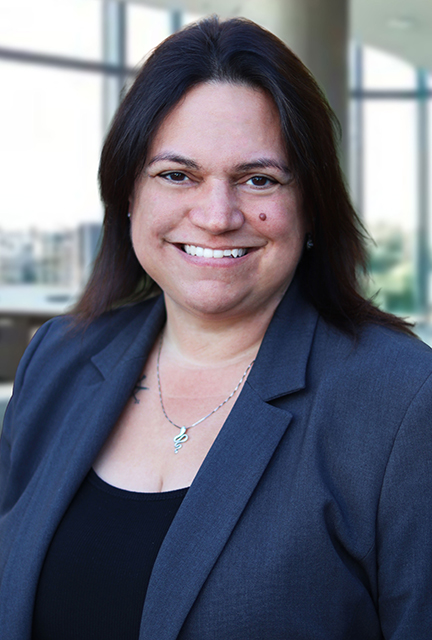
Joanna L. Mishler
Senior Counsel
Rosing Pott & Strohbehn
501 W Broadway A380
San Diego , CA 92101
Email: jmishler@rosinglaw.com

With mandatory CTAPP compliance reviews well underway, in which fee agreements are scrutinized to determine compliance and whether lawyers are saying what they do and doing what they say, this is the time to refresh your fee agreements to ensure ethical and statutory compliance.
Under the California Rules of Professional Conduct (CRPC), "a flat fee is a fixed amount that constitutes complete payment for the performance of described services regardless of the amount of work ultimately involved, and which may be paid in whole or in part in advance of the lawyer providing those services." CRPC 1.5(e). As a threshold issue, all fee agreements must be conscionable. For flat fees in particular, one should consider "the amount of the fee in proportion to the value of the services performed," "the novelty and difficulty of the questions involved, and the skill requisite to perform the legal service properly," and "the time and labor required," at minimum, before setting the flat fee.
When the flat fee exceeds $1,000 in a matter in which the client is not a corporation, the agreement must be in writing and signed by both the client and the lawyer, and state the basis of compensation, the general nature of the legal services to be provided, and the respective responsibilities of the lawyer and client. See Bus. & Prof. Code §6148. The agreement should clearly describe what services are covered by the fee and when the fee, or portions of the fee, is earned (e.g., setting clear benchmarks or milestones, if reasonable under the circumstances).
While advance fees for hourly agreements must be placed in the lawyer's client trust account, advance fees for flat fee agreements may be placed in the lawyer's operating account if two conditions are met:
(1) The lawyer or law firm discloses to the client in writing (i) that the client has a right under paragraph (a) to require that the flat fee be deposited in an identified trust account until the fee is earned, and (ii) that the client is entitled to a refund of any amount of the fee that has not been earned in the event the representation is terminated or the services for which the fee has been paid are not completed; and
(2) If the flat fee exceeds $1,000.00, the client's agreement to deposit the flat fee in the lawyer's operating account and the disclosures required by paragraph (b)(1) are set forth in a writing signed by the client.
CRPC 1.15(b).
Absent compliance with the above requirements, a flat fee paid in advance of providing legal services must be placed in the lawyer's client trust account. This is important because CTAPP compliance reviews and state bar inquiries will test whether fee agreements meet these rules, whether lawyers comply with the terms of their own agreements and whether lawyers comply with other CRPC requirements. For example, if the flat fee is deposited into the client trust account, but an earned portion of the flat fee is not withdrawn at the earliest reasonable time after the lawyer has met a stated milestone, the lawyer is at risk of improperly commingling funds. See CRPC 1.15(c).
As with all fee agreements, if the compensation terms are modified during the representation, especially if the flat fee is increased or the fee is converted to an hourly rate, then compliance with CRPC 1.8.1 is required. This means the terms must be fair and reasonable to the client, the terms must be disclosed to the client in writing, the client must either be represented by an independent lawyer of their choice or be advised in writing to seek the advice of an independent lawyer with respect to the fee agreement modification, and the client must, after a reasonable opportunity to seek advice from an independent lawyer, provide informed written consent. Informed written consent is complete only after the lawyer has discussed with the client the relevant circumstances and benefits and risks of modifying the terms. CRPC 1.0.1(e).
Notably, advance payment of flat fees must be refundable if not earned. Earlier this year, the Standing Committee on Professional Responsibility and Conduct (COPRAC) of the State Bar of California issued Formal Opinion No. 2026-210 about Flat Fees and Termination (the "Opinion"). The Opinion cautions: "any fee agreement entered into that includes a provision stating that a flat fee is nonrefundable or fully earned on receipt violates rule 1.5(d) and may constitute deceit or an intentional misrepresentation under rules 8.3, paragraph (a) or 8.4, paragraph (c)."
Regardless of where the flat fee is deposited, if the lawyer-client relationship terminates before the full fee is earned, the lawyer must refund the unearned portion of the fee. See Comment [3] to CRPC 1.5, CRPC 1.15(b)(2), and CRPC 1.16(e)(2). Thus, a lawyer who places the advanced flat fee into their operating account (with client consent) should consider the risk of not being able to timely return unearned fees depending on their business practices (e.g., if their monthly draws reduce the operating account's balance to an amount less than unearned fees).
The Opinion offers a noteworthy practical tip for how to demonstrate the value of the earned fee if the lawyer withdraws or is terminated before services are complete and the client disputes the amount of the earned fee: "It may also be helpful to discuss the lawyer's ability to obtain quantum meruit if the lawyer is terminated prior to completion of a milestone. A lawyer may benefit from tracking time expended in performing services to help explain the value of services expended in such cases."
Circling back to the importance of showing fee agreement compliance during CTAPP compliance reviews, the critical lesson lawyers should take away is to clearly state the terms of your flat fee agreements and then comply with those terms; in other words, say what you do and do what you say.
Submit your own column for publication to Diana Bosetti
For reprint rights or to order a copy of your photo:
Email
Jeremy_Ellis@dailyjournal.com
for prices.
Direct dial: 213-229-5424
Send a letter to the editor:
Email: letters@dailyjournal.com