


Ethics/Professional Responsibility
Nov. 3, 2026
The spy who shaped California privacy law
Fred Otash's rise from LAPD vice detective to Hollywood's most infamous fixer exposed the ethical and regulatory failures of his era--failures that continue to echo in today's surveillance and legal landscape.


"Those who cannot remember the past are condemned to repeat it."--George Santayana
On the night of Nov. 5, 1954, a jealous Joe DiMaggio, accompanied by Frank Sinatra and private detectives, kicked in the wrong apartment door on Waring Avenue in the infamous "Wrong Door Raid," terrorizing a sleeping secretary named Florence Kotz. The botched operation became instant tabloid fodder. Fred Otash thrived in the same shadowy Hollywood surveillance ecosystem.
In the Los Angeles of the 1950s and 1960s, few men moved as fluidly between the badge, the boulevard and the shadows as Fred Otash. Born in 1922 in Methuen, Massachusetts, to Lebanese immigrants, the former U.S. Marine and LAPD vice detective became Hollywood's most notorious private investigator and fixer. He wiretapped celebrities, fed scandals to Confidential magazine, buried problems for the powerful and occasionally crossed into outright criminality.
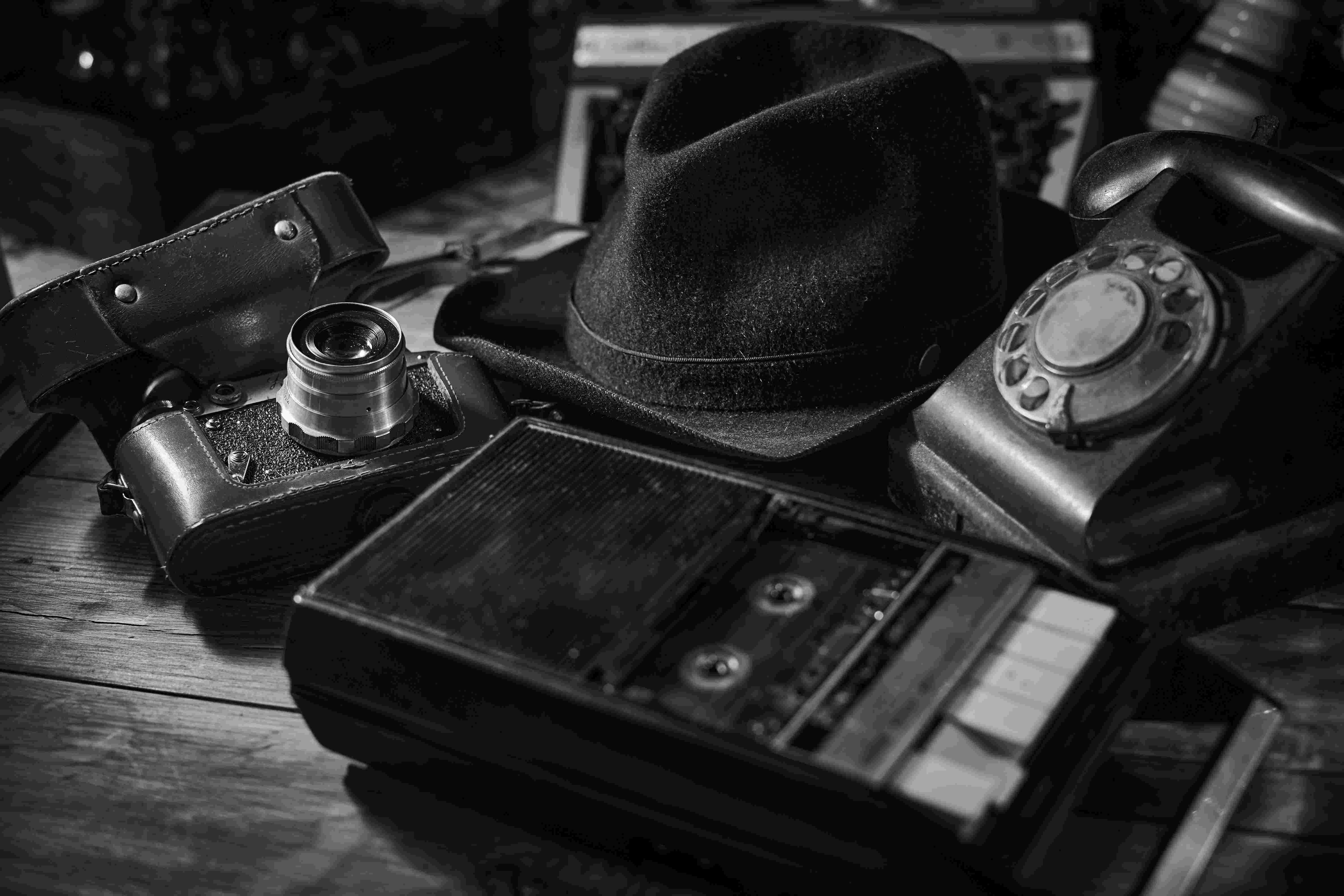
Otash joined the LAPD after World War II and rose quickly in the vice squad, targeting gambling and prostitution rings linked to figures like Mickey Cohen. His relationship with reform-minded Chief William H. Parker was stormy. By the mid-1950s, he had left the department and reinvented himself as a private operator with a chauffeured Cadillac, a four-pack-a-day cigarette habit, and an unmatched network of informants. He specialized in the dark arts of surveillance at a time when legal constraints were minimal. Studios, stars and scandal sheets all paid for his services--sometimes to expose secrets, sometimes to suppress them.
The cases that defined him
In 1959, Otash was indicted as the central figure in a conspiracy to dope racehorses at Santa Anita Racetrack. Prosecutors alleged he and co-conspirators bribed jockeys and administered depressants to fix races. In People v. Otash (1960) 186 Cal.App.2d 132, the Court of Appeal affirmed his conviction for conspiracy to violate Penal Code §337f. He received a suspended sentence, five years' probation and brief county jail time; the felony was later reduced to a misdemeanor and eventually expunged.
When the Bureau of Private Investigators and Adjusters moved to revoke his license on moral turpitude grounds, Otash challenged the action. In Otash v. Bureau of Private Investigators and Adjusters (1964) 230 Cal.App.2d 568, the Court of Appeal upheld the Bureau's authority, ruling that a certified copy of the conviction was conclusive evidence of moral turpitude. The decision reinforced the principle--still applied today--that crimes involving dishonesty trigger professional discipline.
Regulatory ripples and persistent gaps
Otash's activities, along with broader 1950s scandals, helped spur California's Invasion of Privacy Act of 1967, which strengthened protections against unauthorized wiretapping and recording. Licensing standards for private investigators tightened, with greater emphasis on character and fitness reviews. Yet the fixes were incomplete. The same Hollywood-adjacent ecosystem that enabled Otash later produced Anthony Pellicano, whose convictions for racketeering and illegal wiretapping showed how little had fundamentally changed.
Echoes in the digital age
Today the tools are far more sophisticated--data brokers, GPS trackers, open-source intelligence and AI-driven surveillance--but the ethical temptations remain identical. When attorneys or their investigators skirt privacy laws or exploit information asymmetries for powerful clients, Otash's shadow reappears. Recent State Bar ethics opinions on metadata mining and surveillance reflect the profession's ongoing struggle to draw clear lines.
Why legal professionals should remember Otash
For judges, lawyers, regulators and officers of the court in Los Angeles, Otash's story is required professional homework. It warns that selective leniency erodes public trust. It reminds us that ethical boundaries must be actively defended rather than assumed. And it underscores Santayana's warning with uncomfortable precision. Fred Otash did not reform the system--he exploited its weaknesses with style and impunity.
In a city built on reinvention, remembering him clearly enough to close those regulatory and ethical gaps remains the most urgent task of all. The past in Los Angeles is never truly past. It simply updates its wardrobe and technology.
The views expressed here are the author's and not those of the California Military Department or the Los Angeles County District Attorney's Office.
Submit your own column for publication to Diana Bosetti
For reprint rights or to order a copy of your photo:
Email
Jeremy_Ellis@dailyjournal.com
for prices.
Direct dial: 213-229-5424
Send a letter to the editor:
Email: letters@dailyjournal.com