


Alternative Dispute Resolution
Oct. 23, 2026
Toll booth or open road? What Leeper v. Shipt could mean for PAGA mediations
"But what about the arbitration agreement?" In Leeper v. Shipt, the California Supreme Court's answer will change how PAGA cases are filed, valued and settled.


Leonid M. Zilberman
Partner
Wilson Turner Kosmo LLP
Phone: (619) 236-9600
Email: lzilberman@wilsonturnerkosmo.com
Lonny practices employment law, diversity, equity, and inclusion as well as mediation and alternative dispute resolution and provides anti-harassment and other employment-related training to California Employers.
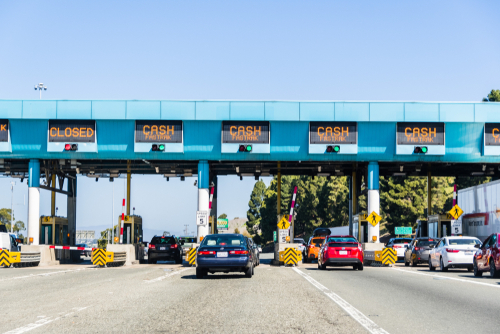
Every mediator knows the moment. The numbers are on the table, both sides have conceded that the case has real value, and then someone asks the question that stops the room: "But what about the arbitration agreement?" In PAGA cases, that question has become harder to answer. Is an arbitration clause a toll booth that every plaintiff must pass through on the way to the courthouse, or can a plaintiff take the open road by pleading only the claims that belong to everyone else? The California Supreme Court will soon decide in Leeper v. Shipt, Inc., and the answer will change how PAGA cases are filed, valued and settled. The court's decision will have a big impact.
How a delivery shopper reached the Supreme Court
Christina Leeper signed an independent contractor agreement with Shipt in 2019. That agreement incorporated a separate arbitration agreement. Under the court's description, it covered "any and all disputes," delegated threshold questions to the arbitrator and was governed by the Federal Arbitration Act. In March 2024, she sued under PAGA, alleging misclassification, and pleaded a single count for non-individual penalties. Her complaint went further and announced that Shipt could not compel arbitration because she was suing only on behalf of others. The trial court agreed. The 2nd District did not.
The Court of Appeal held that every PAGA action necessarily includes an individual claim. Its reasoning started with the statute's text, which describes an action brought "on behalf of the employee and other current or former employees." Importantly, "and," the court said, is conjunctive. It added that the Legislature had deliberately changed "or" to "and" during the 2003 drafting process. The result was an order compelling arbitration of Leeper's individual PAGA claim and staying the representative claim for a period the trial court would set.
The Supreme Court took the case on its own motion in April 2025 and framed two questions: does every PAGA action include both individual and non-individual claims, and can a plaintiff choose to bring only a non-individual one? The Courts of Appeal are split in California. The 4th District in Rodriguez v. Packers Sanitation looked to the face of the complaint rather than reading in a claim the plaintiff never pleaded, ruling that a plaintiff may file a "headless" PAGA action that omits individual claims. The 5th District in CRST Expedited held that the pre-2024 statute allowed headless actions, and the court in Galarsa v. Dolgen reached a similar result under that statute. Oral argument for Leeper is set for Nov. 3, 2026. The court ordinarily has 90 days after submission to rule, so expect a decision by early 2027, if not sooner.
Until then, trial courts have wide latitude. The Supreme Court's order allows Leeper to be cited as persuasive authority and to show a conflict, which means a trial judge may choose a side. Your motion to compel may turn on which courthouse you drew.
If the open road wins: Headless PAGA survives
Suppose the court holds that a plaintiff may disclaim the individual claim and sue only for other employees' violations. The first and most obvious effect is on timing. With no individual claim to compel, there is no motion to compel and no stay. Plaintiff-side amici in Leeper say an individual PAGA arbitration generally takes at least a year and a half. If that detour disappears, so does the settlement discount that defendants built around it, and plaintiffs will come to mediation with more confidence and, frankly, more patience.
That does not leave employers without tools. A headless plaintiff must still be an aggrieved employee, and the merits of the case, potential penalties under the 2024 reforms and the statute's cure provisions remain relevant. Standing is a pointed issue because, as CRST Expedited observed, part of the reason plaintiffs go headless is to avoid an arbitrator finding that they were never personally aggrieved. Defendants should expect that fight to move to the courtroom. There is also unfinished business. A plaintiff's own individual wage claims do not evaporate because the PAGA complaint ignores them. They can still be pursued in arbitration, which leaves the employer fighting on two fronts with a risk of inconsistent results. For that reason, a headless ruling will make global settlements more attractive, not less. A deal that resolves only the non-individual PAGA claim leaves the individual claims hanging, and no employer wants to buy a house and then negotiate separately for the garage.
If the toll booth stays: Every PAGA case has a head
Now consider the opposite result. The court agrees that every PAGA action includes an individual claim, so an employer with a valid agreement can compel that claim to arbitration under the Federal Arbitration Act and ask for a stay of the rest.
Even then, this is a detour, not a knockout. The Supreme Court held unanimously in Adolph v. Uber that compelling arbitration of the individual claim does not strip the plaintiff of standing to pursue the representative claim in court. And while Code of Civil Procedure section 1281.4 requires a stay, the 2nd District emphasized that the court controls how long it lasts. A trial judge with a crowded calendar and an impatient plaintiff has real room to keep the stay short.
The sleeper issue is preclusion. The Court of Appeal acknowledged that arbitrating the individual claim could affect the representative case through issue preclusion. Anything the arbitrator decides about whether the plaintiff was aggrieved or how the employer's practices operated, may follow the case back to court. That puts an unusual amount of weight on what could otherwise be a modest one-plaintiff proceeding, and both sides should plan for it.
The economics change too. The plaintiff-side amici argue the cost and time of individual arbitration often exceed the value of the individual claim, which can make a case unworkable for contingency counsel. Employers, for their part, pay all the arbitration fees and then litigate the representative claim anyway. The amici also point out that roughly 80% of California employment contracts contain arbitration clauses, so the number of cases affected will be large. Expect more motions to compel, more stays and a new question in every mediation: Do we settle before the motion, after the order, during arbitration or after the arbitrator weighs in?
Where I think the court lands
My best prediction is that the court substantially affirms Leeper. I would put that at roughly 60%, with perhaps 35% that headless actions survive at least for cases governed by the older statute, and the remainder a narrow middle path. These numbers are just one mediator's judgment, not a forecast from the court's chambers.
The reasoning begins with the text. The statute describes an action brought on behalf of the employee and other employees, and the legislative history shows the author deliberately chose "and" over "or." The 2024 reforms did not alter that conjunction, and they tightened the definition of an aggrieved employee to someone who "personally suffered each of the violations alleged." That language is awkward for a plaintiff who sues only for other people's violations. Also, the court granted review on its own motion and declined to depublish Leeper, which suggests it wanted to settle the question promptly.
On the other side, the Supreme Court has protected PAGA's enforcement role, as Adolph showed. CRST read the statute's "and" as ambiguous and resolved it in favor of PAGA's purpose, and the court may find that reasoning attractive. There is also a timing wrinkle. The 2024 amendments do not apply to actions in which the notice was filed before June 19, 2024, so the older text governs Leeper's case. The court could decide this one narrowly and leave the new statute for another day. If it affirms, I expect Adolph-style guardrails: The individual claim goes to arbitration, the state's claim continues and trial courts are urged to keep stays short.
What plaintiffs' counsel should do now
Plan for the toll booth even if you hope for the open road. For cases governed by the new statute, plead the individual claim, confirm your client personally suffered every violation you allege and consider pleading the individual claim in the alternative so you are not standing in the open if the court rules against you. Read the arbitration agreement before you draft the complaint. Look closely at the delegation clause, the governing law and the severability language, because a defect there may be your best argument.
If an order compelling arbitration comes, fight about the stay's length rather than only its existence. Ask for a short stay, a firm arbitration schedule and coordinated discovery. Above all, consider mediating your case before the motion to compel is decided. That is when the defendant is weighing the cost of two forums without yet holding the order, and when your leverage is at its peak. Finally, be candid with your client about the economics. If the individual arbitration may cost more than it is worth, the client should hear that from you now, not after the order.
What defense counsel should do now
The most useful advice for defendants is to avoid confusing a stay with a victory. A motion to compel buys time and perhaps some preclusion upside, but the representative claim is still there when the arbitrator finishes. If your reserve assumes otherwise, revisit it. Treat the arbitration route as a real expense, including fees, a year or more of delay and the cost of two proceedings, and weigh that against what a settlement would cost today.
Review your agreements now, while the case is pending. Make sure the clause distinguishes individual from representative PAGA claims, has a workable severability provision and uses a delegation clause that will survive scrutiny. A strong agreement is only valuable if it is enforceable. Then prepare for either outcome. If the court goes the other way, your defense will rest on the data and the merits, not the clause. As I wrote in an earlier article about how data is the black box of wage-and-hour mediation, employers who organize their rosters, timekeeping and payroll records early, and who acknowledge weak spots candidly, negotiate from a stronger position regardless of the forum.
Mediating in Leeper's shadow
If your mediation is scheduled before the ruling, treat Leeper like a weather report rather than a reason to cancel the picnic. Assign a rough probability to each outcome, price the cost of arbitration and look for a structure that works under either. Consider stipulating to hold any motion to compel until the court rules, since a fight over a rule that may change within months is an expensive exercise. Insist on a global release that includes the individual claims, so the deal does not leave an arbitration behind. The best settlements will be the ones that do not depend on guessing the court's answer.
The toll booth analogy holds up in one more respect. Toll booths exist whether or not travelers approve of them, and the smart traveler knows the price before leaving home. Parties who price Leeper now, rather than waiting for the decision to come out, will reach the courthouse, or avoid it altogether, on their own terms. Resolution is always less expensive than more litigation.
Submit your own column for publication to Diana Bosetti
For reprint rights or to order a copy of your photo:
Email
Jeremy_Ellis@dailyjournal.com
for prices.
Direct dial: 213-229-5424
Send a letter to the editor:
Email: letters@dailyjournal.com