


Labor/Employment
Oct. 21, 2026
The algorithm will see you now: How to avoid creating an evidence engine for PAGA claims
Employers own the outputs of the AI tools they deploy. They should audit those tools before errors replicate across every shift and become evidence for PAGA claims.





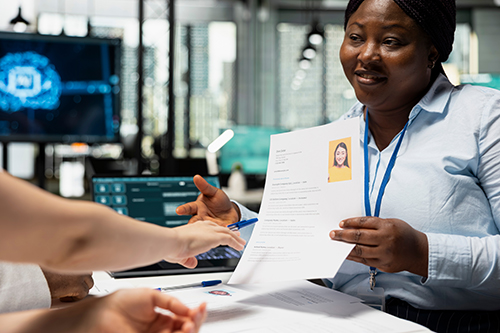
Employers increasingly rely on artificial intelligence (AI) to boost productivity and manage the workforce, and states are responding with legislation limiting its use--particularly to address algorithmic bias.
On Sept. 30, 2026, Gov. Newsom signed Senate Bill 947, the "No Robo Bosses Act." Beginning July 1, 2027, California employers will be unable to rely solely on automated systems to discipline or terminate workers, and a human must corroborate AI-driven decisions. That human step itself will be measurable: If reviewers approve nearly every recommendation within seconds, the record shows the tool decided. Federal preemption efforts are unlikely to blunt its implementation. He also signed companion bills, including Senate Bill 951 (notice where AI leads to job displacement) and Assembly Bill 1883 (barring AI tools that collect neural data or track emotional states).
These bills amend the Labor Code; however, whether violations can give rise to claims under the Private Attorneys General Act (PAGA) remains an open question. More certain is AI's potential to act as a scale multiplier under long-standing wage-and-hour law--replicating potential Labor Code noncompliance across every shift and documenting it in discoverable detail. It also removes variation across managers and sites that employers could once point to. If one tool is used organization-wide, one analysis covers every affected employee. And because many California employers have arbitration agreements with class-action waivers, PAGA is the likely vehicle for these claims.
Employers and their AI vendors should audit their AI tools under privilege, with an expert, as they audited payroll a decade ago. The expert may independently recompute hours and pay from raw punch data and compare them to what the tool produced and what was paid, test whether any differential is centered on zero, and track how often, and in which direction, managers override the tool.
High-risk use cases
Recent litigation makes clear that employers own the outputs of the AI tools they deploy, whether or not they built them. Consistency is a weak defense: Managers err in both directions, while a tool built to minimize labor cost errs in one. And under recent case law, vendors will likely be compelled to identify the employers using their tools.
Employers should audit these tools:
Productivity algorithms that penalize time off, including warehouse scan-rate and "time‑off-task" trackers. These tools can undermine an employer's defense that it provided meal periods.
Tools that push alerts during breaks, such as task-dispatch apps and wearables with haptic pace alerts. These can support claims that breaks were not duty-free and, where alerts go to personal devices, claims for unreimbursed business expenses.
Scheduling tools designed to minimize labor cost. A scheduler that keeps scheduled hours just under overtime thresholds does not keep worked hours there. Closing tasks or handoffs may run past the schedule, triggering overtime violations.
Timekeeping systems that automatically deduct meal periods. These tools can produce records that do not reflect actual breaks, leaving little evidence to rebut the presumption of a violation arising from missed, short or late meal periods.
Algorithmic pay and incentive tools that adjust rates, bonuses or piece rates in real time. These tools can skew the regular rate, which must include nondiscretionary incentives, including for meal and rest period premiums. Because premiums are wages, a single calculation error can trigger derivative wage statement and waiting-time penalties.
Automated attendance and discipline systems, such as point systems that do not distinguish protected leave. These tools can penalize employees for using paid sick leave in violation of Labor Code section 246.5, a PAGA-eligible violation that can be readily proven when the system logs the absence and the discipline side by side.
Surveillance tools, such as location tracking, keystroke monitoring and biometric timekeeping. Their data cut both ways: It can show that breaks were taken and that employee experiences varied, supporting manageability arguments under the 2024 PAGA reforms. But complete datasets allow a plaintiff's expert to model the entire aggrieved-employee group without sampling, and PAGA discovery is broad.
Quotas and pay algorithms that may disproportionately affect protected groups, such as those using inputs correlated with sex or race. These tools invite hybrid claims. A quota that ignores disability or pregnancy can produce both a Fair Employment and Housing Act (FEHA) claim and a pattern of missed breaks. And while FEHA is not a PAGA predicate, the Equal Pay Act (Labor Code section 1197.5) and the anti-retaliation provisions (Labor Code sections 98.6 and 1102.5) are.
Five action items for next Monday
The 2024 PAGA reforms reward audits: Penalties are capped at 15% for employers that took all reasonable steps before a PAGA notice and 30% for prompt remediation afterward. But relying on an audit may waive privilege, so coordinate with counsel to protect it.
Employers should: (1) inventory every AI tool that touches time, pay, pace or discipline, including schedulers that never touch pay; (2) test configurations against California rules using raw punch, schedule and override data, not vendor reports, and retest with each vendor update or legal change; (3) audit AI tools under privilege with experts retained through counsel; (4) align data retention policies with litigation reality; and (5) review vendor agreements for audit rights, data access and indemnification. Employers who fared best in the last wage‑and‑hour wave proactively audited payroll; the same will be true of algorithmic management.
Submit your own column for publication to Diana Bosetti
For reprint rights or to order a copy of your photo:
Email
Jeremy_Ellis@dailyjournal.com
for prices.
Direct dial: 213-229-5424
Send a letter to the editor:
Email: letters@dailyjournal.com