


Oct. 15, 2026
Supreme Court twice backs Renner's reasoning as he faces voters
Twice, the California Supreme Court has unanimously adopted 3rd District Justice Jonathan Renner's reasoning. The former legal affairs secretary to Gov. Jerry Brown seeks a full 12-year term Nov. 3.


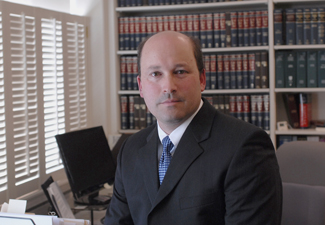
Twice in six years, the California Supreme Court has unanimously adopted the reasoning of 3rd District Justice Jonathan K. Renner, siding with his dissent and resolving a conflict between appellate districts.
Renner, who seeks a full 12-year term Nov. 3, joined the court in 2015 after working as Gov. Jerry Brown's legal affairs secretary. As with some other Brown appointees, he had no prior judicial experience.
A unanimous Supreme Court reversed a 3rd District majority and agreed with Renner's partial dissent in In re Scoggins (2020).
Willie Scoggins planned an unarmed beating and robbery of a man who had cheated him, but an accomplice shot the man dead. Scoggins was sentenced to life without parole under the robbery-murder special circumstance.
The appellate majority found reckless indifference to human life. Renner disagreed.
Justice Goodwin H. Liu quoted his dissent three times, including: "Scoggins's plan included violence, certainly, but the need to minimize the risk of violence when planning an unarmed beating is less pressing than the need to minimize the risk of violence when planning an armed robbery."
The Supreme Court reversed the special circumstance finding.
Six years later, the high court adopted Renner's reasoning in a dispute over government acquisition of private utilities.
In Pacific Gas & Electric Co. v. Superior Court (2023), Renner held that a utility challenging an irrigation district's effort to take its electric grid need only disprove the acquisition's necessity by a preponderance of the evidence, rather than establish gross abuse of discretion.
The Supreme Court unanimously adopted his approach in August, resolving a conflict with the 4th District in Town of Apple Valley v. Apple Valley Ranchos Water (2026). Justice Leondra R. Kruger quoted Renner's description of a legislator's statement as "too vague for us to understand."
Renner's other opinions have examined political speech and police authority.
In Reed v. Gallagher (2016), he upheld dismissal of a defamation suit by losing Assembly candidate James E. Reed against James Gallagher, whose campaign ad called Reed an "unscrupulous lawyer" and displayed a former client's newspaper quote calling him "a crook."
Renner found "unscrupulous" a subjective judgment that could not be proved false.
"Trial courts do not adjudicate questions of character, and consequently do not generate records establishing whether or not litigants have scruples," he wrote.
He considered "crook" political hyperbole. The ad also inaccurately said Reed had been ordered to repay fees improperly collected from an elderly client, when he had returned fees under a confidential settlement. But the distinction "would appear to us to make little difference in the mind of the average viewer," Renner wrote, and Reed showed no actual malice.
Sacramento County gang detectives responding to a report of a thin teenager with a gun at a music video shoot caught a juvenile carrying one. But they held Jameal Mosley, a heavyset, 30-year-old, documented gang member, in handcuffs for 41 minutes and searched his car despite his refusal to consent, leading to Mosley v. Superior Court (2024).
Renner found the detention unlawfully prolonged and the car search unsupported by probable cause. No one had seen Mosley place anything in the car, and his gang membership did not establish that evidence of a crime would be found there.
"The People have a lot to say about what Detectives Farrow and Johnson knew about petitioner, and relatively little to say about their reasons for believing evidence of crime or contraband might be found in the car," he wrote.
Before joining the bench, Renner spent four years as Brown's legal affairs secretary, meeting weekly on parole decisions, judicial appointments and major litigation.
Renner told the Daily Journal in 2011 that Brown's legal training shaped their work.
"The governor is somebody who wants to know if there's a controlling statute or a controlling provision of the constitution -- he wants to read it personally," Renner said. "If there's a controlling case decision, he wants to see that. He wants to know if there was a dissent. He wants to know who the justices were who authored it."
Laurinda Keys
laurinda_keys@dailyjournal.com
For reprint rights or to order a copy of your photo:
Email
Jeremy_Ellis@dailyjournal.com
for prices.
Direct dial: 213-229-5424
Send a letter to the editor:
Email: letters@dailyjournal.com