


Oct. 12, 2026
New presiding justice Cody brings close reading, collegiality to Division 6
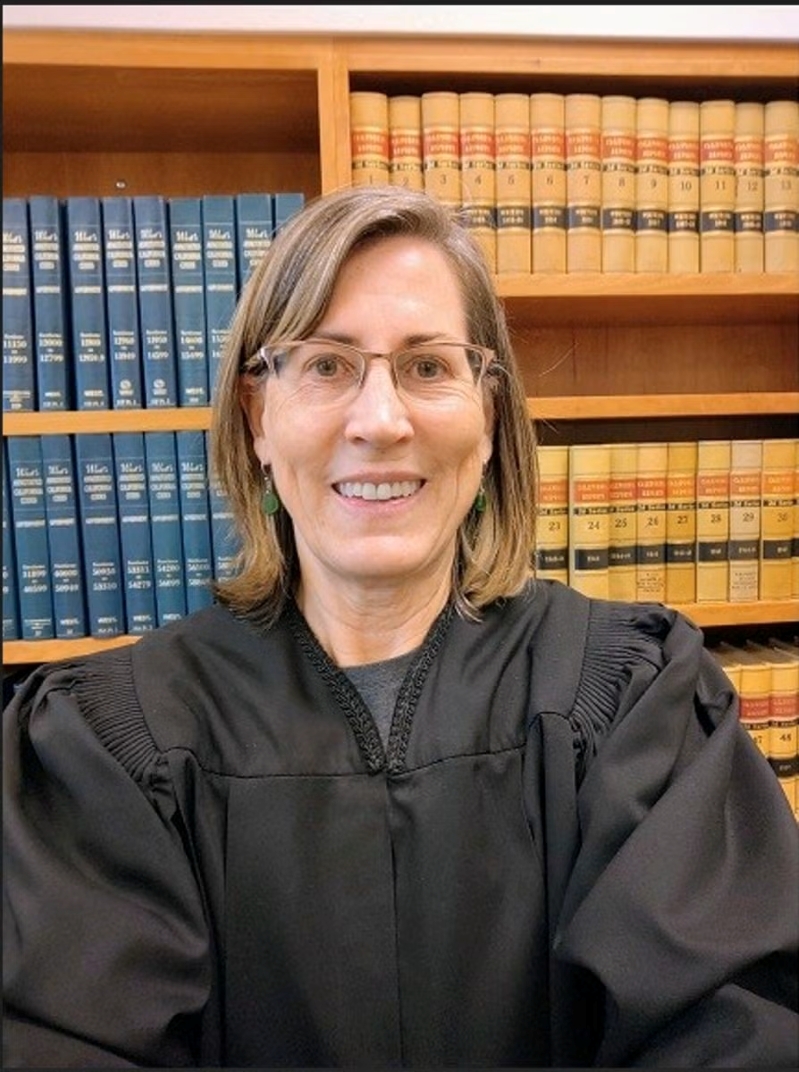
Presiding Justice Tari L. Cody of the 2nd District Court of Appeal, Division 6, a former juvenile court judge known for taking the time to get rulings right, faces her first retention vote.


A longboarder riding without a leash "dropped in" on another surfer's wave at Miramar Beach in Montecito, and his board struck the other man's torso and back. The injured surfer sued for negligence.
Writing for the 2nd District Court of Appeal, Division 6, in Olson v. Saville (2024), Justice Tari L. Cody held that the primary assumption of risk doctrine barred the claim, applying it to surfing for the first time in California.
"Showing respondent could have acted with more caution does not establish he acted recklessly," Cody wrote. She was also "wary of relying too heavily" on etiquette rules "when defining the scope of an activity's inherent risks."
Cody, who became presiding justice of Division 6 in August, faces voters Nov. 3 for the remaining four years of her predecessor's term. Gov. Gavin Newsom nominated her to lead the division in June after appointing her to the court in 2023.
Her close reading of statutes has sometimes put her at odds with colleagues.
Cody dissented in part from an attempted murder decision in People v. SanMiguel (2024) after the prosecutor struck a prospective juror with a Hispanic surname, citing his lack of eye contact and brief answers. Such reasons are presumptively invalid unless the lawyer explains why they matter to the case, and the prosecutor never did, Cody wrote.
"One may well wonder why behaviors like inattentiveness would require further explanation," she wrote. "Our function, however, is not to evaluate the wisdom of the Legislature's choices."
She also "respectfully" departed from Justice Kenneth R. Yegan, who argued in a concurrence that the statute's automatic-reversal rule is unconstitutional.
In July, the state Supreme Court reversed and remanded, citing Cody's dissent.
Cody again parted ways with Yegan in People v. Wilson (2025), which upheld a Black defendant's sex-trafficking convictions. The prosecutor had called him a "gorilla pimp" three times in closing argument without objection. The attorney general conceded defense counsel had been ineffective, but the majority rejected the concession, treating the phrase as sex-trade slang.
"One strains to produce an example of animal imagery more inflammatory than 'gorilla pimp,'" Cody wrote, dissenting in part. She faulted the majority for noting that the prosecutor never compared the defendant to an actual gorilla, "as if the addition of the word 'pimp' after 'gorilla' somehow ameliorates the harm rather than exacerbating it."
Cody wrote for the court in People v. Hardy (2026), rejecting Second Amendment challenges to California's restrictions on short-barreled shotguns, large-capacity magazines and silencers. She brushed aside the U.S. Supreme Court's 2025 description of the AR-15 as the nation's most popular rifle: "we will not extrapolate from the Court's parenthetical comment in a disparate context."
Her colleagues have described the same deliberative approach behind the scenes.
At Cody's Aug. 6 confirmation hearing, Justice Hernaldo J. Baltodano recalled circulating a draft opinion in a juvenile dependency case. Cody pointed him to cases she considered on point, and he ended up writing the opinion the other way.
"She never said, 'You're wrong,'" Baltodano told the Commission on Judicial Appointments. "Instead, she gave me the tools to reconsider my position." That, he said, "is what judicial leadership looks like. Not insisting on agreement but helping colleagues arrive at the right answer together."
Asked about her priorities, Cody said she would "accept suggestions from everybody and anybody," discuss them with colleagues and then decide. "I try not to make decisions too quickly ... before I have all the information that I need," she said.
"I'm the kind of person who likes to do a lot of research, probably too much sometimes," she told the Daily Journal in 2015, when she was a Ventura County Superior Court judge.
After graduating from Loyola Law School in 1985, Cody practiced civil litigation and represented government agencies and water districts.
Gov. Gray Davis appointed her to the Ventura County Superior Court in 2000. She became supervising juvenile judge in 2019 and co-chairs the Judicial Council's Family and Juvenile Law Advisory Committee.
Laurinda Keys
laurinda_keys@dailyjournal.com
For reprint rights or to order a copy of your photo:
Email
Jeremy_Ellis@dailyjournal.com
for prices.
Direct dial: 213-229-5424
Send a letter to the editor:
Email: letters@dailyjournal.com