


Oct. 9, 2026
Mori aims to bring equal-treatment focus to law, judging
Justice Audra Mori, whose family's wartime internment shaped her views on fairness and equal treatment, has written opinions emphasizing statutory language and legal boundaries as she faces voters Nov. 3.


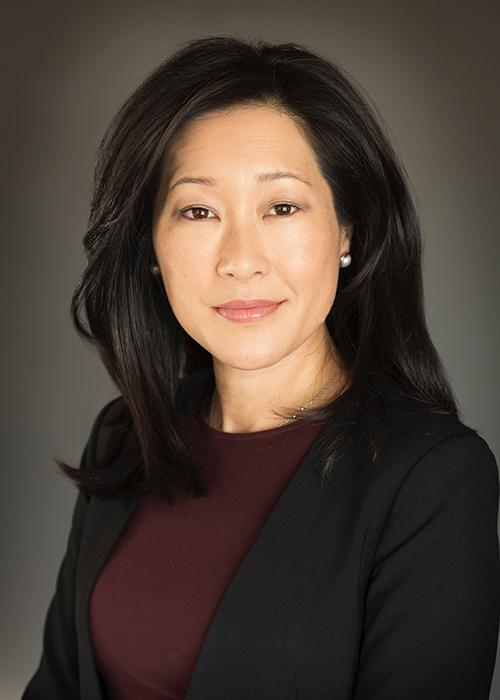
Justice Audra M. Mori's father was a boy when he was sent to an internment camp in Wyoming during World War II. One of the few stories he told about it was of a pet chick that froze to death overnight.
"Japanese Americans don't really talk about it that much," Mori told the Daily Journal in 2019, when she was a Los Angeles County Superior Court judge. She said she pieced together her family's history from such anecdotes, and law classes she took in college to understand the internment led her to a legal career.
Asked at her 2023 confirmation hearing how her upbringing informs her approach, Mori said that when her family was incarcerated, "there were no judges that represented that population."
"It also makes me empathetic to powerlessness that people feel in our justice system," she said, adding that it left her keenly aware the law must be applied equally to all, regardless of background. "I think it's shaped my desire to be a part of the justice system. And I think I will always carry it with me."
Gov. Gavin Newsom appointed Mori to the 2nd District Court of Appeal, Division 4. She seeks to complete the four years remaining in her predecessor's term in the Nov. 3 retention election.
On the appellate court, her opinions have emphasized what statutes and legal rules require, even when a party argues for a different result.
That approach was evident in a property-tax dispute in which Los Angeles County argued homeowners were seeking "credit for the value of house that they themselves elected to tear down." In Greenspan v. County of Los Angeles (2023), Mori held the assessor violated state tax law by automatically shifting a demolished home's value to the land when owners rebuilt within two years of buying.
"That may be true," Mori wrote, "but that is what sections 51 and 75.10 direct."
She took a similarly rule-bound approach to trial-court authority in People v. Millsap (2025), holding that a judge could not resentence a death row inmate while his automatic appeal remained before the California Supreme Court, which had exclusive jurisdiction over the capital judgment.
Mori also questioned whether a court could assess public safety from a criminal history that was "nonfinal, currently disputed, and subject to material change." If the Supreme Court affirmed any of his eight death sentences, she wrote, resentencing "may be for naught."
A challenge to a State Bar rule likewise turned on distinctions Mori found legally significant. In Getzels v. State Bar of California (2025), she upheld a rule barring inactive lawyers from working as private arbitrators or mediators. Mori rejected a retired lawyer's "freedom of contract" argument and noted that inactive lawyers serving as neutrals remain subject to State Bar discipline while nonlawyer neutrals do not. "Equal protection does not mean 'that different things must be treated as though they are the same,'" she wrote.
After graduating from Cornell Law School, Mori practiced intellectual property and commercial litigation, becoming managing partner of Perkins Coie's Los Angeles office and chairing its global diversity committee.
She was president of the Japanese American Bar Association in 2012 and later chaired the Los Angeles Superior Court's judicial mentor program. Asked about her diversity work at her confirmation hearing, Mori said, "I feel like we all improve by understanding the perspectives of others and the experience of others."
Gov. Jerry Brown appointed her to the Superior Court in 2018, where her first assignment was family law. Mori made a practice of summarizing the facts from the bench before the parties spoke.
"They can let me know if they think I've gotten something wrong," she said in 2019. She rarely gave oral tentative rulings because "I want people to be heard.
"Every family operates on a different normal, and I can't impose my normal."
Laurinda Keys
laurinda_keys@dailyjournal.com
For reprint rights or to order a copy of your photo:
Email
Jeremy_Ellis@dailyjournal.com
for prices.
Direct dial: 213-229-5424
Send a letter to the editor:
Email: letters@dailyjournal.com