


Oct. 5, 2026
Presiding Justice Stewart prizes consensus as murder law shifts
Stewart, who argued San Francisco's marriage-equality cases before joining the bench, has written a series of opinions reversing denials of resentencing as California narrowed murder liability.


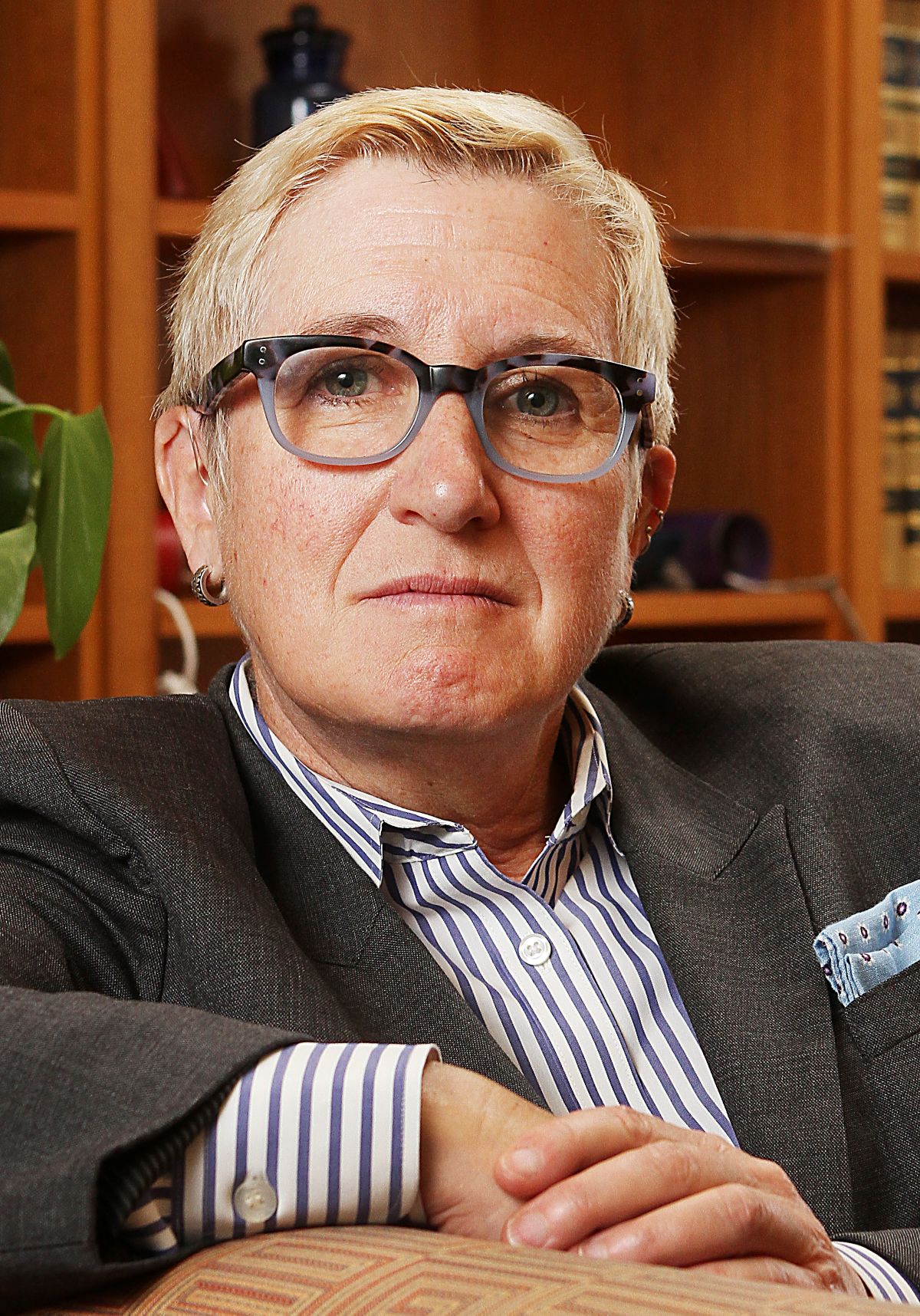
Before joining the bench, Presiding Justice Therese M. Stewart was best known for leading San Francisco's marriage-equality litigation. After 12 years on the 1st District Court of Appeal, she takes satisfaction in something less visible: a division that seldom splits.
Stewart noted recently that the division she presides over "is very collegial and works hard to reach consensus so that we do not produce very many split decisions. Unanimous opinions tend to provide more useful guidance to lawyers and litigants.
"Unanimity does not mean we agree on everything," she added, "but there are often very legitimate ways to decide a case that avoid reaching issues where there is disagreement."
Gov. Jerry Brown appointed Stewart to Division 2 in 2014, making her the first lesbian justice on the California Court of Appeal. She was elevated to presiding justice in 2022 to complete her predecessor's term and now seeks a full 12-year term on the Nov. 3 ballot.
Criminal law has changed the most, she said, with "the new definition of murder being the most striking."
Some of her most challenging cases tracked those changes. In People v. Anthony (2019), the court affirmed four defendants' gang-related murder convictions in three killings despite finding police violated one defendant's Miranda rights.
When the case returned as People v. Campbell (2023), Stewart wrote that the jury's gang-murder special-circumstance findings of intent to kill did not by themselves bar resentencing on the first-degree murder convictions, and the court ordered an evidentiary hearing.
Several opinions have sided with convicted men seeking relief under the amended law. Stewart held in People v. Lopez-Barraza (2025) that a resentencing judge had to respect a jury's earlier acquittal of the petitioner on a robbery conspiracy charge and could not deny relief based on findings that he took part in nearly every stage of planning the robbery.
Another resentencing case, People v. Jackson (2025), involved a man convicted in 1991 of three murders during a robbery. The panel reversed the denial of relief, with Stewart writing that assisting "the actual killer" means helping with the killing itself, not merely the underlying crime.
Her opinions have also scrutinized the prosecution's duty to disclose evidence favorable to the defense. A forcible rape conviction carrying a 13-year sentence was reversed in People v. Stewart (2020) because prosecutors withheld impeachment material in a police report.
Four years later, the court revived the habeas petition of a man sentenced to death in 1987 for two murders in In re Hill (2024). Stewart wrote that he adequately alleged prosecutors relied on false or misleading testimony and withheld evidence favorable to the defense, including a promise not to prosecute a key witness.
Her recent civil work includes Osaze v. Gee (2026), filed Sept. 29, in which Stewart's panel revived a wrongful death suit by the family of a woman who died after an unwitnessed fall at a veterinary hospital while chasing a loose dog. A San Mateo County judge excluded expert opinions that she likely tripped on a raised threshold as speculative and granted summary judgment. A trial court's role is to decide whether an expert's methods reasonably support an opinion, not whether it is persuasive, Stewart wrote. "It is not uncommon for accidents to happen without an eyewitness seeing them."
Stewart has written about 100 published opinions, although criminal law was not her background when she joined the court.
As San Francisco chief deputy city attorney, she argued for the city and county in the trilogy of marriage-equality cases before the California Supreme Court. She also led the team of deputy city attorneys who intervened as plaintiffs in the federal challenge to Proposition 8, which ended at the U.S. Supreme Court.
Charles J. Cooper of Cooper & Kirk PLLC, her lead opposing counsel in the Prop. 8 case, said in 2015, "She was the only one on either side ready to try that case," when it unexpectedly went to trial.
Stewart graduated Order of the Coif from UC Berkeley School of Law in 1981.
Laurinda Keys
laurinda_keys@dailyjournal.com
For reprint rights or to order a copy of your photo:
Email
Jeremy_Ellis@dailyjournal.com
for prices.
Direct dial: 213-229-5424
Send a letter to the editor:
Email: letters@dailyjournal.com