


Sep. 30, 2026
Burns' rulings trace boundaries of fairness in government proceedings


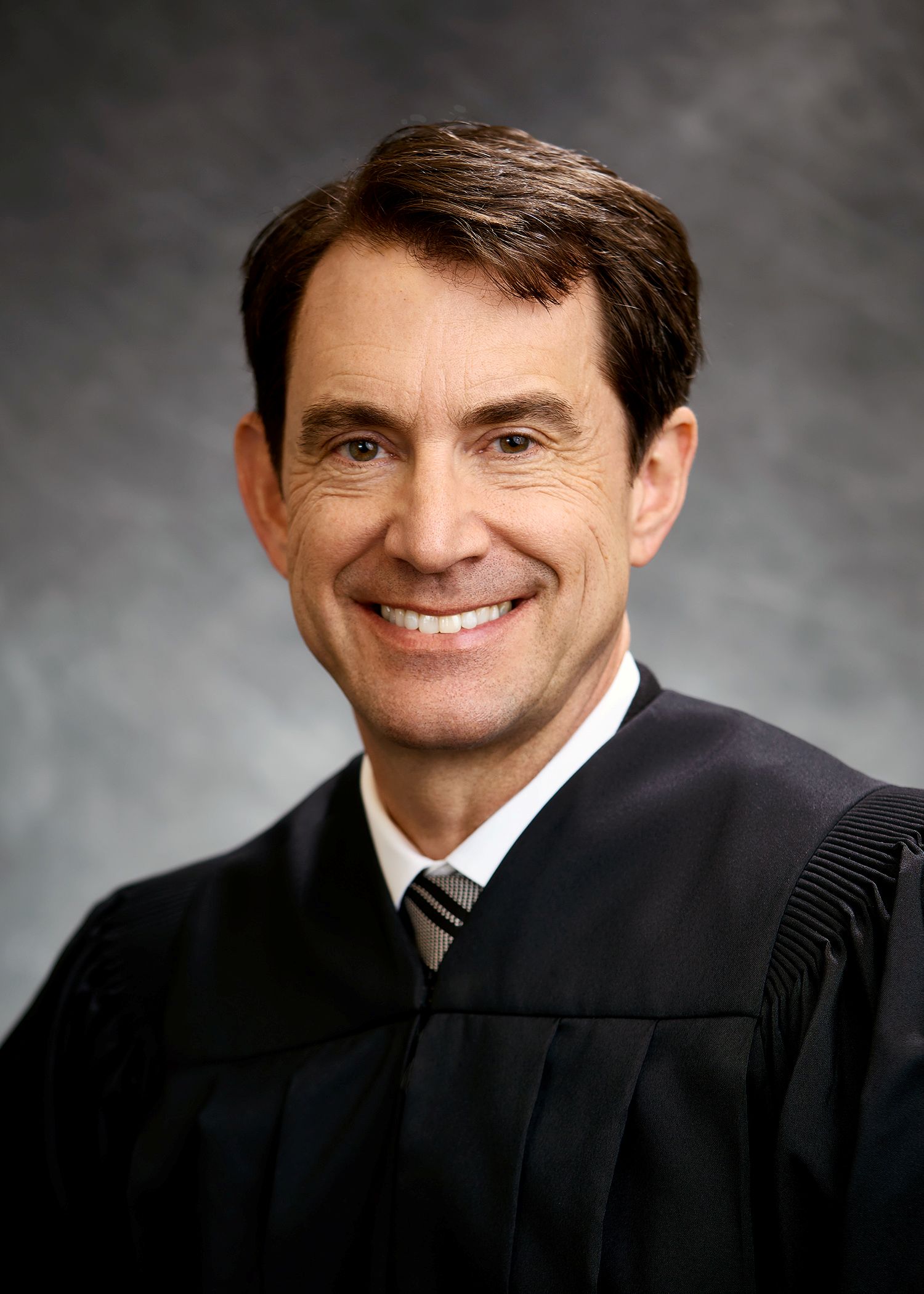
Seventeen years before Justice Gordon B. Burns wrote that a Department of Motor Vehicles hearing officer can introduce evidence and still decide a case fairly, he made a similar argument to the California Supreme Court on behalf of the state.
In 2009, the high court was weighing whether to bar a government lawyer from advising an agency board in one matter while prosecuting another case before it. Burns, then a deputy solicitor general, urged the justices to reject the stricter rule.
"We think that's an extremely dangerous position," he said. "It would entangle the court in regulating relationships between judges and advocates."
The high court sided with the state, reversing the Court of Appeal in Morongo Band of Mission Indians v. State Water Resources Control Board (2009) and holding that the presumption of impartiality can be overcome only by specific evidence of actual bias or an unacceptable risk of it.
Burns, appointed by Gov. Jerry Brown in 2018 to the 1st District Court of Appeal, Division 5, was retained by voters in 2022 for the remainder of the term and is on the ballot again Nov. 3. He joined the bench without judicial experience after some two decades as a state lawyer and environmental official. Several recent opinions turn on what fair process requires of courts and agencies.
In Chi v. Department of Motor Vehicles (2026), Burns rejected a driver's claim that a DMV hearing officer violated due process by acting as a prosecutor. Pengfei Chi's license was suspended after he refused chemical testing following a California Highway Patrol stop. The hearing officer introduced documents, ruled on objections and asked clarifying questions while describing herself as a neutral factfinder.
The opinion said due process presumes an adjudicator is impartial absent specific evidence of a disqualifying interest or an intolerable risk of bias.
"It is well settled that a mere appearance of bias does not violate the due process clause," Burns wrote. Judging hearings by appearances, he added, "would expose almost any administrative hearing to judicial micromanagement, turning the due process clause into a universal disqualification standard rather than a fail-safe."
The conclusion differs from other recent appellate decisions about DMV hearings. The state Supreme Court has granted review and is holding the case pending its decision in one of them.
The question of fair procedure arose in a different setting in People v. Alston (2026), where Burns wrote for the court in reversing a conviction for attempted lewd act on a child because the trial judge overruled a defense objection to the DA's peremptory challenge without explanation. The prosecutor struck a prospective juror who expressed distrust of law enforcement, a presumptively invalid reason under Code of Civil Procedure Section 231.7.
Another Burns opinion drew a line between volunteer work and employment. In Spilman v. Salvation Army (2026), the panel revived a class action by participants in a rehabilitation program who worked full time in the charity's warehouse and thrift store as "work therapy." Burns set out a two-part test for distinguishing volunteers from employees: The worker must have freely agreed to work for a personal or charitable benefit rather than pay, and the organization's use of the labor must not be a subterfuge to evade wage laws.
Before his appointment, Burns spent most of his career at the state's Department of Justice. He joined as a deputy attorney general in 1997, handling tort, condemnation and natural resources litigation. In 2006, he became the California's first deputy solicitor general for civil law, supervising cases in the state and U.S. supreme courts.
Much of that work was behind the scenes. Then-Solicitor General Manuel Medeiros told the Daily Journal in 2008 that he and his deputies, including Burns, normally let other state attorneys argue before the higher courts.
After a year at Resources Law Group LLP, Burns became undersecretary of the California Environmental Protection Agency in 2011, working on groundwater management, water rights, drinking water infrastructure and drought management.
Burns graduated from UC Hastings, now UC Law San Francisco.
Laurinda Keys
laurinda_keys@dailyjournal.com
For reprint rights or to order a copy of your photo:
Email
Jeremy_Ellis@dailyjournal.com
for prices.
Direct dial: 213-229-5424
Send a letter to the editor:
Email: letters@dailyjournal.com