


Judges and Judiciary
Sep. 28, 2026
Justice's dissents question results he says law cannot support
Justice Kenneth R. Yegan, on the appellate bench since 1990, brings a direct writing style to disputes over criminal law, statutory interpretation and government authority as he seeks retention Nov. 3.


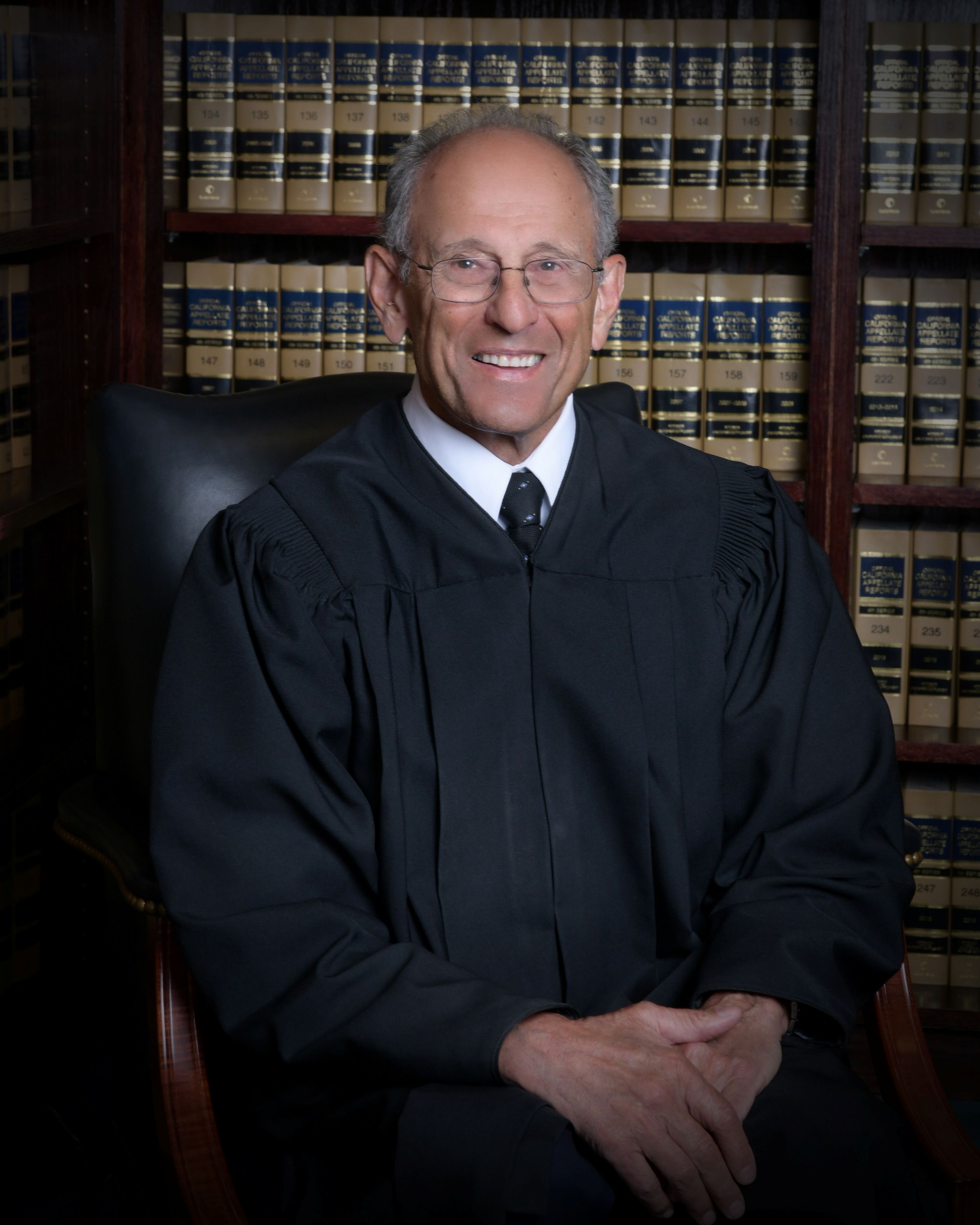
Justice Kenneth R. Yegan does not hide his disagreement when he believes the law has produced the wrong result.
"We are supposed to correct a miscarriage of justice, not help to create one," the 2nd District Court of Appeal justice wrote this month, dissenting from a decision returning to juvenile court the case of a man who admitted committing two murders at age 15.
The opinion in In re J.C., B345707, is characteristic of a justice whose writing can be brief, blunt and occasionally pointed.
J.C. was 31 by the time the court ruled his transfer to criminal court improper, an error the attorney general conceded.
"The Legislature has the power and right to draw this line," Yegan wrote. But the prospect that a defendant who admitted two murders could avoid punishment because he was now too old for juvenile treatment "gives one pause. This is such a case."
Yegan, who has served on Division 6 in Ventura since 1990, is seeking another 12-year term on the Nov. 3 ballot.
His approach was also evident this year when he sat by assignment on the California Supreme Court in People v. Morris, S284751, involving legislation narrowing California's felony-murder rule.
The majority held that a nonkiller who acts with intent to kill must aid or abet the actual killer in the killing itself, not simply participate in the underlying felony. Yegan dissented.
"One hundred seventy-five years of felony-murder precedent should not be set aside by an ambiguous statute," he wrote.
Defining crimes and punishment belongs to the Legislature, not the courts, Yegan wrote.
"There is way too much 'interpretation' going on here," he added, saying the legislation "is not going to win an award for clarity."
The same direct style surfaced in Sable Offshore Corp. v. California Coastal Commission, B347601. Yegan dissented from a decision upholding an injunction halting pipeline repairs Santa Barbara County found were authorized by a 1986 permit.
Yegan said the commission lacked jurisdiction to override the county and called their dispute a "continuing turf war."
"They are supposed to work together, and they should not be adversaries," he wrote.
In a 2013 Daily Journal profile, Yegan said he did not ask questions at oral argument merely to make a point.
"If I ask a question, it's because I really don't know the answer," he said.
Attorney Wendy C. Lascher, who appeared before Division 6, commented in that profile, "He doesn't pull any punches. He's blunt when he writes an opinion, too."
Away from the courthouse, Yegan acquired another identity. To disabled skiers he taught at Mammoth Mountain, he became "Kenny Y."
Yegan began volunteering with Disabled Sports Eastern Sierra in 2003 and later worked with wounded veterans. He became a certified ski instructor and received the California Judges Association's humanitarian award and a Wounded Warrior Regimental Medal.
"He totally drops the whole judge bit when he's up here," Kathy Copeland, then the program's executive director, told the Daily Journal in 2013. "He leaves all of that at the office."
When asked during the 2013 interview to show his humanitarian award, Yegan shrugged.
"I'm not into plaques," he said. "It's still in a box at home."
The first in his family to attend college, Yegan graduated from McGeorge School of Law and began as a Ventura County deputy public defender. After seven years as a research attorney at the Court of Appeal, he became a superior court judge in 1983. Gov. George Deukmejian appointed him to Division 6 in 1990.
In In re J.C., Yegan ultimately reduced his concern to an ancient maxim.
"Salus populi suprema lex esto," he wrote.
The translation was equally direct: "The safety of the community is the highest law."
Laurinda Keys
laurinda_keys@dailyjournal.com
For reprint rights or to order a copy of your photo:
Email
Jeremy_Ellis@dailyjournal.com
for prices.
Direct dial: 213-229-5424
Send a letter to the editor:
Email: letters@dailyjournal.com