


Consumer Protection Law
Sep. 29, 2026
Addressing the harm caused by online sports gambling platforms and prediction markets
Sports betting apps are engineered to addict, and consumer protection lawyers are taking them on.


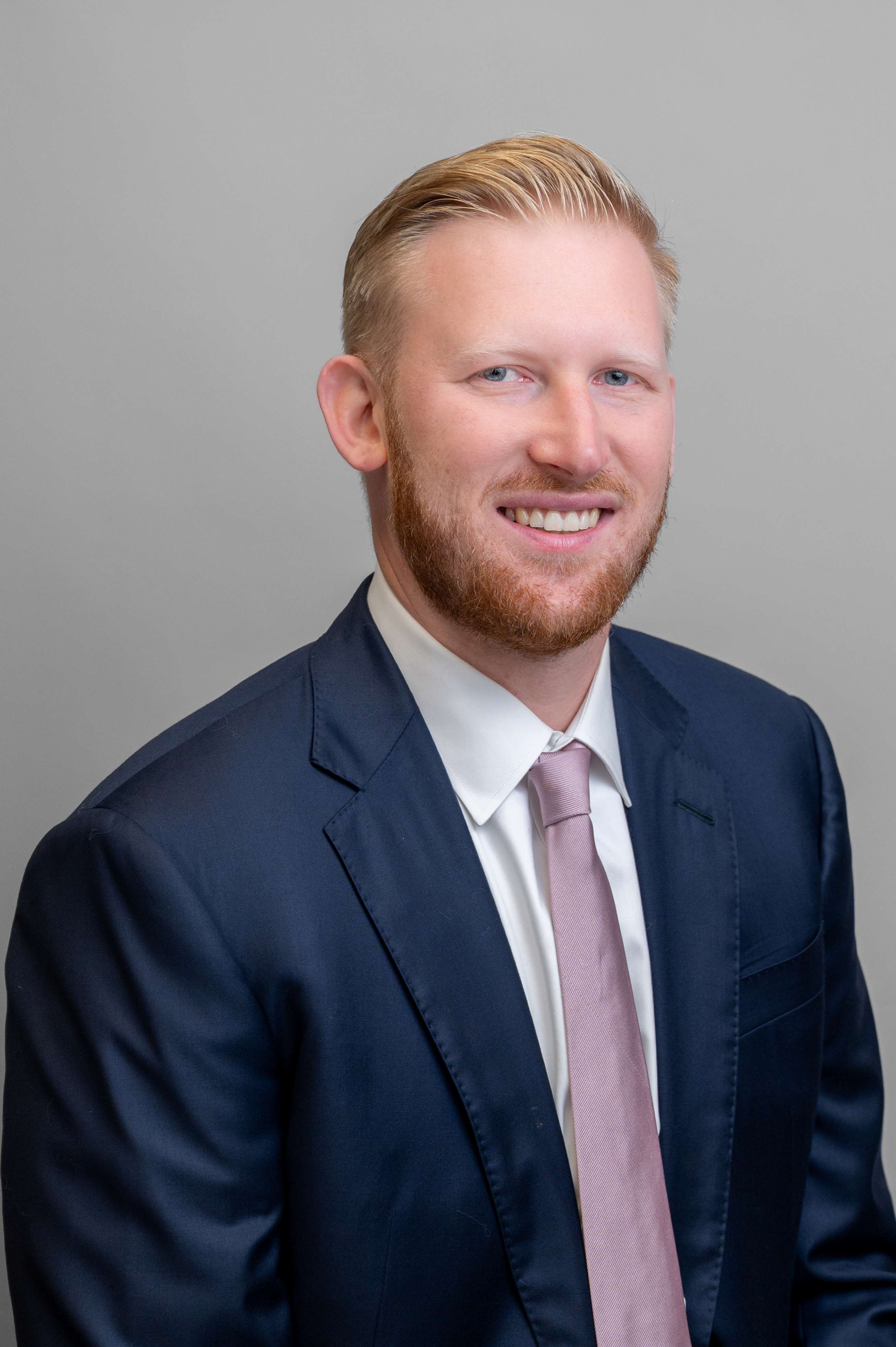
Zachary N. Zaharoff
Partner and Trial Lawyer
Cotchett, Pitre & McCarthy, LLP
Email: zzaharoff@cpmlegal.com
Zachary N. Zaharoff maintains a broad practice in personal injury and consumer protection, with a recent focus on consumer harm inflicted by technology companies.
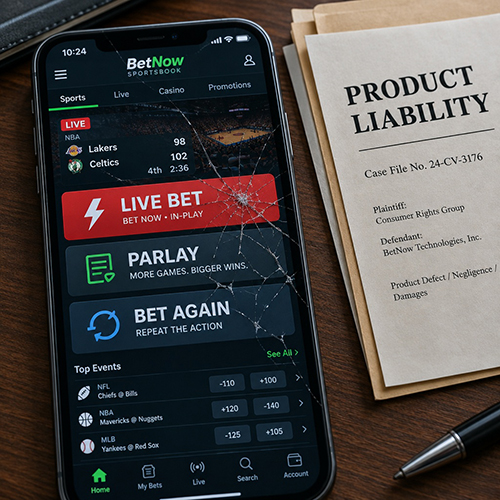
Online sports betting is a problem.
Prior to 2018, for most Americans, betting on sports meant traveling to a casino and placing an in-person bet at a sports book. That barrier to sports gambling was not a historical accident. For most of the last century, society set up legal frameworks and safeguards that treated gambling as a vice to be contained, and containment meant inconvenience. In 2018, the Supreme Court struck down the federal ban on state-authorized sports betting in Murphy v. NCAA. Since then, 39 states have legalized sports betting, and now casinos are in gamblers' pockets, open 24 hours a day, sending push notifications.
The rise of sports betting apps, so-called "prediction markets," and their vast network of corporate partners has created winners and losers. The winners are the platforms, professional sports leagues, and the network of corporate partners that inundate sports fans with ads for DraftKings and FanDuel (and now Kalshi). DraftKings reported a market capitalization of about $10.7 billion in the first quarter of 2026, and Flutter Entertainment's (the parent of FanDuel) is roughly $19 billion. Those figures are down from highs a few years ago as Kalshi and Polymarket have taken off in popularity. According to the Pew Research Center, combined monthly trading volume on Kalshi and Polymarket climbed from roughly $5 billion in September 2025 to about $24 billion in April 2026. Pew reports that over 80% of total trading on Kalshi is sports-related, and 39% is sports-related on Polymarket. A Bank of America report estimated a potential market of over $1 trillion on sports betting in the coming years.
The losers are the sports-betting app's primary customers, young men gambling billions of dollars through their phones hoping small bets turn into large paydays. According to Nerdwallet, 31% of sports bettors perceive gambling as an "investment," with "making extra money" being the top reason why Americans chose to bet on sports as of early 2025. But according to a 2024 University of San Diego study of over 700,000 gamblers, only 4% made money in the long-run. Given this disparity, it is no surprise that the rate of gambling addiction in the United States has skyrocketed 60% in states that legalized sports betting, and rates among men aged 18-29 more than doubled between 2018 and 2026. See Bartelt K, Cox C, Deckert J, Fox B, Sahakian S. Gambling Disorder Diagnoses Have Risen More Than 60% in States That Legalized Sports Betting, Epic Research.
This is all by design: These apps track every wager, every second spent in the app, and even moments of hesitation, and feed that data into algorithms that personalize the experience and maximize the betting activity. "No risk" bets get users in the door, and push notifications, sleek interfaces and in-game "micro-betting" opportunities cajole users to continue doubling down so they never have to walk away.
Lawyers are leading the way on consumer protection
When it comes to dodging accountability, the online sports gambling industry is on a heater. While the states have a patchwork of regulations on gaming, sports-betting platforms have largely avoided federal regulation, and most states have relatively weak consumer protection regimes. The prediction markets are also lobbying hard to avoid regulation and oversight at both the federal and state level. Part of the reason for the prediction markets' success has been their ability to avoid state taxes and regulations and that apply to the traditional sports betting apps, such as warning requirements and requirements to provide users with anti-addiction resources. The prediction markets argue they don't have to pay the higher taxes or provide addiction resources because they are subject to the exclusive jurisdiction of the federal CFTC, which is headed by a Trump-appointed, anti-regulation ally. The markets have direct access to the Trump administration through Donald Trump Jr., who is a paid "advisor" to both companies. 1789 Capital, Trump Jr.'s venture capital firm, announced recently that it was investing $300 million into Polymarket, making the president's son one of Polymarket's largest equity holders. Trump Jr. told Republican state attorneys general at their annual conference in March not to go after the prediction markets because they were being regulated sufficiently by the CFTC. Given the competitive threats posed by prediction markets, betting apps like DraftKings and FanDuel have poured over $40 million into a 2026 election Super Pac backing friendly candidates that will help subject prediction markets to the same regulations, and stifle regulation on the federal level. To date, the federal government's stance on consumer protection for online gambling has been: "let it rip."
These companies have also immersed themselves in mainstream sports and culture. Within the last year, DraftKings became the official sports book and odds maker for ESPN, and Fanatics, FanDuel and DraftKings became the official betting operators for the NFL. In the most recent Super Bowl, Fanatics, FanDuel and DraftKings all ran TV advertisements featuring A-list celebrities and professional athletes. "Prediction markets" are taking a similar tack, with Kalshi rolling out ads and endorsements from celebrities like Timothy Chalamet and Marshawn Lynch. Kalshi is now the official partner of CNN, the Weather Company and multiple MLB teams. Polymarket is the official partner of the New York Rangers, Yankees and the MLS.
Lawyers representing victims whose lives have been affected by the surge in gambling addiction caused by these platforms may be the last line of defense. Although only a few lawsuits have been filed, there has been some initial success and important lessons. Beyer v. DraftKings, Inc. (N.D. Ill.) is a putative class action filed in 2025 alleging Draft Kings' "no risk" betting advertisements were misleading and fraudulent, that DraftKings markets to minors, and that Draft Kings' platform is a defective product that is designed to be addictive. While the court dismissed some of the misrepresentation claims for failure to plead that plaintiffs actually saw the problematic ads, it upheld most of the claims, including product defect. The court was troubled by the misleading advertising allegations, agreeing with plaintiffs that the alleged practices offended Illinois public policy and were "immoral, unethical, oppressive, or unscrupulous," analogizing the practice to "marketing of nicotine products to underage users[.]"
One of the hotly contested questions among district courts analyzing these gambling addiction suits is the application of product liability law to the online betting applications. The Beyer court, acknowledging the novelty of the issue, adopted the approach taken in the Northern District of California in the social media addiction cases and held that the app's allegedly addictive interface and features--as opposed to the application as a whole--are products, not services, which means they fall under the ambit of Illinois products liability law.
Conversely, in Macek v. DraftKings, Inc. (E.D. Pa.), another putative class action, the court dismissed the products liability claim because the Pennsylvania Supreme Court has not addressed whether a betting application should be considered a "product," and the district court applying state law was uncomfortable extending Pennsylvania products liability law in this novel way. In De Leon v. Draft Kings (S.D.N.Y), the court agreed that the application of products liability law to an online sports-betting application was "novel," but sidestepped that issue and dismissed the claims because the plaintiffs had failed to sufficiently allege a physical injury caused by the product. Both De Leon and Macek dismissed ordinary negligence claims based on reluctance to conclude that DraftKings owed a duty to its customers to ensure they did not engage in problematic gambling. How sports-betting apps are treated for purposes of tort liability and consumer protection laws will vary depending on the state, but initial test cases have shown that there is a path forward to holding the platforms accountable for harm they cause to users.
Uncertainty ahead
The Beyer decision provides a roadmap to claims against gaming apps that cause harm to users including claims for products liability, false advertising, fraud and unfair business practices. While many states have fully legalized and regulated sports gambling, California does not allow traditional sports betting outside of Indian casinos. However, sports-betting apps are still permitted to offer some functionality in California such as daily fantasy sports that could be addictive. Further, prediction markets claim that their "event contract" model provides them with an end-run around state-level regulations like California's. In January and August of 2026, respectively, Fanduel and DraftKings launched their own "prediction market" functions, modeled off Kalshi and Polymarket, to gain access to the large market in states without legalized sports betting.
Multiple lawsuits have been filed against Kalshi across the country to resolve the question of whether it can circumvent state-level restrictions by classifying itself as an "event contracts" platform under the exclusive jurisdiction of the federal CFTC. In August, the 9th Circuit ruled against Kalshi, allowing Nevada's gaming commission to regulate Kalshi as sports gambling. In September, the 9th Circuit dealt another blow to Kalshi when it ruled in favor of California Indian Tribes seeking to exclude Kalshi from use on its lands, concluding that Kalshi was engaged in a "gambit" to circumvent gaming laws: "Kalshi may reshuffle the cards, but it cannot change the hand: Its sports event contracts are class III gaming." The 6th Circuit recently agreed with the 9th and held that Kalshi can be regulated by Ohio and Tennessee. The 9th and 6th Circuits' decisions conflict with an April decision in the 3rd Circuit, which blocked New Jersey's attempts to regulate Kalshi, teeing up a circuit split on how Kalshi's sports event contracts are regulated.
While Kalshi may not survive in Indian territory in California, the state of California has not taken action to stop Kalshi's operation elsewhere in the state, even though its existence appears to contravene California's restriction on sports betting. It is unclear how this fight will play out nationally. States like New York, Arizona, Washington, Connecticut and others have filed civil suits, and Arizona even brought criminal charges, against Kalshi for operating illegal gaming activities in their state. The CFTC and DOJ have sued multiple states for allegedly interfering with the CFTC's exclusive jurisdiction.
Regardless, in California and across the country, there have been and will continue to be individuals who get sucked into these addictive apps through misleading advertising, become addicted to gambling, and suffer or cause harm. Depression, bankruptcy, domestic violence and suicide are the products of applications that are built to make users believe the next parlay will fix everything. With the government actively working to impede consumer protection, civil justice may be all that is left to dissuade companies from pursuing their most harmful, profit-driven instincts. For consumer-protection lawyers, the playbook is the same as the social media addiction suits: explain to juries how these companies maximize engagement and betting through personalized algorithms, uncover the internal memos showing they knew that this profit-maximization strategy harms users, and demonstrate how the companies choose exorbitant profits over user well-being at every turn. Juries are tired of the government sitting on its hands while greedy executives prey on consumers through addictive algorithms. While a different administration may someday choose to prioritize consumer protection, for now, it is up to lawyers and consumer advocates to help protect everyday citizens and impose accountability.
Submit your own column for publication to Diana Bosetti
For reprint rights or to order a copy of your photo:
Email
Jeremy_Ellis@dailyjournal.com
for prices.
Direct dial: 213-229-5424
Send a letter to the editor:
Email: letters@dailyjournal.com