


Technology
Sep. 17, 2026
Cooley launches AI tool that drafts initial S-1 in minutes
Developed with OpenAI, Cooley GO Public can produce an initial IPO registration statement in minutes, as the firm looks to AI to reshape how lawyers work -- and potentially how clients pay for it.


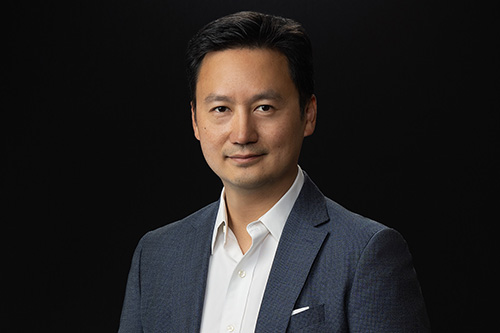
Cooley LLP has launched an artificial intelligence system developed with OpenAI that the firm says can produce a bespoke first draft of an IPO registration statement in minutes rather than days, while potentially changing how capital markets lawyers work, train and bill clients.
Cooley GO Public uses purpose-built AI agents to research and draft an initial Form S-1 using company-specific information, the firm's drafting guidance and curated precedents. Lawyers supervise the process and remain responsible for the legal analysis and final work product.
For David Wang, Cooley's chief innovation officer and a former capital markets lawyer, the goal is not to eliminate lawyers' work but to shift their time away from document production.
"The work isn't disappearing. The work is changing," Wang said in an interview Thursday. "We can automate a significant amount of the work that goes into IPO, but use that time to do more important, higher-value things for our clients."
The offering, designed for use with ChatGPT Enterprise, is part of a broader push by major law firms to build proprietary AI systems around their own expertise.
Kirkland & Ellis LLP in June unveiled a fund formation platform developed with Palantir Technologies that incorporates Kirkland's model documents and legal know-how to automate portions of private fund formation. Kirkland reportedly plans to invest $500 million over three to four years in proprietary AI.
Cooley is applying a similar concept to capital markets, beginning with one of the most labor-intensive documents required to take a company public.
Unlike systems that adapt an existing registration statement, Cooley said GO Public starts with information about the company itself. Its agents conduct research and use Cooley's internal instructions and precedents to construct an initial S-1, which can then be updated as the transaction changes.
Wang said reducing the time required could also ease the burden on executives during an IPO.
"It's a huge suck for management and attention," he said. "What we're able to do is reduce the load on management and make this a better process for them."
The ability to automate substantial portions of work traditionally performed by associates raises questions about both training and the economics of Big Law.
Wang stopped short of predicting that GO Public would lead directly to fixed-fee IPO work but said greater predictability makes alternative pricing easier.
"Previously it was based on input, but now we want it to be based on value," he said.
Kirkland Executive Committee member Erica Berthou recently made a similar point, telling PitchBook that AI could encourage more project-based value billing rather than strict hourly billing.
Wang also rejected the notion that automating document work would deprive younger lawyers of essential training. He said associates working late into the night to complete documents are not necessarily receiving meaningful instruction.
"When we free up that time, we're going to be able to enable more mentorship, more communication between the teams, and train our lawyers better," he said.
Wang said Cooley built attorney supervision into GO Public because of the stakes involved in securities filings.
"Every single step is monitored and supervised by the attorney because, at the end of the day, we stand behind the work product," he said.
GO Public is the first offering from Cooley AI, an AI services company the firm created to rethink how legal services are performed, staffed, priced and delivered. Cooley plans initially to extend the model to private companies, investment funds and mergers and acquisitions. Its architecture could also be adapted to follow-on offerings and debt transactions.
"We want to give firms the ability to build AI around the expertise that makes them distinctive," said Jason Boehmig, OpenAI's general manager for the legal industry.
Cooley has nearly 1,400 lawyers in 19 offices. Citing Deal Point Data, the firm said it has ranked first among U.S. issuer counsel based on completed IPOs since 2016.
"We have all of this know-how and capability, and we want to bring it to more clients," Wang said.
David Houston
david_houston@dailyjournal.com
For reprint rights or to order a copy of your photo:
Email
Jeremy_Ellis@dailyjournal.com
for prices.
Direct dial: 213-229-5424
Send a letter to the editor:
Email: letters@dailyjournal.com