


Sep. 16, 2026
Prop. 45 will speed data center construction
Proposition 45's plain language, and millions of dollars in donations from data center developers, show that the measure will cover data centers and weaken public health protections for surrounding communities.


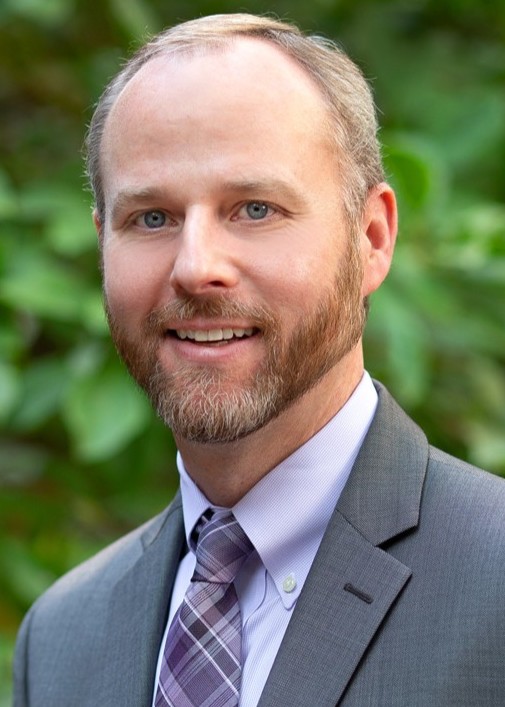

Richard M. Frank
Professor of Environmental Practice (Ret.)
UC Davis School of Law
Senior Fellow, California Environmental Law & Policy Center
Richard is director of the California Environmental Law & Policy Center at the UC Davis School of Law.
Proposition 45's proponents have spent the summer trying to reassure Californians that the measure has nothing to do with data centers. But voters are not being asked to approve proponents' statements to the press. They are being asked to enact 41 pages of statutory text.
Buried in that text is language that covers data centers. Prop. 45 covers so-called "broadband Internet access projects," which it defines as "mass-market retail service . . . that provides the capability to transmit data to, and receive data from, all or substantially all Internet endpoints." This definition encompasses facilities that house the physical infrastructure used for transmitting mass-market retail consumer data to and from the internet, which includes many modern data centers.
Critically, Prop. 45 covers "all related and ancillary . . . infrastructure . . . included in [a] project application as part of the 'whole of the project.'" Data center developers invoking Prop. 45 will surely argue that data centers are "related" and "ancillary" to internet access infrastructure. Without the servers and storage to support internet-based applications, the hardware that connects those applications to the internet would be useless.
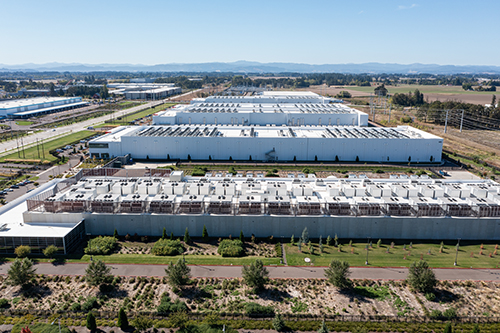
This argument becomes even more obvious when one considers how modern data centers are built. Colocation facilities are multi-tenant buildings where companies rent space for their own servers and networking equipment. A growing class of colocation facilities are known as "carrier hotels," which include both network interconnection equipment and hardware that facilitates internet-based services in the same building. These types of facilities would fall within Prop. 45's coverage. Hyperscale data centers are massive, purpose-built campuses typically owned and operated by a single company, such as Google, Meta and, increasingly, AI companies such as OpenAI and Anthropic. Hyperscale data centers very often contain infrastructure that connects the facility to the internet's physical backbone, including, in many cases, the operator's own submarine cables and backbone fiber. Exactly what type of equipment is included in a data center facility matters. If a proposed data center contains any broadband transmission infrastructure alongside its other equipment, the facility can claim coverage under Prop. 45 as a "broadband Internet access project."
The drafters of Prop. 45 explicitly excluded a long list of controversial projects. The measure expressly carves out high-speed rail, the Delta Conveyance Project, nuclear generation, jails, immigration detention facilities, prisons and oil and gas facilities. Data centers are conspicuously absent from this list. Under bedrock principles of statutory interpretation, a California court will read that silence not as an oversight, but rather as deliberate intent to include data centers in Prop. 45's coverage. As they did for other projects, the proponents could have expressly excluded data centers in the text of the initiative. They didn't.
Tellingly, while publicly proclaiming that Prop. 45 has nothing to do with data centers, the Yes Campaign has quietly taken in $2 million from three companies that are actively building them. Prologis, a builder of two San Jose data center campuses, has given $250,000. California Resources Corporation, which is co-developing a 275 MW data center on its Elk Hills oil field, routed $500,000 into a Chamber-controlled committee four days after the measure cleared for circulation, and contributed another $500,000 directly to support Prop. 45 just two weeks ago. And PG&E has given $750,000, a $500,000 direct contribution and $250,000 to the Chamber-controlled committee, while collaborating with a Canadian mega developer to incorporate data centers into three San Jose housing developments.
Meanwhile, existing environmental law is protecting communities from data centers' most significant impacts. The STACK Trade Zone Park data center, for example, is located on 9.8 acres in San Jose, within 150 feet of homes and 330 feet of a daycare facility. It includes two 4-story data center buildings and is backed up by a 91-megawatt bank of 39 diesel generators. The environmental review process for the project identified several critical mitigation measures, including requirements that backup generators burn renewable diesel fuel, and that the facility buy 100% carbon-free electricity.
Separately, in November 2024, the City of Pittsburg approved the Pittsburg Technology Park Specific Plan, which includes AVAIO Digital Partners' "Perseus" data center. At full build-out, the data center could require roughly 400-500 MW of power. The Center for Biological Diversity filed a legal action because the environmental review process for the project failed to adequately analyze its greenhouse gas emissions, water use, wildfire risks, and impacts on wildlife and wetlands, noise and traffic. In December 2025, the case settled under an agreement that provides robust mitigation for the project's significant environmental and community impacts. Among other things, this project will now include 100% renewable or carbon-free electricity, dust minimization, recycled water for cooling, zero-emission construction equipment, noise mitigation and wildlife protections. AVAIO also agreed to pay $750,000 into a climate-resiliency fund for disadvantaged Pittsburg communities.
These examples show how the environmental review process can provide real protections for local communities. Prop. 45 will dramatically weaken environmental standards applicable to these projects and strip courts of the power to enforce the law. It is critical that we maintain these existing legal protections. Public health costs from pollution tied to California data centers rose from $44.7 million in 2019 to $155.4 million in 2023. These costs are projected to climb further.
The Yes Campaign's public statements about data centers will matter little in a court of law at the end of the day. Judges will look at the initiative's text and the ballot materials, not press statements, when interpreting what Prop. 45 covers. Californians should therefore believe what Prop. 45 actually says and understand that the data center industry isn't funding Prop. 45 out of the goodness of their hearts.
Submit your own column for publication to Diana Bosetti
For reprint rights or to order a copy of your photo:
Email
Jeremy_Ellis@dailyjournal.com
for prices.
Direct dial: 213-229-5424
Send a letter to the editor:
Email: letters@dailyjournal.com