


Ethics/Professional Responsibility
Aug. 21, 2026
Meta judge draws line between legal, business advice in privilege fight
A federal judge rejected Meta's bid to broadly block a former researcher's testimony about communications with in-house lawyers, while questioning whether his work is relevant to the social media addiction case.


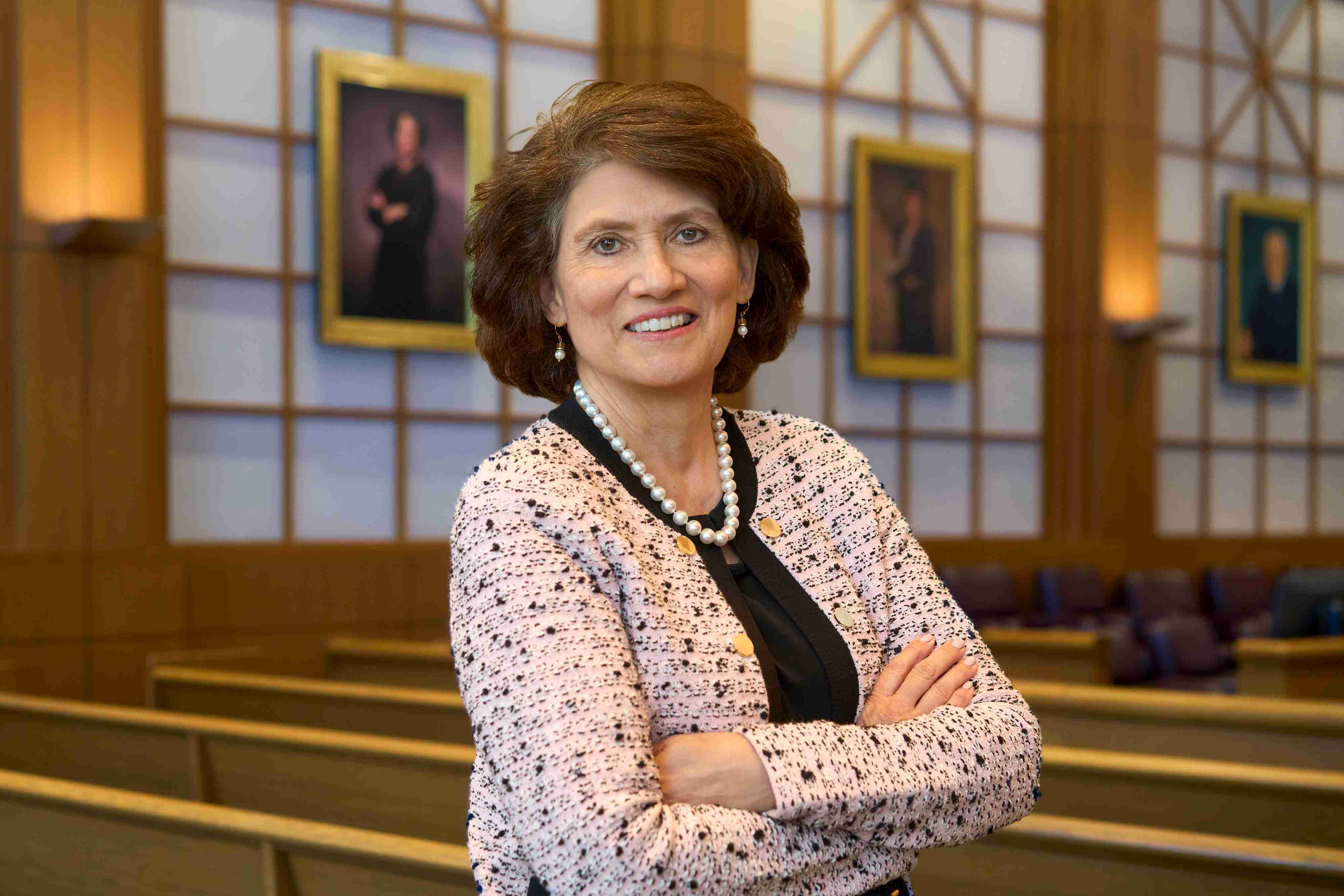
Meta can't broadly invoke attorney-client privilege to prevent a former employee from testifying that its in-house lawyers interfered with his research, Chief U.S. District Judge Yvonne Gonzalez Rogers said Friday.
But Gonzalez Rogers also ruled that some communications were protected by the privilege and questioned whether the former employee's testimony is relevant to the case at all.
"Lawyers who give business advice cannot shield business advice even when it involves risk," Gonzalez Rogers said in Oakland, where four states allege Meta misled the public about the risks of teenagers becoming addicted to its Instagram and Facebook platforms.
With the trial recessed because of a sick juror, the parties sought to resolve a longstanding dispute over the testimony of former Meta researcher Jason Sattizahn. The plaintiffs plan to call Sattizahn to testify that Meta's in-house counsel pushed him to change his research findings, but Meta objected, arguing that the communications constituted legal advice protected by attorney-client privilege.
Gonzalez Rogers declined to issue a blanket ruling precluding Sattizahn's testimony, saying she would evaluate each communication for which Meta asserts privilege on a case-by-case basis. Communications conveying legal advice are privileged, she said, but testimony concerning business advice given by lawyers is not necessarily protected.
"I am not going to enforce some claim of privilege that a lawyer with a business hat on told him to change things," Gonzalez Rogers said.
The case, People of the State of California et al. v. Meta Platforms Inc. et al., No. 4:23-cv-05448 (N.D. Cal.), is part of In re: Social Media Adolescent Addiction/Personal Injury Products Liability Litigation, No. 4:22-md-03047 (N.D. Cal., filed Oct. 6, 2022).
Even as she rejected Meta's request for a broad privilege ruling, Gonzalez Rogers questioned whether Sattizahn's testimony is relevant to the plaintiffs' case.
Sattizahn conducted research related to Meta's virtual reality efforts, while the plaintiffs' claims concern alleged harms associated with the company's social media platforms. Gonzalez Rogers questioned the connection between the two and whether Sattizahn's testimony should reach the jury.
Meta, represented by Covington & Burling LLP, noted that Los Angeles County Superior Court Judge Carolyn B. Kuhl restricted Sattizahn's testimony in a JCCP bellwether case involving similar allegations. Gonzalez Rogers responded that California courts apply a different standard to privileged material than federal courts, which in the 9th Circuit examine the primary purpose of a communication.
Communications about ongoing research, she said, primarily served a business rather than a legal purpose.
"My view in terms of an attorney's commenting on ongoing research is [that it's] business advice and is not protected," Gonzalez Rogers said.
The judge did side with Meta on one exhibit discussed in the parties' briefs, concluding that it consisted entirely of a Meta lawyer's legal opinion and was protected.
"You're luckier than most because you now have an insight into what their lawyers are thinking... But be that as it may, the document is protected," Gonzalez Rogers told the plaintiffs.
Even when a specific communication is privileged, however, Gonzalez Rogers said the plaintiffs may still be able to introduce evidence of changes to research that resulted from it.
She offered a hypothetical involving a report titled "A." If a lawyer instructed a researcher in a privileged communication to change the report, and the company subsequently published a revised version titled "A1," the communication itself could remain privileged while the underlying research would not necessarily be shielded.
"The witness can testify as to what was in A, assuming it doesn't concern something legal," Gonzalez Rogers said.
UC Law San Francisco professor David I. Levine said allowing witnesses to testify about their research without disclosing privileged communications offers courts a way to protect attorney-client privilege while still allowing potentially relevant factual testimony.
"That's a way to keep that out of the hands of the appellate court," Levine told the Daily Journal.
In general, Levine said, distinguishing legal advice from business advice tends to be a "judgment call."
"It very much has to do with what's the lawyer's motivation. Can you really point to a corporate purpose?" Levine said.
Corporate counsel represents the company, and communications between in-house lawyers and employees can be privileged when they are made for the purpose of obtaining or providing legal advice. But employees frequently communicate with company lawyers about matters that involve both legal and business considerations, making the line difficult to draw, Levine said.
The privilege belongs to the company rather than the individual employee, but that does not mean communications between corporate lawyers and lower-level employees fall outside its protection. Courts must instead examine the purpose and context of the communication to determine whether the privilege applies.
Some in-house lawyers try to address the issue by telling employees before a meeting that the communication is privileged, Levine said. But simply labeling a communication privileged can sweep too broadly and does not determine whether the privilege actually applies, leaving the issue for a court to resolve.
Ultimately, Levine said, drawing the line between legal and business advice often comes down to judicial judgment.
"There's room for reasonable minds to differ," Levine said.
Daniel Schrager
daniel_schrager@dailyjournal.com
For reprint rights or to order a copy of your photo:
Email
Jeremy_Ellis@dailyjournal.com
for prices.
Direct dial: 213-229-5424
Send a letter to the editor:
Email: letters@dailyjournal.com