


State Bar & Bar Associations
Aug. 11, 2026
State Bar reverses course on certification deadline for law graduates
After weeks of objections from prosecutors and public defenders, the State Bar admissions chief says the agency has reversed its interpretation of a new certification deadline, restoring eligibility for some graduates previously blocked from post-bar practice, which affected district attorney and public defender offices statewide.


By Laurinda Keys, Associate Editor
After weeks of pleas from prosecutors and public defenders -- and after saying it could not make exceptions to a new certification deadline -- the State Bar has reinterpreted the rule for some recent law graduates who had been blocked from appearing in court under supervision.
The reversal comes after public agencies statewide warned that the new deadline was disrupting post-bar programs that help train law graduates and provide legal assistance to district attorney and public defender offices.
In a Monday evening email to Santa Clara County Public Defender Daman Silver and a Tuesday email to the Daily Journal, State Bar Chief of Admissions Donna S. Hershkowitz said the bar had reconsidered how the new 30-day application deadline for the Certified Law Student Program should apply to graduates who completed their studies before the amended rules took effect June 1.
"After reviewing your concerns and upon further consideration, we have determined that the best interpretation of these amendments is that the 30-day deadline to apply for the Certified Law Student Program applies prospectively only to those who graduated or completed their law studies on or after June 1, 2026, the effective date of the amended rules," Hershkowitz wrote.
The new interpretation provides relief for those who graduated from law school before June 1, took the July 2026 bar examination as the first for which they were eligible and are awaiting results. Those applicants may apply under the former rules and procedures and, if approved, participate in the program until July exam results are released Nov. 6, Hershkowitz said.
The State Bar is also contacting graduates whose applications were denied under its earlier interpretation of the amended rule but who would have been considered under the former rules and procedures.
"We apologize for any inconvenience caused by this situation," Hershkowitz wrote.
It was not immediately clear whether the State Bar had announced the new interpretation publicly or notified law schools and employers participating in the program more broadly. The bar said Tuesday morning it would respond to further questions the Daily Journal sent Monday.
Merrill Balassone, a public affairs officer for the Judicial Council, confirmed in an email Tuesday: "We have been made aware that the State Bar will afford immediate relief to those law students who graduated before June 1, 2026 and wish to apply to the Certified Law Students Program."
The reinterpretation marks a significant shift from what the State Bar previously told affected public-sector employers. In correspondence quoted in letters from Santa Clara County District Attorney Jeffrey Rosen and Contra Costa County Public Defender Ellen McDonnell, the bar said it could not accept applications after the deadline and that admissions officials lacked authority to grant exceptions.
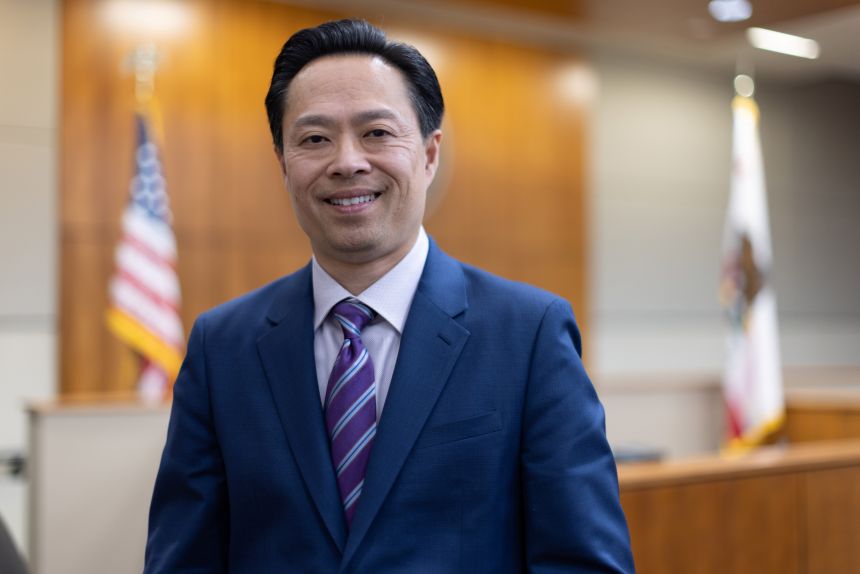
Sacramento County District Attorney Thien Ho welcomed the reversal, saying it would provide immediate help to graduates working in his office while also calling for better communication about future changes.
"We appreciate the State Bar's new interpretation of the rules. This will help Sacramento County District Attorney law student graduates this summer. We hope to maintain clear and more consistent communication with the State Bar regarding future rule changes," Ho wrote in an email Tuesday.
"I have been confident our values of fairness would override bureaucratic inertia because this issue was too important to our collective goal of advancing and cultivating diversity and investment in public interest work in our profession," Silver said Tuesday after the reversal. "To do otherwise would have disproportionately impact the most vulnerable, in particular our financially fragile and most racially diverse recent graduates. We are grateful for the revised approach and intervention by those who share these ideals."
The relief does not resolve concerns about graduates who completed their studies on or after June 1 or about future classes. Hershkowitz said the State Bar is considering seeking another rule change from the California Supreme Court.
"We value the feedback received concerning the effect of these amendments for future graduates as well, and we are evaluating whether to submit for the California Supreme Court's consideration a change to the rules for future classes of certified law students," she wrote.
The California Supreme Court approved the amendments March 19, effective June 1. Rule 9.42(c)(5) gives graduates up to 30 days after graduation or completion of studies to apply for certification, which allows them to perform specified legal work, including appearing in court, under attorney supervision before admission to the State Bar.
Prosecutors and public defenders said the deadline collided with the normal post-bar hiring cycle. Graduates typically finish law school in May, spend eight to 10 weeks preparing for the July bar examination and begin public-sector jobs afterward, by which time the application window had closed under the new rule.
Silver said in an interview that the program is important to public agencies and recent graduates because "it allows us to likewise not only see them and get some observation of their work but also allows us to train them."
The post-bar clerks perform legal research, motion work and court appearances, he said. "We do, frankly, depend on them to do this work."
California District Attorneys Association President Dan Dow told Chief Justice Patricia Guerrero in an Aug. 4 letter that many graduates do not yet have the supervising attorney required for certification while the 30-day period is running.
"The rule conditions eligibility on a document that, for most graduates entering public service, cannot yet exist," CDAA wrote.
The association said the program is an important tool for district attorneys' offices to train and evaluate prospective prosecutors. It asked the Supreme Court to provide transition relief for spring 2026 graduates and, for future classes, either eliminate the 30-day deadline or allow graduates to apply within 30 days of beginning employment under a supervising attorney.
California Public Defenders Association Executive Director Kate Chatfield said public defender offices historically certified post-bar clerks in August, after graduates completed the July bar exam.
"The 30-day requirement forces students to file certification paperwork in the middle of bar prep, and it categorically excludes anyone hired after taking the bar," Chatfield wrote in an email to the Daily Journal on Monday. "It's a rule that doesn't reflect how these programs actually work."
The organizations also questioned whether law schools and participating employers received adequate notice.
Chatfield said the 30-day requirement appeared in proposed amendments to State Bar Rule 3.2(B) but was not expressly stated in the proposed text of California Rule of Court 9.42 attached to the bar's Dec. 19, 2025, petition to the Supreme Court. CPDA's review concluded that the Supreme Court inserted the deadline into Rule 9.42(c)(5) when it granted the bar's petition in part, as modified, in March.
The State Bar previously gave a different account of how the requirement was presented. In correspondence quoted by Rosen, a bar official said the rules were put out for public comment in 2023 and 2025 and that the 2025 proposal included the 30-day requirement as a proposed amendment to State Bar Rule 3.2.
"The Supreme Court moved it to the Rule of Court as part of their approval," according to the State Bar correspondence quoted by Rosen.
Rosen's letter quoted a bar official as acknowledging that the agency did not provide special notice of the change to employers participating in the program and did not have records showing whether those employers were affirmatively notified during the public comment process.
At the time, the State Bar official also told Rosen, "Unfortunately, the rules do not permit us to allow participants to apply for the program beyond the deadline set in the rule."
The new interpretation reverses that position for those who graduated before June 1.
San Bernardino County District Attorney Jason Anderson said in an email Tuesday, "We have a total of five certified candidates who were scheduled to start with us this fall. Since they missed the 30-day window, two declined to come in as non-certified and we are waiting to hear from the other 3."
Rosen said eight graduates hired by the Santa Clara County District Attorney's Office to begin work this fall had been affected.
Contra Costa County Public Defender Ellen McDonnell said her office hired post-bar clerks from seven law schools whose graduation dates ranged from May 9 to May 17, before the amended rule took effect. As a result, the graduates had only eight to 16 days after June 1 to comply with a deadline calculated from their graduation dates, she wrote.
None of the incoming clerks met the deadline, according to McDonnell, who said her office and the graduates were unaware of the change.
McDonnell argued that applying the deadline to people who graduated before the rule took effect improperly gave it retroactive application and raised due process concerns because they lacked adequate notice and a reasonable opportunity to comply.
"They should not pay the price for apparently widespread notice defects by losing the critical ability to appear and argue on the record in court as they await their bar results," McDonnell wrote.
The State Bar's new interpretation adopts the prospective application McDonnell sought for graduates who finished law school before June 1.
The March amendments had been publicly announced as expanding the Certified Law Student Program to people participating in the Law Office Study Program, a path for legal study outside traditional law schools. Critics said the announcement did not disclose that the amendments also substantially shortened the application period for recent law school graduates.
The State Bar's decision now provides relief for graduates who completed their studies before the amended rules took effect. Whether the 30-day deadline will remain in place for future classes is under consideration by the bar.
Laurinda Keys
laurinda_keys@dailyjournal.com
For reprint rights or to order a copy of your photo:
Email
Jeremy_Ellis@dailyjournal.com
for prices.
Direct dial: 213-229-5424
Send a letter to the editor:
Email: letters@dailyjournal.com