


Aug. 10, 2026
California Supreme Court orders electronic recording when court reporters unavailable
Writing for a unanimous court, Chief Justice Patricia Guerrero said California's chronic shortage of court reporters cannot leave litigants who cannot afford private reporters without a meaningful record for appeal.


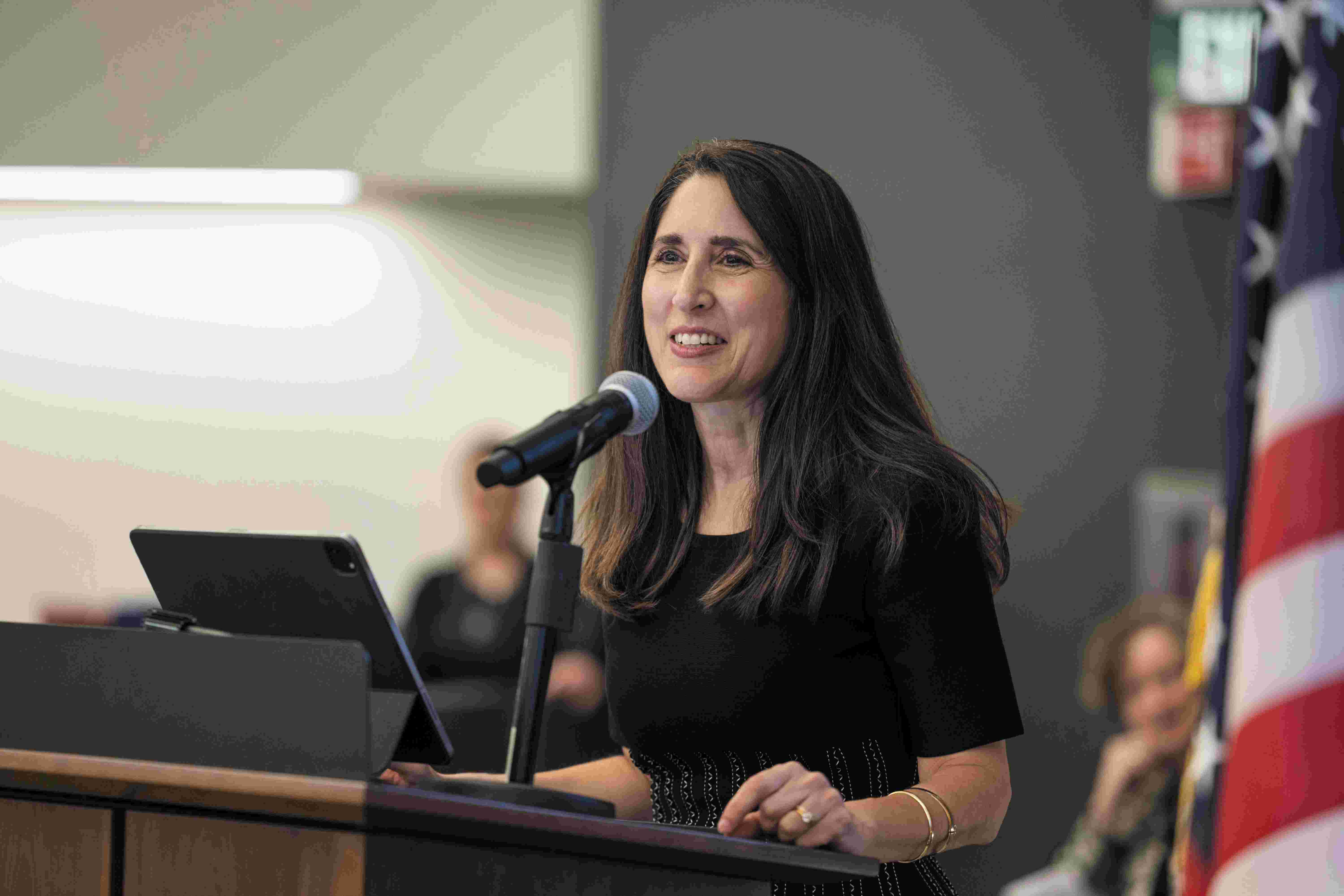
The state Supreme Court ruled Monday that trial courts must provide low-income civil litigants with an official verbatim record of proceedings, including through electronic recording when a court reporter is unavailable.
In a unanimous opinion authored by Chief Justice of California Patricia Guerrero, the court said California's chronic shortage of court reporters cannot leave litigants who cannot afford private reporters without a meaningful record for appeal. Family Violence Appellate Project et al. v. Superior Court of Contra Costa County et al., 2026 DJDAR 6882 (Cal. S. Ct., filed Dec. 5, 2024).
"Where a litigant requests the creation of an official verbatim record and establishes an inability to pay for a private court reporter, a superior court has a duty to provide some way for the litigant to obtain an official verbatim record, including by electronic recording if an official reporter is unavailable," Guerrero wrote. "It has no discretion to decline to do so."
Covington & Burling LLP senior counsel Sonya D. Winner, who represents Family Violence Appellate Project, hailed the ruling.
"Hundreds of thousands of people have been deprived of this basic right of access to the justice system," she said in a phone interview. "What today's decision says is that's not allowed. The poor people can't be the ones who pay the price."
Los Angeles County Presiding Judge Sergio C. Tapia II said his court welcomed the high court's directive.
"Our Court has been advocating for litigants to have access to verbatim records for over three years, through advocacy to the California State Legislature and robust recruitment and retention of court reporters," Tapia said in a statement.
The decision grants a writ of mandate against the superior courts in Los Angeles, Santa Clara, Contra Costa and San Diego counties, which did not oppose the petition.
The ruling builds on its 2018 decision, which required courts that stopped routinely providing official reporters in civil cases to make reporters available to indigent litigants upon request. Jameson v. Desta, 2018 DJDAR 6643 (Cal. S. Ct., filed Dec. 1, 2015).
Guerrero wrote that experience since Jameson has demonstrated that guarantee can become "illusory" when courts lack enough reporters to fulfill those requests.
"Courts have no discretion in this regard," she wrote. "It is their duty under Jameson and the in forma pauperis doctrine to provide indigent litigants with some way of obtaining an official verbatim record of proceedings."
The Supreme Court issued an order to show cause in February 2025 asking the four superior courts why they should not be required to provide electronic recordings when court reporters are unavailable.
The dispute arose from a statewide shortage of certified shorthand reporters that has left hundreds of thousands of civil, family and probate proceedings without transcripts. A 2024 California Access to Justice Commission report estimated that more than 1 million hearings and trials in unlimited civil, family and probate cases occurred during the preceding year without courts providing a means of creating an official transcript.
California law generally prohibits electronic recording from serving as the official record in most civil proceedings. Deputy Solicitor General Ian Fein told the justices during oral argument in June that the prohibition was enacted in 2004, before the current shortage of court reporters.
Guerrero concluded that courts possess inherent authority to create an exception when necessary to ensure meaningful access to justice for litigants unable to afford private reporters.
Court reporter organizations argued that electronic recordings can be less reliable than records created by certified shorthand reporters and attributed some of the shortage to court hiring and management practices. The Supreme Court declined to resolve those disputes, saying the cause of the shortage was beside the point.
Scott A. Kronland, a partner with Altshuler Berzon LLP who filed an amicus brief on behalf of court reporters and the Service Employees International Union, had urged the justices to reject the petition, arguing that granting it would "undermine the Legislature's successful effort to rejuvenate the court reporting profession."
Following Monday's decision, Kronland said the ruling "should increase job opportunities for court reporters."
"Electronic recording is an inferior method that may be used only if court reporters are unavailable," Kronland said. "Court reporter schools are full and have waiting lists. Superior courts must hire those court reporters."
The opinion does not require the four superior courts to hire additional court reporters or lift hiring freezes.
"It is sufficient to note that a verbatim record created by electronic recording is better than no record at all," Guerrero wrote.
Mark R. Yohalem, a Wilson Sonsini Goodrich & Rosati PC partner representing the four counties, agreed with the plaintiffs during oral argument that the court reporter shortage constitutes a "constitutional crisis ... that can be ameliorated with electronic recording."
The Coalition to Capture the Record, an access-to-justice advocacy group, applauded the decision while noting that the writ applies only to the four counties named in the case.
"Notably, the Court did not treat electronic recording as an inferior or unreliable way of creating the record -- it found that any concerns about accuracy 'can be mitigated with standardized procedures and safeguards,'" spokesperson Natalie Bauer Luce said.
Craig Anderson
craig_anderson@dailyjournal.com
For reprint rights or to order a copy of your photo:
Email
Jeremy_Ellis@dailyjournal.com
for prices.
Direct dial: 213-229-5424
Send a letter to the editor:
Email: letters@dailyjournal.com