


Labor/Employment
Aug. 7, 2026
Navigating the hazy boundaries of public employee speech
The Ninth Circuit's Theis decision clarifies public employees' workplace speech protections, holding that when employees speak as part of their jobs, employers -- not employees -- control the message.



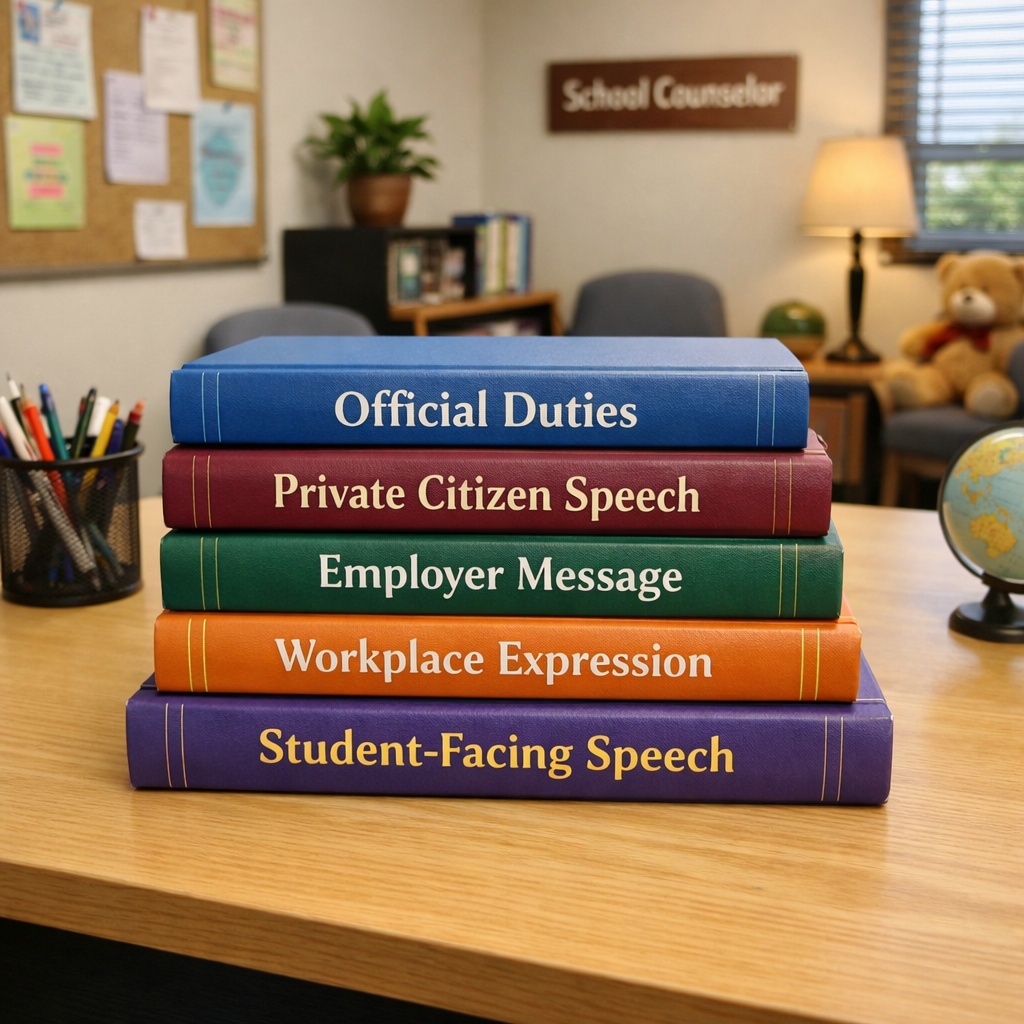
Twenty years ago, the Supreme Court held that the speech of public employees can be limited by their employers--depending on the context of the speech. When public employees act "pursuant to their official duties," they are "not speaking as citizens," but are instead speaking as representatives of their employers. Garcetti v. Ceballos, 547 U.S. 410, 421 (2006). The First Amendment does not insulate such speech from employer discipline. Id. But some speech, even at work, can be made as a private citizen. Drawing the line between protected and unprotected workplace speech has proven to be a thorny and often-litigated issue in the two decades since Garcetti.
One of the latest installments in that litigation is the Ninth Circuit's recent divided opinion in Theis v. Intermountain Education Service District, ___ F.4th ___, 2026 WL2093895 (9th Cir. July 21, 2026). In Theis, a licensed clinical social worker was employed at a public middle school. Among other duties, he met with students in his office to perform evaluations and assessments. At his desk, he displayed books which the school district viewed as expressing anti-transgender messages in violation of its inclusion policies. The majority opinion, authored by Judge John B. Owens, concluded the social worker's display of the books was speech made in his capacity as a public employee, not as a private citizen. Id. at *4. Two key (and related) considerations drove the result.
First, the majority emphasized that the speech "occurred within the scope of his professional role." Id. This factor focuses on the setting and the task: whether the challenged expression took place in an environment where the employee was assigned to perform official duties, and whether the speech was directed at students with whom the employee was working. The majority distinguished cases where the challenged speech occurred off school grounds or was not directed at students, such as Dodge v. Evergreen School District #114, 56 F.4th 767, 778 (9th Cir. 2022), in which a teacher's decision to wear a political slogan at a teacher-only training was held to be private speech.
Second, "and most importantly," the majority reasoned that the employee's speech "owes its existence to his position." Id. This consideration asks whether a key function of the employee's role is to communicate and express a message or curriculum set by the employer. The majority relied on Johnson v. Poway Unified School District, 658 F.3d 954, 967-68 (9th Cir. 2011), which held that a teacher's classroom expression constitutes government speech because in hiring educators, the school employs them to communicate the school's message to students. The majority also drew on the Seventh Circuit's formulation that "expression is a teacher's stock in trade, the commodity she sells to her employer in exchange for a salary." Mayer v. Monroe Cnty. Cmty. Sch. Corp., 474 F.3d 477, 479 (7th Cir. 2007). Thus, "the school system does not 'regulate' teachers' speech as much as it hires that speech." Id. (emphasis in original). This framing treats certain public employees--particularly educators--as having been engaged specifically for their expressive work, which in turn empowers the employer to dictate the content of that expression.
This analytical framework will likely continue to drive the analysis of future cases involving public employee speech. The Theis majority's emphasis on whether an employee occupies an inherently expressive role suggests that courts will focus on the nature of the employee's position, in addition to the content or location of the challenged speech. Employees in roles centered on communication with the public or with students (such as teachers, counselors, and administrators) may find their workplace expression more readily characterized as government speech, while employees in non-expressive roles (accounting staff, IT personnel, custodians) would retain stronger claims to private citizen First Amendment rights even when speaking on the clock.
This holding drew a lengthy and impassioned dissent from Judge Lawrence VanDyke, who argued that its result could not be squared with Kennedy v. Bremerton School District, 597 U.S. 507 (2022), and that Kennedy abrogated much of the precedent on which the majority relied. This disagreement reveals a deeper fault line: whether Kennedy fundamentally altered the longstanding Garcetti framework for analyzing public employee speech, or whether it was merely a fact-specific application of it.
The majority countered that Kennedy should be limited to its "unique facts." Id. at *6. Specifically, the Supreme Court described the coach's postgame prayer as occurring when he was not engaged in his official duties as a coach, implying that if he had been on duty and engaging with the students in a professional capacity, the result would have been different. Id. The majority pointed out that other circuits have considered whether Kennedy abrogated longstanding precedent that curricular speech is not private and concluded that it did not. Id.
Judge Owens summed up the majority opinion by reaffirming that the core principle of Garcetti remains undisturbed by Kennedy: "If an employee is on the clock, then the school district, not the employee, decides what he can or cannot say to students, even if private citizens may object to the messages that the government permits or prohibits." Id. That's the law of the circuit, at least for now.
Submit your own column for publication to Diana Bosetti
For reprint rights or to order a copy of your photo:
Email
Jeremy_Ellis@dailyjournal.com
for prices.
Direct dial: 213-229-5424
Send a letter to the editor:
Email: letters@dailyjournal.com