


Family
Aug. 5, 2026
Whose fault is it? His? Hers? Theirs? Or nobody's?
California's status as a pure no-fault divorce state, established in 1969, is now facing renewed reform proposals, prompting a look at how fault-based divorce historically worked, how it shaped early American and California law, and how the state's current annulment rules still retain traces of a fault-based framework.


Stanley Mosk Courthouse
Scott J. Nord
Judge
Los Angeles County Superior Court
Family Law
Whittier Law School, 1996

Annabel Binandeh
Annabel Binandeh is a second-year law student at Southwestern Law School and a legal extern at the Los Angeles Superior Court.
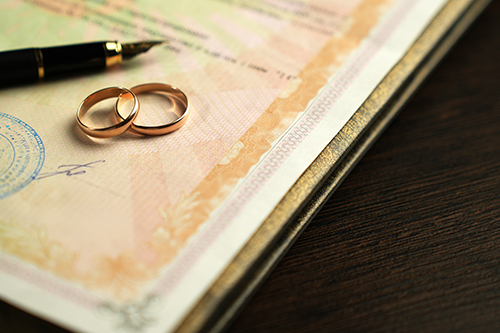
California is what is called a "no-fault" state when it comes to dissolution proceedings. In other words, the cause of the end of the relationship is generally irrelevant to the division of the community property estate. California is one of 17 states where "no-fault" is the only option. The other 33 states allow a decision to be made between "at fault" or "no fault" options for dissolution.
Consider this hypothetical: the petitioner and respondent have been married for 15 years. The petitioner suspects that the respondent has been engaging in an extramarital affair with a co-worker. When the petitioner would ask the respondent about this person, the respondent would only reply that "they are a friend" or a "co-worker" and downplay the relationship beyond that. The respondent would freely allow the petitioner to read all the text messages to prove there was, in fact, "nothing going on." In fact, respondent even allowed the petitioner to view the social media applications to show that there were no "hidden" text messages. Again, the "investigation" provided no proof, but the petitioner continued to believe there was a relationship. However, the petitioner was convinced that more was going on because the respondent had become more distant in their relationship, and there was a lack of intimacy when previously there had been plenty. When the petitioner mentioned these concerns, the petitioner's friends would just say, "It's what happens in a marriage" and "Welcome to the club." However, the petitioner continued to harbor these concerns. The respondent agreed to attend counseling with the petitioner, which the parties did for a period of six months. Despite the demonstrable lack of proof and counseling, the petitioner continued to hold this belief. Ultimately, the petitioner filed for divorce alleging that the respondent was unfaithful. The respondent countered that the petitioner's obsession with an affair that did not exist destroyed their marriage. Who's at fault? And why should it or should it not matter?
California has been a no-fault state since Gov. Ronald Reagan signed the Family Act law in 1969. But what if California reverted to a fault state? Recently, there has been proposed reform to do so. However, what does a fault state actually look like? (Donna S. Hershkowitz and Drew R. Liebert Counsel, "The Direction of Divorce Reform in California: From Fault to No-Fault . . . and Back Again?" Cal. Assemb. Judiciary Comm. (1997)).
The history of fault-based divorce
Historically, obtaining a divorce depended on proving one spouse had engaged in marital misconduct. A court would not dissolve a marriage unless the party attempting to exit the marriage proved the other party's marital misconduct, or fault, such as adultery, abandonment or extreme cruelty that justified ending the marital relationship. As a result, it was notoriously difficult to obtain a divorce.
During the early 17th century, at the time English colonists arrived in Virginia and Massachusetts, legal dissolution was extremely uncommon and practically unattainable under English law. Legal separation was generally reserved for only upper-class men through ecclesiastical courts: "In England, ecclesiastical courts, not judicial courts, had granted annulments and divorces 'a mensa et thoro' (i.e., from table and bed), but neither severed the marital tie, thereby prohibiting remarriage. It was merely a separation that was available only on the gross misconduct of the other spouse..." (Jane J. Felton and Barbara A. Schweiger, "Toward a More Perfect Dissolution: The History of American Divorce Law and Its Ghosts in Contemporary Practice," 37 J. of the Am. Acad. of Matrim. Laws. 501, 506-07 (2025). The Puritans eventually rejected England's ecclesiastical approach and embraced the Reformation principle that marriage was, at its core, a civil contract entered into by mutual consent. (Id.) In 1692, the Massachusetts Legislature enacted a law recognizing that marriage and divorce were civil rather than ecclesiastical matters. (Id. at 509).
Gender has also been a significant factor in determining fault as grounds for divorce. For example, in 1876, a New Jersey court held "a husband's forcing himself sexually on his wife, whose medical condition had rendered it extremely painful for her, was not sufficiently 'grave and weighty' to warrant her marital freedom." (Id. at 505). An act of adultery committed by one's husband was typically insufficient to grant dissolution. (Id.) However, on the other hand, a woman typically had to prove her husband engaged in multiple affairs plus one other wrong to be granted dissolution, where adultery was the cause of action. (Id. at 517).
Fault-based divorce law in the West was generally more progressive than the rest of the United States. For example, California's first divorce law in 1851 required any of the following to warrant a divorce: "impotence, adultery, extreme cruelty, desertion, neglect, habitual intemperance, fraud, and conviction for a felony." (Hershkowitz and Counsel, "The Direction of Divorce Reform in California," supra, at 2). By the year 1900, proper grounds for divorce had widely broadened to four basic elements: "fault-based grounds, one party's guilt, the continuation of gender-based marital responsibilities after divorce, and the linkage of financial awards to findings of fault." (Id. at 3).
For many years, it was common practice for those living in California and other Southern states to travel south of the border to Ciudad Juárez for a no-fault "quickie divorce." Lax residency requirements allowed one party to seek a divorce with little effort. At the time the Mexican government put an end to this practice in 1970, it was estimated that 43,000 divorces per year were being granted in Mexican courts for American citizens. ("The Law: Demise of the Quickie Divorce," Time Magazine, 1970, https://time.com/archive/6838334/the-law-demise-of-the-quickie-divorce). Some of the rich and famous who took advantage of this process were Marilyn Monroe (from Arthur Miller), Mia Farrow (from Frank Sinatra), Anthony Quinn, Bette Davis and Zsa Zsa Gabor. (https://www.yahoo.com/entertainment/ celebrity/ articles/hollywood-stars-found-quickie-divorces-150046198.html). Interestingly, the Time Magazine article directed people still interested in "quickie" divorces to Idaho and Nevada, which only had six-week residency requirements.
The push towards no-fault
California's adoption of no-fault divorce entirely changed this old approach to dissolution. Rather than requiring proof of marital misconduct, no-fault divorce permits a marriage to be dissolved based solely on the fact that the relationship has broken down beyond repair, or in other words, where there exists "irreconcilable differences." In 1966, Gov. Edmund G. Brown created the Governor's Commission on the Family, which issued recommendations, including eliminating fault-based divorce because it failed to serve the public interest. (Hershkowitz and Counsel, "The Direction of Divorce Reform in California," supra, at 5). On Sept. 5, 1969, Reagan signed the Family Act into law, bringing the Commission's recommendation to fruition and establishing no-fault divorce in California. (Id.)
Efforts to push no-fault reform were driven by policy concerns that the requirement to establish grounds for a divorce encouraged artificial tactics that one could be encouraged to partake in just to divorce their spouse successfully. Because one partner had to prove the other was at fault for the divorce, while simultaneously maintaining they were blameless themselves, it was not uncommon to hear fabricated stories of adultery in order to prove fault, "...Even when both partners desired the divorce, they were often reduced to perjury and collusion, sometimes staging adulterous liaisons to be captured in grainy photographs by lurking private eyes." (Id.)
Let us revisit the hypothetical above. The petitioner is convinced that the respondent has been involved in an extramarital affair with a co-worker. Under a fault-based divorce system, the cause of the marital breakdown becomes the central issue in deciding who is at fault. However, is the cause of the petitioner and the respondent's marital breakdown the petitioner's paranoia of an imaginary affair, or the respondent's hidden affair that was just never uncovered? Who is really at fault? This question radically changes the scope of discovery in dissolution proceedings. The petitioner would likely need to track the respondent or hire a private investigator to capture any "signs" of an affair. But would this be considered stalking or an invasion of the respondent's privacy resulting in the filing of a Domestic Violence Restraining Order? And what would sufficient "signs" of adultery be? Would circumstantial evidence suffice, or would there need to be direct evidence of an affair? In Zeringue, a Louisiana court found that circumstantial evidence, such as the defendant's wife sharing a motel room with another man overnight until 8:00 a.m., was sufficient for a finding of adultery, even with a lack of direct evidence. Zeringue v. Zeringue, 479 So. 2d 443, 445-46 (La. Ct. App. 1985).
Nonetheless, according to our hypothetical, the petitioner would at the very least have to subpoena phone records for any deleted texts, calls or dating apps, financial records or location history. Also consider how extensive the petitioner's witness list would be for depositions or trial, as it would be wise to subpoena any potential witnesses, such as neighbors, relatives, friends, alleged affair partners, counselors or even medical professionals. On the other hand, think about the respondent's case-in-chief. The respondent would not only attempt to rebut the allegations of adultery but also prove the petitioner's obsession with an imaginary affair. How much is too much information to disclose, and can discovery become an invasion of privacy for the parties involved (i.e., discussion of their history of intimacy or lack thereof)? Also, consider how this breadth of discovery could be abused and the need for protective orders. Not to mention the applicability of the rules of evidence, as any or all of each party's personal life could arguably be sought to be entered during trial to determine fault. What information would be irrelevant in this scenario?
Fault-ish
California, however, still arguably holds some form of fault in its quiver. Similar to fault-based divorce, an annulment requires grounds to deem a marriage void. Annulments treat the marriage as if it never existed in the first place. Under Family Code §2210, the required criteria for an annulment include fraud, underage marriage, bigamy, incest, marriage while of unsound mind or even impotence. (California Courts: Self-Help Guide, [https://selfhelp.courts.ca.gov/divorce-california/annulment/legal-reasons]). Perhaps the most famous annulment in history was King Henry VIII's separation from Catherine of Aragon in 1533. Because of King Henry VIII's inability to convince the Pope of his reason, or in other words, sufficient "fault," to warrant an annulment from Catherine, King Henry, in turn, ordered Thomas Cranmer, Archbishop of Canterbury, to assemble an ecclesiastical court. This decision ignited the English Reformation, causing England to break away from the Roman Catholic Church and establish the Church of England. (Wikipedia, "Wives of Henry VIII," [https://en.wikipedia.org/wiki/Wives_of_Henry_VIII]).
Considering King Henry VIII and Catherine of Aragon's annulment, California has kept some remnants of the fault-based system when it comes to annulments. Although there has been a complete change in the world of no-fault divorce, unlike divorce, an annulment cannot be granted for any reason. It is still required that there exists some valid reason to obtain an annulment, which sometimes arises out of the "fault" of the other spouse, such as in cases of fraud or physical incapacity. The standard of proof for annulments ranges anywhere from a preponderance of the evidence to clear and convincing evidence. In particular, seeking an annulment based on fraud must be established through clear and convincing evidence, a higher standard than is typical in most civil fraud actions. (California Practice Guide: Family Law, ¶ 19:106 (The Rutter Group 2026). Nonetheless, California has still provided a pure no-fault avenue for people to divorce their spouse, no matter what the reason may be.
So, whose fault is it in the end? Well, it depends.
Submit your own column for publication to Diana Bosetti
For reprint rights or to order a copy of your photo:
Email
Jeremy_Ellis@dailyjournal.com
for prices.
Direct dial: 213-229-5424
Send a letter to the editor:
Email: letters@dailyjournal.com