


Environmental & Energy
Jul. 31, 2026
Federal attacks on greenhouse gas emissions regulations: What's at stake for California?
The Trump administration's rollback of federal and California vehicle emissions standards threatens to worsen the state's already severe ozone pollution and increase costs for consumers.



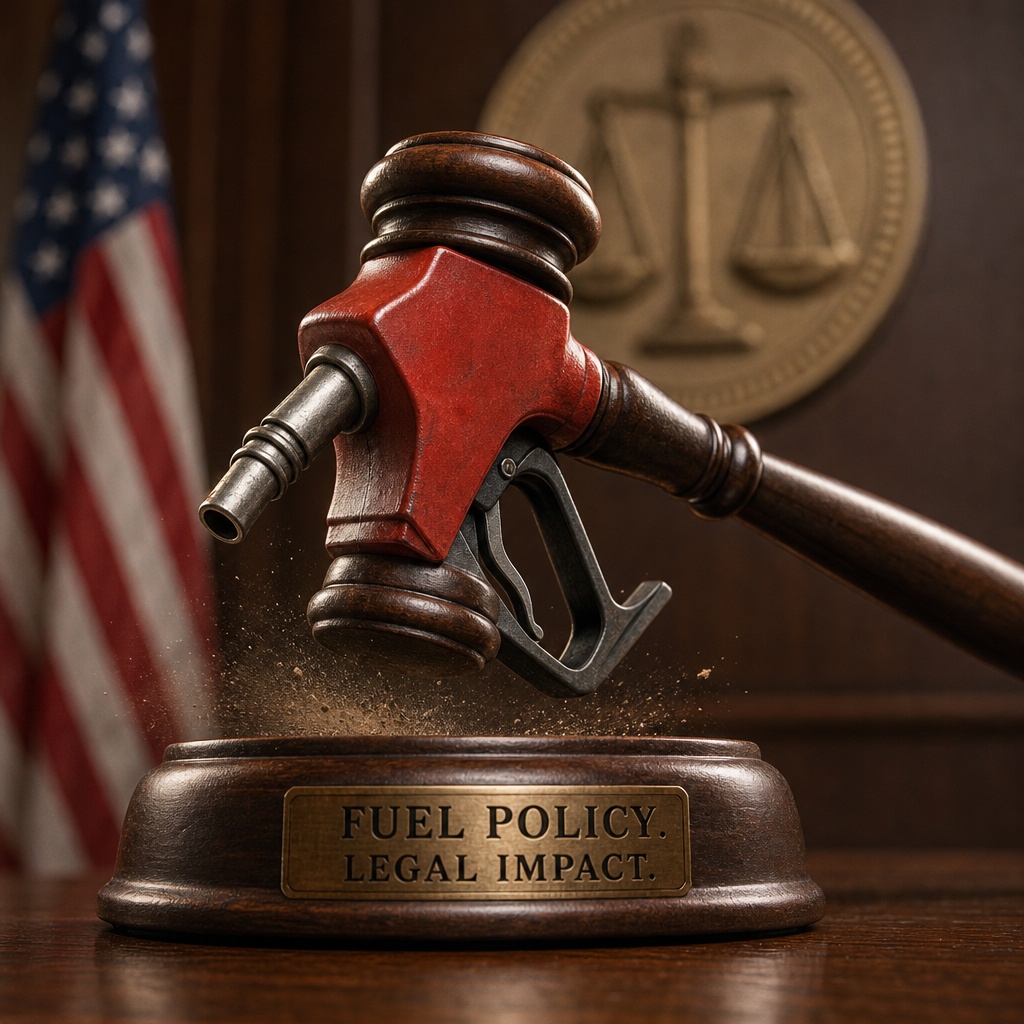
California has the worst ozone pollution in the country, and the Trump administration appears hellbent on making it worse.
Our state is in the fight of its life to protect its nation-leading safeguards against transportation-fueled greenhouse gas pollution. If the Trump administration gets its way and those protections are stripped, we can expect to see more internal combustion engines on the road, and more ozone pollution.
These attacks are yet another example of the Trump administration undermining California's sovereignty and the decisions made by our elected officials. California has a statutory right under the Clean Air Act to protect its residents and environment from air pollution, including greenhouse gas emissions. But the Trump administration wants to ignore that part of the Act so that they can hurt our state.
Under the federal Clean Air Act, states can't regulate greenhouse gas emissions from motor vehicles without obtaining a waiver of preemption from the U.S. Environmental Protection Agency. If California gets such a waiver, then most other states can enact duplicates of the California regulation.
Starting in 2002 with the California Clean Cars Act, California began reducing greenhouse gas emissions from cars and trucks sold in the state. In 2022, California adopted its Advanced Clean Cars II regulations, which required every new passenger vehicle to meet zero-emission standards (including plug-in hybrids) by the model year 2035.
Not surprisingly, those regulations were met by a storm of lawsuits. And in 2025 Congress contorted a little-known federal statute called the Congressional Review Act (CRA) in an attempt to nullify California's Advanced Clean Cars II and other greenhouse gas-reducing regulations.
Congress's CRA resolutions are being litigated. If they are upheld, then EPA can't grant California a waiver for anything "substantially similar"--whatever that means--without permission from Congress.
As this drama plays out, the Trump administration has taken a number of regulatory steps that will make California's air quality problems worse and enhance oil company profits.
In February 2026, Trump's EPA repealed the 2009 "endangerment finding," which provides a legal basis for federal regulation of greenhouse gasses pursuant to Massachusetts v. EPA. The administration is now falsely claiming that it lacks the legal authority to regulate car and truck emissions at the federal level, and that California and other states cannot regulate mobile-source greenhouse gases either. The endangerment finding repeal is being challenged in court by the Center for Biological Diversity, other environmental groups and many states.
More recently, Trump's EPA asked Congress to pass additional CRA resolutions in an effort to roll back California's greenhouse gas regulations that preceded Advanced Clean Cars II, and which automakers have complied with since 1990.
The Department of Justice also sued California under the Energy Policy and Conservation Act, which preempts state regulation of auto and truck fuel economy standards if they exist. They don't, in California. But in its lawsuit, the Trump administration claims that California's clean air protections are fuel economy rules. The U.S. Supreme Court rejected this argument in its 2007 Massachusetts v. EPA decision.
And as to mileage rules, any day now the Trump administration will release new auto mileage standards that will roll back the gains created during the Biden administration and lead to more fossil-fueled cars on the road.
As I write this, the EPA has launched another assault on California's clean air protections by asking Congress to use the Congressional Review Act to get rid of two state rules that govern emissions from harbor craft (like tugboats) and ships at berth.
If this broad federal attack is successful, cars and trucks in California will guzzle more gas, and spew more planet-heating carbon dioxide, as well as pollutants like nitrogen oxides--a precursor to ground-level ozone, or smog--harming people's health and threatening wildlife in California.
And this will happen while gas prices hit renewed highs and oil company profits increase.
As it stands now, California can't enforce its Advanced Clean Cars II, Advanced Clean Trucks and parts of its Omnibus Low NOx regulations. California's Advanced Clean Cars I regulations are also under attack. And the EPA refuses to enforce any federal mobile-source greenhouse gas limits, or issue any additional waivers for California's regulations.
These fuel economy rollbacks will force Californians to pay more to fill up inefficient cars and trucks, costing us money at the pump and in pollution-related health care costs.
The California Air Resources Board, and many non-profit groups like mine are at work figuring out how to protect our state against air pollution and global heating in today's legal environment. For example, California recently enacted MyFirstEV, a targeted zero-emission vehicle rebate that partially replaces the former federal rebates.
Ultimately, a future Congress could restore California's tailpipe safeguards by adding a sentence or two to the Clean Air Act, affirming that the EPA can and should regulate these emissions and authorizing waivers to California.
If that happens, it will be a good day for Californians' health and our state's biodiversity.
Submit your own column for publication to Diana Bosetti
For reprint rights or to order a copy of your photo:
Email
Jeremy_Ellis@dailyjournal.com
for prices.
Direct dial: 213-229-5424
Send a letter to the editor:
Email: letters@dailyjournal.com