


Torts/Personal Injury
Jul. 28, 2026
No permit, no defense: Hold delivery platforms and retailers liable for unpermitted drivers
California's Motor Carriers of Property Permit Act may provide a new legal theory for holding delivery platforms such as Uber Eats, DoorDash and Amazon directly liable for injuries caused by unpermitted couriers, regardless of Proposition 22's independent contractor protections.



Arash Homampour
Sole Shareholder
The Homampour Law Firm PC
15303 Ventura Blvd.
Sherman Oaks , CA 91403
Phone: (323) 658-8077
Fax: (323) 658-8477
Email: arash@homampour.com
Southwestern Univ SOL; Los Angeles CA
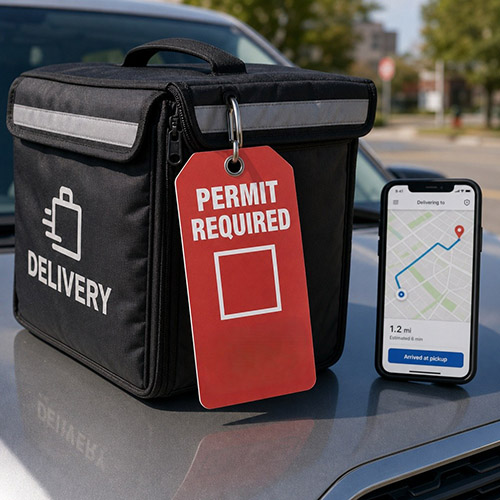
This article is about the delivery platforms most Californians use every week-Uber Eats, DoorDash, Postmates, Grubhub and the like, and about the retailers and national brands that dispatch drivers through them. In a companion article, I addressed the passenger side of app-based transportation, which turns on the Public Utilities Code and the CPUC permit system. Delivery transportation is different. It may use the same roads, platforms and even the same drivers, but the driver's duty is based on the Motor Carriers of Property Permit Act, Division 14.85 of the Vehicle Code, specifically Sections 34601, 34620 and 34622.
Section 34620 requires motor carriers of property to hold permits. Subsection (a) binds the carrier to the permit requirement. Subsection (b) reaches anyone who engages that carrier, providing that "a person shall not contract with or otherwise engage the services of a motor carrier of property unless that carrier holds a valid permit." Subsection (b) then adds certification and notice mechanics governing carrier-to-carrier contracts, but those mechanics do not narrow or otherwise affect the opening prohibition.
As of this writing, I'm aware of no published California decisions applying Section 34620(b) to a delivery platform, but there should be a groundswell of such cases. The permit requirement should be the basis for any and all legal claims against the likes of Uber, Amazon and FedEx. The permit requirement rests on statutory text and the enforcement agency's own manual.
Instead of basing lawsuits on claims of negligent hiring, vicarious liability, or the Prop 22 insurance floor-all sound theories-the permit theory does not play into the delivery platforms' chosen litigation vehicles of employment status and control. It reaches the entity that engaged an unpermitted carrier without asking whether that courier was an employee.
Definitions reach paid motor vehicle delivery
Statutory definitions matter. Those in Vehicle Code Section 34601 are broader than the delivery platforms would like. A "motor carrier of property" is a person who operates a commercial motor vehicle, and a "for-hire motor carrier of property" is such a carrier who transports property for compensation. A "commercial motor vehicle" is not limited to trucks over a certain weight; it expressly includes "any other motor vehicle used to transport property for compensation." An ordinary car making a paid delivery falls squarely within this definition.
The delivery platforms will try to read the exemptions backward, noting that Section 34601, subdivision (c)(2) carves out certain vehicles, including qualifying pickups, by weight and noncommercial use, and that Vehicle Code Section 34622 carves certain household-mover furniture transport out of the permit requirement. The platforms will seize on those exemptions to argue that a courier's car falls outside the Act. It does not.
The "commercial motor vehicle" (CMV) clause in Section 34601, subdivision (c)(1) controls, and a courier's passenger car falls outside every exclusion under subdivision (c)(2). Once a vehicle of any type carries another's property for compensation, it is a CMV. Chapter 13 of the California Highway Patrol Manual 82.6, revised October 2025, as well as the FAQ on CMV permits, confirm that a CMV is any vehicle used to carry goods for compensation. Only vehicles used for private and noncommercial purposes are exempt.
The CHP has named the platform fact pattern
Section 11 of Chapter 13 of the Highway Patrol Manual defines a for-hire motor carrier as any person who transports another person's property for direct compensation, regardless of vehicle size or weight. It goes on to state that any person operating a motor vehicle in a third-party food delivery operation, specifically Uber Eats and Grubhub, is a for-hire motor carrier. Any vehicle used primarily for such an operation is a commercial vehicle for registration purposes under Section 260.
The manual is not appellate authority, and it was not adopted through the Administrative Procedure Act, so courts owe it no binding deference. However, pursuant to Yamaha Corp. of America v. State Board of Equalization (1998) 19 Cal.4th 1, a court exercising independent judgment must still give an agency's interpretation of the statute it administers the weight its reasoning merits.
The CHP Manual is the official current view of the agency charged with permit enforcement, and it sets forth the exact business model for CMVs. It constitutes persuasive weight, not window dressing.
Lack of permit is the platform's violation
Vehicle Code Section 34620(a) prohibits couriers from operating commercial motor vehicles on public highways without a valid permit. Section 34620(b) extends that prohibition to anyone who engages such a carrier: "A person shall not contract with, or otherwise engage the services of, a motor carrier of property, unless that motor carrier holds a valid motor carrier of property permit issued by the department."
This is the core of the delivery theory. A platform that dispatches a specific courier to deliver goods by motor vehicle for compensation has engaged the services of a motor carrier of property. If the courier holds no permit, subdivision (b) imposes a direct statutory violation upon the platform itself.
Chapter 13 of the CHP manual interprets Section 34620(b) to prohibit any person, including motor carriers and shippers, from engaging an unpermitted carrier. The certification mechanics of the law may govern carrier-to-carrier contracts, but they do not rewrite the first part of the subsection, which clearly extends to "a person." The CHP reads this as any person, and so should the courts.
Violation is more than a paperwork lapse
Lack of a permit can create a negligence per se presumption under Evidence Code Section 669, but the smart move is to plead every element and prove the one that decides the motion. Anchor the presumption to Section 34620(b) itself. The statute defines the violation, sets the standard, and supplies the presumption directly, so the claim never depends on anything outside the code.
The elements that must be established are the code violation, a plaintiff who falls into the class the statute protects, an injury of the kind the law was designed to prevent, and causation. Road users are the protected class, and a traffic injury is the harm the permit regime exists to prevent. The fight will be over causation.
In order to establish causation, the violation must be inextricably linked with the collision mechanism. The CHP issues permits only with proof of financial responsibility, and this gives the DMV and the CHP an important hook to police unsafe operations.
In order to succeed, the plaintiff must be able to tie the missing permit to the harm he or she suffered. The permit regime would presumably have caught what the dispatch did not. Commercial coverage was never filed. An unsafe vehicle went uninspected. Adverse driver history that the pull-notice system would have uncovered never surfaced. That a form went unsigned is not the point. The illegal dispatch put this carrier and this vehicle, this uninsured and unmonitored operation, on the road. This is exactly what the permit system was designed to prevent.
Proposition 22 did not repeal the Vehicle Code
It's safe to assume that the delivery platforms will quickly respond that Proposition 22, Business and Professions Code Section 7451, classifies an app-based driver who meets its four conditions as an independent contractor, not an employee or agent of the platform. This, they will argue, is the sum total of the driver's relationship with a network company.
That initiative may have changed the employment relationship, but it did not repeal duties under the Vehicle Code. Sections 34601, 34620 and 34622 are still applicable law. A courier may be an independent contractor for employment purposes while also acting as a motor carrier of property with whom the platform is forbidden to engage. The permit theory has nothing to do with whether or not the driver is an employee. It depends solely on the platform engaging an unpermitted carrier, something that Prop 22 does not address.
The smart approach for plaintiffs is to meet the agent language head on. Section 7451 says that the driver is neither an employee nor an agent of the delivery platform, so a food platform will argue that this forecloses any ostensible agency theory. There are two answers to this position. First, the Section 34620(b) permit requirement has nothing to do with agency, so Section 7451 does not touch it. Second, the agent bar is limited, by its own words, to the driver's relationship with a network company, making it inapt for operations that are not network rideshare or delivery, in particular Amazon. To further undermine their position, Business and Professions Code Section 7455, subdivision (f)(1), requires a delivery network company to carry $1 million in coverage for third-party injuries during engaged time where the driver's own policy does not already provide it. The coverage is a gap-filler, but the point stands: the initiative the platforms invoke for immunity already assumes the platform pays.
The rule reaches beyond food
The platforms will also argue they are technology marketplaces, not carriers. Section 34620(b) does not ask what label a platform gives itself. It asks whether it engaged an unpermitted carrier, and algorithmic dispatch is engagement in any ordinary sense. The platform markets the delivery, sets the price, collects payment, assigns the job, routes it and confirms completion. That is not passive publication of a want ad.
Nothing in Section 34601 limits the permit requirement to food deliveries. The trigger is transporting another person's property for compensation, and the analysis reaches groceries, retail goods, pharmacy items, auto parts, flowers and almost all other local deliveries. A merchant delivering its own goods in its own vehicle may be considered a private carrier. But the moment it, or the national brand behind the order, hands the delivery to a paid motor vehicle courier, the courier becomes the for-hire carrier. The only relevant question is who engaged it.
Amazon requires its own analysis
Amazon, as one would expect, also fits within these definitions. Flex drivers deliver in their own cars for per-block pay, and delivery service partners run Amazon-branded vans. Neither delivers its own goods. Section 34620(b) again establishes Amazon's own violation if a permit is missing.
Amazon's answer to the permit theory will, unsurprisingly, be interstate commerce. The Motor Carriers of Property Permit Act governs intrastate transportation, and the CHP manual expressly excludes interstate carriers. The best response to this position is the come-to-rest doctrine. The CHP manual frames this doctrine through the shipper's fixed and persistent intent at the time of shipment. When goods arrive at a California fulfillment center as general inventory, not to fill any particular order, the interstate journey ends at the warehouse and the last mile is intrastate. Grocery, same-day and local seller deliveries never cross a state line at all.
Independent of the permit statute, Amazon's control over branding, routing, delivery windows, metrics and in-van telematics supports ostensible agency, control-based agency and negligent undertaking. Its employee drivers represent a straight respondeat superior case. Shipment origin, inventory status and order timing therefore belong in discovery in every Amazon case.
What to do in the next delivery case
It's just a matter of time before a California court lays down the law on permit requirements for delivery platforms. Plaintiff's counsel should be prepared to help move these cases forward. The first step will be to identify the exact contracting entity, since delivery affiliates often hold no authority of any kind.
The next step will be to confirm the courier's permit status through public records, which will list every MCP, CA number, application, suspension and insurance filing. Because Section 34620(b) turns on who engaged the services of the carrier, plaintiffs will need to prove that chain with white label integrations, delivery agreements, dispatch records and payment flow. Counsel will want to serve discovery that focuses on Section 34620(b) compliance, the CHP manual, internal audits and any corporate decision to forgo permits.
Additionally, plaintiff's counsel will want to check the vehicle's registration class, primary use and policy exclusions. The complaint should name every link the evidence supports: courier, platform, delivery affiliate, merchant, white label partner and controlling parent. In addition to pleading direct negligence under Civil Code Section 1714, the claim should allege negligence per se with the causal path spelled out, as well as ostensible agency where branding supports it.
Most importantly, the case should be framed as a road safety violation, not a matter of employment status.
Conclusion
California legislators made paid property transportation subject to a permit, financial responsibility and safety oversight regime. Vehicle Code Section 34620(b) enforces this regime by forbidding any person or entity from engaging an unpermitted carrier.
The delivery platforms' best defense in these cases is to turn them into fights about employment classification. Do not take the bait. Proposition 22 did not repeal the Motor Carriers of Property Permit Act, and it did not create immunity for delivery platforms.
These companies chose to build their on-demand businesses on the backs of paid motor vehicle couriers, and they had full knowledge of the permit obligations associated with moving property for hire. Having put those couriers on the road without the required permits, they cannot now disclaim responsibility for their couriers' actions.
Submit your own column for publication to Diana Bosetti
For reprint rights or to order a copy of your photo:
Email
Jeremy_Ellis@dailyjournal.com
for prices.
Direct dial: 213-229-5424
Send a letter to the editor:
Email: letters@dailyjournal.com