


Technology
Jul. 17, 2026
America's AI future needs a national strategy
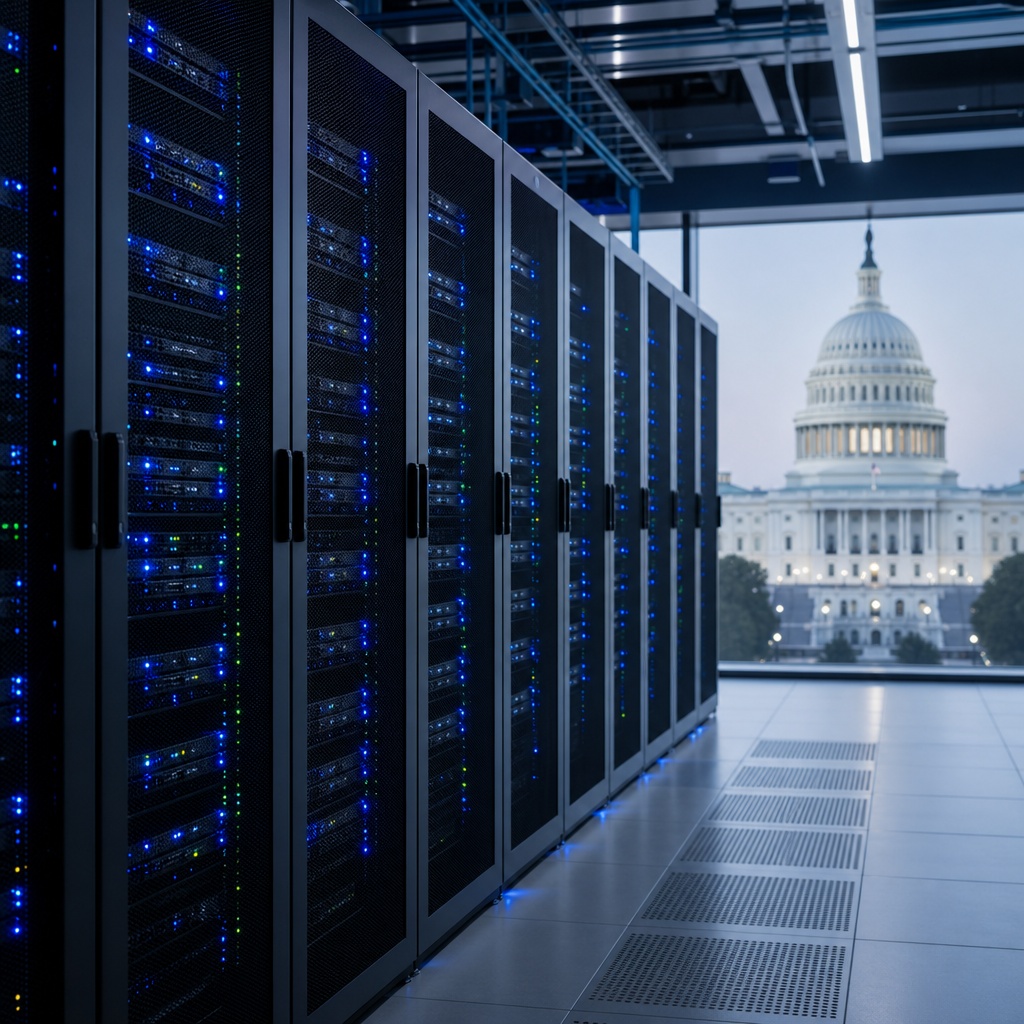
Data centers are the backbone of America's AI future, and the federal government must ensure short-term local politics do not undermine long-term national interests.



Kevin Frazier
Kevin Frazier is the Director of the AI Innovation and Law Program at the University of Texas School of Law and a Senior Fellow at the Abundance Institute.
"If our constitutional government were all brakes and no engine, it could never have taken the Nation across a continent and on the eventual and difficult journey of our first 250 years."
The wisdom of Professor Harry Jones is often lost in contemporary debates around the proper allocation of power between the central government and the states, especially when it comes to the need for the federal government to drive data center development. Too many people have forgotten that "the Constitutional Convention's great purpose was the creation of an effective national government." Implicit in that goal was limiting the authority of states to interfere with national aims. Put plainly, the federal government was designed to solve collective action problems--those policy matters that require a national response or otherwise exceed the capacity of the several states. The drafters desired to form an "efficacious union," while still recognizing the sovereignty and unique political identities of the states. But they were not drawing on a blank canvas.
The generation of Americans that ratified the Constitution had suffered through the Articles of Confederation, which proved incapable of coordinating the states toward common ends. States frequently pursued their immediate interests without accounting for the costs imposed elsewhere. Some states, responding to pressure from indebted residents, adopted paper-money, installment, legal-tender and court-closing laws that impaired obligations owed to out-of-state creditors. States also imposed unilateral commercial restrictions that diverted trade and provoked retaliation. Massachusetts's restrictions on British ships, for example, merely shifted commerce to Connecticut, rendering the former policy toothless. New York later taxed goods from Connecticut and New Jersey to punish them for refusing to join its trade policy. These measures could be an advantage to one state temporarily, but collectively they increased costs, frustrated coordinated action and undermined the general welfare and harmony of the nascent Union.
We once again find ourselves in a situation in which the general prosperity is being dictated by a handful of states that often have divergent views of the future. California's economic future in many ways hinges on the success of the tech sector, specifically AI. Other states, like Washington, are in a similar position. They are counting on a ready supply of talented individuals, data, energy and computational resources. California, already home to 277 operating data centers, has 54 more under development. Yet, the decision by New York Governor Hochul to impose a one-year moratorium on large-scale data center development indicates that single states can interfere with the availability of those AI inputs. What happened in Albany is unlikely to stay there as opposition to data centers spreads and politicians look to score quick wins. This path is not only one the founders sought to avoid but one that clashes with the nation's economic and national security.
The United States must build more data centers. That was true even before the current AI boom. Data centers house servers. Your phone, your laptop, and your smart devices all rely on those servers to access online services. Relatedly, core industries, such as healthcare, finance and education all benefit from and rely on data centers. Of course, the AI economy has drastically increased the demand for data centers. Meeting that demand is a question of the nation's economic growth and sovereignty. A vibrant AI ecosystem is critical to the nation's GDP as more companies lean into AI to improve services, develop new products, and, in many cases, create new jobs. The data centers underpinning that ecosystem cannot be offshored. As the war in Iran has made clear, data centers are now a target in armed conflicts. The US will need to build most of this critical infrastructure at home.
Data center development is a national opportunity, challenge and requirement. Every American stands to benefit from data centers being built in the most cost-effective, energy-efficient and expeditious fashion. But data center development is not costless. While many essays and posts on X attempt to offer a definitive assessment of the environmental footprint of data centers and the potential economic consequences, the only fact that is likely to persist in the near future is that most Americans are very opposed to data center construction in their community. Justified or not, they feel as though there are tremendous costs associated with data centers.
When single states like New York opt out of that national endeavor, they reduce the likelihood of data centers being created in the most suitable locations. It's not the case that data centers denied access to New York will never exist. Instead, those data centers will likely be developed in areas that have long been asked to bear disproportionate costs of national infrastructure projects. In a significant shift from the past, the majority of planned data centers will be built in rural communities. These communities may have less success in negotiating with developers. The impact of data centers may also be higher given that building in remote areas may require more roads, resources and disruption.
That's a future we can and should avoid. Expect legal challenges in the near future that build on prior cases in which the Supreme Court struck down state laws that effectively imposed infrastructure costs on the rest of the country. But merely preventing others from emulating New York is not enough. The country needs a national strategy such that individual communities and states are not bargaining in isolation. A united approach--as developed through federal law--can direct data center development to the best locations, reduce the costs of that construction and spread the benefits. Professor Jones had it right. The Constitution gave us brakes, but it also gave us an engine. It's time to use it.
Submit your own column for publication to Diana Bosetti
For reprint rights or to order a copy of your photo:
Email
Jeremy_Ellis@dailyjournal.com
for prices.
Direct dial: 213-229-5424
Send a letter to the editor:
Email: letters@dailyjournal.com