


Labor/Employment
Jul. 16, 2026
The hidden record behind every employment case
Employment cases are often won or lost years before trial because everyday workplace decisions, manager communications and internal documentation create a hidden litigation record that ultimately determines whether a jury believes the employer's story.



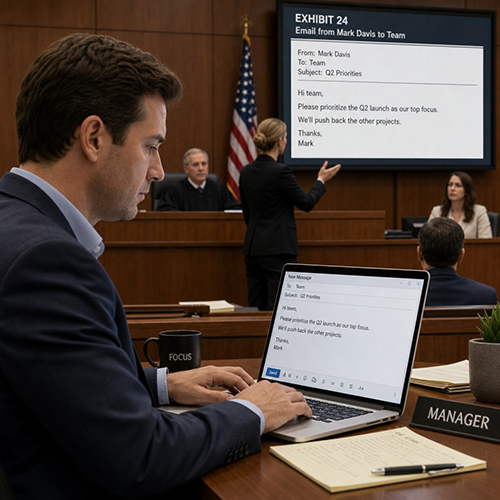
Several years ago, I defended an employment case that appeared, on paper, to be remarkably strong. The employer had well-written policies, an extensive investigative file, detailed performance documentation, and managers who genuinely believed they had made the right decision.
None of those documents became the centerpiece of the trial. In my experience, often the documents and information that the jury focuses on is never what you expected.
Instead, the exhibit that jurors discussed most during deliberations was a set of Slack messages exchanged between two managers nearly two years before the employee was terminated. It was not offensive. It was not a "smoking gun." In fact, standing alone, it seemed almost insignificant.
But it told a story.
More importantly, it told a different story than the one the employer presented at trial.
That experience reinforced something my colleagues and I have learned after trying a number of employment cases before juries: employment cases are rarely decided by the legal issue lawyers spend months briefing. They are decided by credibility. Jurors ask a far simpler question than lawyers often expect:
Do I believe this employer? Do the documents support the story the lawyers are telling me?
Everything else tends to flow from that answer.
In today's workplace, every investigation, every performance discussion, every accommodation request, every Teams chat, every Slack conversation, every hastily written email and every text message contributes to what I think of as the employer's hidden litigation record--a body of evidence that exists long before anyone files a charge, retains counsel or utters the word "litigation."
By the time trial counsel is hired, that record has largely been written.
The role of trial counsel is often not to create the story, but to explain the one the organization has already created.
For in-house lawyers, that reality has fundamentally changed the relationship between employment counseling and litigation strategy. The best trial defenses are no longer built after the complaint arrives. They are built, day after day, in the ordinary decisions managers make--and in the ordinary communications they assume no one else will ever read.
Training on how to communicate important employment decisions becomes very important. Informal communications often cause more damage than formal documents. A single Slack message, text or email can undermine months of careful documentation and become a centerpiece of the plaintiff's case.
If I could provide any practical guidance for in-house counsel, hoping to be well positioned for trial, it would be this:
Stop thinking of employment counseling and trial strategy as separate disciplines. Every difficult conversation, every accommodation request, every complaint investigation, every performance discussion and every manager text message is helping write the trial record.
Before making a significant employment decision, ask:
• Would I want a jury to read this?
• Does the documentation tell the same story the witnesses plan to tell?
•Did we document the issue before the employee complained?
• If this case were tried tomorrow, would our story make sense?
Those questions sound simple. They are not.
They force employers to confront the issue that wins and loses most employment trials: credibility.
The truth is, the longer I try employment cases, the more convinced I become that juries are not deciding who has the better legal argument. They are deciding whom they believe.
The policies matter. The investigation matters. The law matters.
But once a jury concludes that the documents tell a different story than the witnesses, you have got a problem.
The documents that do the most damage are rarely created for litigation. They are created when nobody thinks litigation is coming.
The most important trial exhibit probably does not exist yet. Your managers are writing it today.
Submit your own column for publication to Diana Bosetti
For reprint rights or to order a copy of your photo:
Email
Jeremy_Ellis@dailyjournal.com
for prices.
Direct dial: 213-229-5424
Send a letter to the editor:
Email: letters@dailyjournal.com