


Alternative Dispute Resolution
Jul. 16, 2026
Sit, stand or kneel? Preparing clients for mediation
A successful mediation depends on preparing clients for an unfamiliar process by explaining what to expect, addressing case strengths and weaknesses, discussing risks and costs, and helping them make informed decisions before negotiations begin.



Matt White
Mediator, Arbitrator and Court-Appointed Neutral (special master/referee)
JAMS
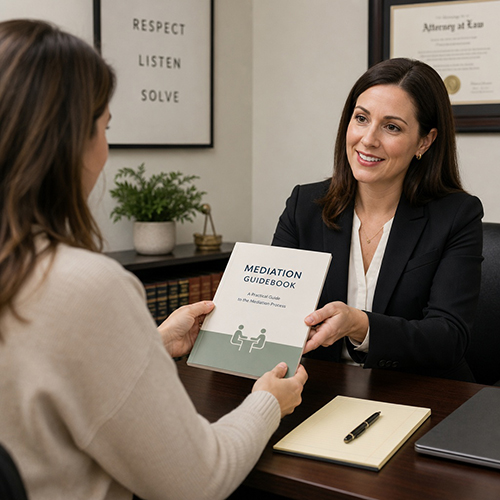
Most litigants don't know what mediation is. They may have it confused with arbitration, or even meditation. They have not participated in the process, have not read about it and have never seen it on television. (Some clients, such as insurance claims representatives, have been through dozens or hundreds of mediations. This article is not about them.)
Imagine going to a house of worship outside your own faith. Perhaps you are going to a baptism or a memorial service at a Catholic church for the first time. How do you dress? Where do you sit? Are head coverings required, or forbidden? When do you stand, when do you kneel and at what point (if ever) do you shout "amen" toward the priest? When the regular parishioners line up to take communion, should you follow them?
Now, let's add one more element. Although you are in a foreign environment and unfamiliar with the customs and norms, you will be asked to make crucial decisions that will have a significant impact on your life, your family or your business. Others may offer advice, but the decision is yours alone. Are you feeling comfortable enough to make that call?
The point, obviously, is that your best result at mediation depends on proper, thorough client preparation. Here are some suggestions to achieve that goal.
1. Sit down with your client well in advance of the mediation. Clients need time to absorb unfamiliar concepts, formulate questions and prepare themselves for a new experience. A brief overview on the morning of the mediation will not suffice.
2. Describe the process in depth. Inexperienced clients want to know what to expect. They want to know how to dress. They want to know where the mediation will take place, how long it will take, who else will be there, whom they can bring with them and what will take place at the hearing. They need to know that the mediator is a facilitator, not a decision-maker. If the client is expected to speak during the mediation, review the likely topics. At deposition, you counseled your client to respond concisely and volunteer nothing. Your client should know that the rules of mediation may be different, especially because the process is confidential. Describe the bargaining process. Make sure they know that the other party's opening position may be outrageous but those proposals will almost certainly get more reasonable. Ask the client about their hopes, fears and concerns.
3. Discuss the weaknesses of the case. Too many lawyers paint for their clients an unrealistically rosy picture of the case, relying on the mediator to point out the legal and factual problems that might torpedo or damage the case at trial. This is a mistake. Why would the client believe the mediator, who has only a superficial knowledge of the case, over the client's own lawyer, who has been involved from the outset? The client may need time to absorb and consider unpleasant information. A mediator's discussion about risks will be more effective if your client has already had that same conversation with you.
4. Ask your client for permission to discuss the risks of the case. Are you concerned that the client will be offended if you point out weaknesses in the case? ("If you don't believe in my case, I will find another lawyer who does!") Try asking for permission: "Do you want to hear only the good parts of our case, or would you like to know what our risks might be?" Your client will of course ask to hear the bad news as well as the good news and, in this context, will be more receptive. Another option is to explain that you want only the best for your client and that this means you must present an honest evaluation of their case and a frank comparison of the best and worst alternatives to settlement.
5. Don't wait for mediation day to discuss the costs of continued litigation. Once more, it takes time for inexperienced litigants to grasp nonintuitive concepts. Parties find it difficult to understand how a better result at trial might be a worse outcome after factoring in attorneys' fees and costs. If there is a risk your client will owe costs (especially expert fees), have that discussion well in advance of the mediation.
6. Be specific about your evaluation. If you wish to be understood, don't use general terms to describe your client's chances at trial. If you tell them there is a "good chance" of winning, you may mean it's a 50/50 proposition, but your client may hear that you are 90% confident of victory. "We have a shot at winning" can been interpreted to mean a 10% chance or an 80% chance. Of course, your specific numbers cannot be precise, but your communication will be clear.
7. Develop the opening position with your client. Before you state an opening position in your mediation brief, discuss it with your client. Together, figure out what you need to demand or offer to reach your goals at mediation. Don't propose a number until you have agreed on a target result. If, for example, you represent a personal injury plaintiff and you agree the target is $100,000, talk about the need to demand more (perhaps $150,000 or $250,000) so you can safely reduce your demand at mediation. Otherwise, the client will read your brief, become fully convinced of the righteousness of their cause, and start spending the $250,000 in their mind. Also, if you represent a plaintiff on a contingency basis, remember that they are probably less interested in a gross settlement number than their own projected net recovery.
8. Take the time to prepare your client. You may think you are too busy to devote a day (or even a couple of hours) to reviewing the case with your client in advance of the mediation. In that case, consider the time involved in taking the case through trial. You have a much better chance of resolution if your client is fully prepared and ready for meaningful negotiations.
Preparation is key
Spend time with your client in advance of the mediation. Describe the process. Discuss the pros and cons of the case, including costs and risks. Set a target. Your client will appreciate the preparation and will be much more receptive at mediation to rational discussion and effective bargaining--increasing your chances of achieving a prompt, favorable and durable resolution.
Submit your own column for publication to Diana Bosetti
For reprint rights or to order a copy of your photo:
Email
Jeremy_Ellis@dailyjournal.com
for prices.
Direct dial: 213-229-5424
Send a letter to the editor:
Email: letters@dailyjournal.com