


Government
Jul. 14, 2026
Adam Silver on policing money and ethics in California politics
FPPC chair Adam Silver on the watchdog's Watergate-era origins, exploring AI to catch campaign money laundering, and why disclosure before an election matters more than fines after it.


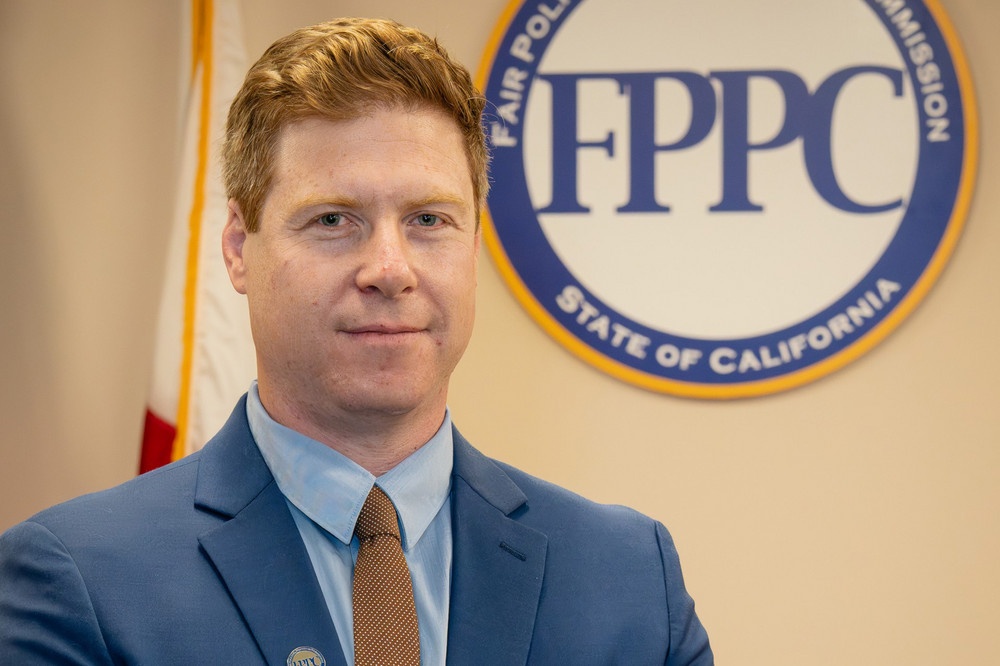
Adam E. Silver chairs a state agency with an acronym even his own parents can't remember. "My parents sometimes tell people that I work at the SPCA," he said.
The Fair Political Practices Commission, or FPPC, is California's campaign finance and ethics watchdog. If a city council member accepts an illegal gift or takes part in a decision in which they hold a financial interest, the FPPC is the agency that investigates the complaint and, where there is a violation, prosecutes. Its remedies are administrative and civil; criminal cases fall to district attorneys or the attorney general.
On the latest episode of In the Counsel's Chair, Silver told host Jack Needham how the agency grew out of the post-Watergate push for transparency. Proposition 9, a 1974 ballot measure backed by Jerry Brown and other good-government advocates, became the Political Reform Act and created the FPPC, which Silver said established some of the strictest campaign finance and ethics rules in the country.
His own route to the job was not the one he planned. He left Loyola Law School in Los Angeles intending to practice bankruptcy law, then got a call from the Capitol Fellows Program offering a spot in Sacramento if he could move within a week. He was assigned to the FPPC, stayed on as a prosecutor after passing the bar, and later founded a company that let people make campaign contributions by retweeting a post. "Not that many people wanted to give out their credit card information on Twitter," Silver said. He returned to private practice at Olson Hagel and Fishburn LLP, served as chief counsel to the Assembly Legislative Ethics Committee, and was appointed chair by Gov. Gavin Newsom in March 2024. His term expires in January 2027.
Much of the conversation turned on AI. California lawmakers passed a package of three bills aimed at deepfakes and voice cloning in campaign ads, and two were struck down at the district court level on constitutional grounds. The survivor, AB 2355, requires a disclaimer telling the public when a campaign ad was generated or modified with AI, and the FPPC is charged with enforcing it. Silver said the goal is rules that give voters context without restricting political speech or choosing winners and losers.
The agency is also weighing AI for its own work. With about 100 staff members, roughly 40 of them in enforcement, and jurisdiction over the entire state, the FPPC depends heavily on public complaints. Silver said the commission is exploring tools that would flag patterns in campaign reports suggesting money laundering, where a donor conceals who is really giving or skirts contribution limits, with investigators who are former peace officers and FBI investigators reviewing whatever the software surfaces. He recalled prosecuting a San Francisco case, back when the city's contribution limit was $250, in which a company seeking to influence the mayor told employees to give the maximum, promising to look out for them come bonus season. The employees wrote the purpose in the notes on their checks.
A second tool, closer to plain software than AI by Silver's description, would compare the economic interests high-level public officials disclose on their Form 700 filings against upcoming meeting agendas and warn them of potential conflicts before they vote, so a recusal happens in advance rather than an enforcement case after.
Silver was direct about where timing matters most. Election officials across the state notify the FPPC when a candidate misses a pre-election filing deadline. The commission tells the candidate to file immediately, without discussing penalties at that stage, and takes nonfilers straight to court. Fines after the fact matter less, he said, than voters knowing who is behind the activity before they cast a ballot.
Complaints climb in election years, and Silver said the commission encourages them: "If you see something, say something." Residents who spot a lawn sign, billboard or TV ad they believe lacks a required disclaimer can photograph it and submit it through the agency's portal. Even with the added volume, he said, new resources from the Legislature and the governor have allowed the enforcement division to cut its case backlog significantly.
Before his term ends, Silver said he wants participation in public life to feel less risky. "I want the regular citizen to feel comfortable that they can go run for office," he said, without fearing a $10,000 fine letter from his agency. He also pushed back on a common assumption: conduct that strikes the public as unethical is not always illegal. Where the law lags what a regular Californian would expect, the commission has sponsored fixes, including a bill, since signed into law, that bans making a campaign contribution inside a state building. Dropping a check at the mayor's office looked illegal to most people, Silver said. Until recently, it wasn't.
You can watch or listen to In the Counsel's Chair on the Daily Journal Network, or subscribe wherever you get your podcasts and never miss an episode.
For reprint rights or to order a copy of your photo:
Email
Jeremy_Ellis@dailyjournal.com
for prices.
Direct dial: 213-229-5424
Send a letter to the editor:
Email: letters@dailyjournal.com