


Technology
Jul. 8, 2026
Judge rejects Meta's bid to shield moderation claims under Section 230
Chief U.S. District Judge Yvonne Gonzalez Rogers ruled that four state attorneys general may present evidence that Meta made false statements about its content moderation practices at next month's bellwether trial over adolescent social media addiction.


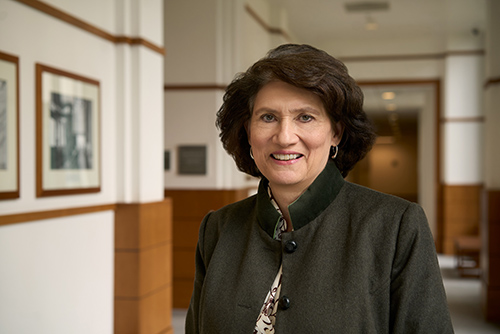
Four state attorneys general suing Meta for its alleged role in adolescent social media addiction can present evidence that the company made false statements about its moderation practices when they take their claims to trial next month, Chief U.S. District Judge Yvonne Gonzalez Rogers ruled Tuesday.
Meta, represented by Covington & Burling LLP and Davis Polk & Wardwell LLP, moved to bar the statements, arguing that it is protected by Section 230 of the Communications Decency Act against claims over how it moderated content. The state attorneys general allege Meta made affirmative misrepresentations about its practices, Gonzalez Rogers wrote, meaning that even evidence related to content is not protected by Section 230.
"The Court has reviewed the Chart of the Statements at issue and finds that Meta frequently mischaracterizes the nature or content of communications," Gonzalez Rogers wrote. "Labeling an affirmative statement in such a way to assert that it is protected by Section 230 creates a false premise."
The judge said she could further narrow the list of alleged misrepresentations the state attorneys general can present at trial.
"On the other hand, some of the statements are quite generic," Gonzalez Rogers wrote. "Once the Court receives the final list, it will determine whether further narrowing is appropriate."
Gonzalez Rogers denied all five of Meta's motions in limine in an order issued Monday. The judge allowed the state attorneys general to present testimony from experts and former employees about Meta's content moderation practices, both of which the company argued should be excluded under Section 230.
Meta had also moved to exclude evidence of internal studies showing risks associated with its platforms. Gonzalez Rogers ruled that the evidence is relevant to whether the alleged misstatements were false but said some examples could be unfairly prejudicial while offering little probative value. She allowed Meta to amend the motion to make it more narrowly tailored.
"Not only is the motion overbroad for seeking, in effect, to eliminate all of Meta's internal decision-making process and working knowledge, but should the Court grant the motion it would effectively disembowel the case," Gonzalez Rogers wrote. "The evidence referenced is relevant to whether the alleged representations were false and known to be false. That this evidence may be prejudicial to Meta does not make it excludable."
The case is In re: Social Media Adolescent Addiction/Personal Injury Products Liability Litigation, 4:22-md-03047 (N.D. Cal., filed Oct. 6, 2022).
Gonzalez Rogers also ruled that Meta's age verification system is not protected by Section 230 but said she would need more information about third-party photo filters available on the platform before deciding whether evidence concerning them could be presented at trial.
The state attorneys general filed three motions in limine: one to exclude certain testimony from their Rule 30(b)(6) witnesses as irrelevant, one to exclude evidence of policy changes Meta made after the lawsuit was filed from the jury phase of the bifurcated trial, and a third to exclude legal conclusions offered by Meta's expert on industry practices.
The court denied the first two motions without prejudice, finding they were overbroad, and partially granted the third. According to Gonzalez Rogers, Meta's expert, Mary Catherine Wirth, cannot offer an opinion on what the Children's Online Privacy Protection Act requires.
The ruling is the latest in a series of battles over Section 230 in the multidistrict litigation. Gonzalez Rogers previously denied Meta's motions to dismiss and for summary judgment based on Section 230 but narrowed the claims to include only decisions actively implemented by the company. She has also said she plans to instruct the jury each day that Meta cannot be held liable for content posted by third parties.
More than two dozen states brought claims against Meta, and four -- California, Kentucky, Colorado and New Jersey -- will try their claims in the first bellwether trial.
Jury selection is scheduled to begin Aug. 12, with opening statements set for Aug. 17.
Daniel Schrager
daniel_schrager@dailyjournal.com
For reprint rights or to order a copy of your photo:
Email
Jeremy_Ellis@dailyjournal.com
for prices.
Direct dial: 213-229-5424
Send a letter to the editor:
Email: letters@dailyjournal.com