


Constitutional Law
Jul. 8, 2026
A constitutional promise for America's next 250 years
Birthright citizenship remains constitutional law, and for millions of California families in mixed-status households, that ruling means safety and belonging aren't up for debate.


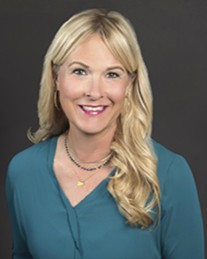
Kate Marr
Executive Director
Community Legal Aid SoCal (CLA SoCal)
Email: kmarr@clsocal.org
CLA SoCal works to fight injustice by providing compassionate, high-quality, direct legal services and systemic advocacy that creates positive change in communities, with a staff of over 100 serving Orange and Los Angeles Counties.
This past Saturday, Americans celebrated the 250th anniversary of the Declaration of Independence. Across the country, we commemorated the ideals that gave birth to our nation: liberty, equality, opportunity and the radical proposition that government derives its legitimacy from the people.
As executive director at Community Legal Aid SoCal, I spend my days working for and with families navigating some of life's most difficult challenges--domestic violence, housing instability, economic hardship and legal systems that shape their futures. They come to us seeking something fundamental: safety, stability and a fair chance to build a better life for their children.
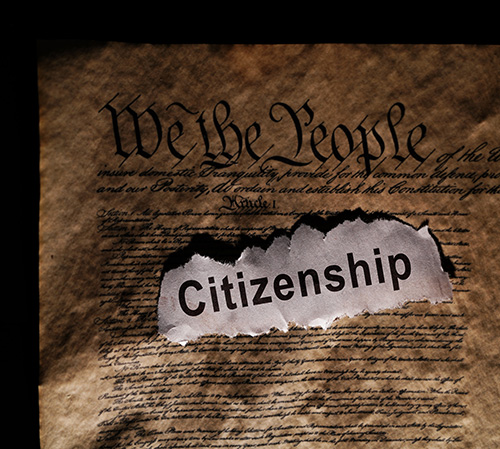
That is why the Supreme Court's decision last week in Trump v. Barbara resonates far beyond the courtroom. In a landmark ruling, the Court held that children born in the United States to parents who are undocumented or present in the country temporarily are citizens at birth under the Fourteenth Amendment, striking down an executive order that sought to limit birthright citizenship.
Coming just days before our nation's 250th birthday, the decision invites us to reflect on a question that has shaped America since its founding: Who belongs?
Birthright citizenship emerged from one of the most important constitutional transformations in American history. After the Civil War and the Supreme Court's infamous Dred Scott decision, which denied citizenship to Black Americans, the Fourteenth Amendment established a simple but profound principle: people born in the United States are citizens of the United States. Decades later, the Supreme Court reaffirmed that principle in United States v. Wong Kim Ark, holding that citizenship is not solely determined by ancestry or parentage, but by birth on American soil. The Court's decision this week builds on that constitutional foundation.
While the legal question before the Court concerned the meaning of the Citizenship Clause, the broader significance of the decision extends beyond constitutional law. At a moment when Americans continue to debate immigration, identity and belonging, the Court reaffirmed a principle that has helped define our nation for more than 150 years: citizenship is grounded in constitutional principle, not bloodline or circumstance.
For those of us who work in legal aid, citizenship is not an abstract constitutional theory. It shapes whether families feel secure, whether children can imagine a future without fear, and whether communities trust the institutions designed to serve them.
I think of a former client I will call Ana. After escaping domestic violence, she struggled to protect her children while navigating housing, court proceedings, school enrollment and economic insecurity. Her children were born here. They attend local schools, play in neighborhood parks and dream about their futures. For Ana, their citizenship was not a legal concept. It was an anchor of stability during a period of profound uncertainty.
Families like hers are woven into the fabric of our region. Across California, nearly four million children are part of immigrant families and almost all are U.S. citizens. One in five California children live in a mixed-status household. Nationally, more than 16 million children in immigrant families are U.S. citizens.
The numbers are especially significant in the communities served by Community Legal Aid SoCal. In Orange County, more than one million residents are immigrants. In Los Angeles County, immigrants account for approximately 35% of the population, and more than two million residents are either undocumented or live with undocumented family members. More than 123,000 children under age five in Los Angeles County live with at least one undocumented parent.
These numbers remind us that debates about citizenship are ultimately debates about people, families and communities. In places like Orange and Los Angeles counties, legal status is not an abstract policy question. It influences whether a parent seeks protection from abuse, whether a child feels secure at school and whether families believe the law will protect them.
For more than 150 years, birthright citizenship has provided clarity, stability and equality. It affirms that citizenship is not determined by race, ancestry, wealth or family lineage. It is grounded in a shared civic identity.
That principle has helped make America stronger.
As someone who has spent my career in legal aid, I believe our nation's greatness is measured not only by the rights we proclaim, but by our willingness to ensure those rights remain meaningful in people's everyday lives. The families we serve remind me daily that the law is at its best when it creates pathways to safety, opportunity and dignity.
As we mark our nation's 250th anniversary, we have an opportunity to think not only about where we have been, but where we are headed. The enduring challenge of American democracy is not simply preserving our institutions but ensuring they remain worthy of the ideals they were created to serve: equal justice, opportunity and belonging.
The Supreme Court's decision in Trump v. Barbara belongs in that larger story. It reaffirms that citizenship in America is grounded not in ancestry, race or family lineage, but in constitutional principle.
The promise of America has never been that we were perfect at our founding. It is that each generation has the opportunity--and responsibility--to bring the nation closer to its ideals. As we begin America's next 250 years, our challenge is not merely to celebrate the Constitution we inherited, but to build a society worthy of it. The Court's decision preserves a promise that has helped generations of Americans see themselves in our national story. The task before us now is to ensure that future generations inherit a nation where opportunity, belonging and equal justice are not aspirations reserved for some, but realities available to all.
As we begin America's next 250 years, the task before us is larger than preserving constitutional principles. It is ensuring those principles remain real in the lives of the people they are meant to serve.
That is the work we should commit to for the next 250 years.
Submit your own column for publication to Diana Bosetti
For reprint rights or to order a copy of your photo:
Email
Jeremy_Ellis@dailyjournal.com
for prices.
Direct dial: 213-229-5424
Send a letter to the editor:
Email: letters@dailyjournal.com