


Technology
Jul. 7, 2026
Why the litigator will outlive the machine, part one
The first of five articles on what artificial intelligence will do to the practice of law.



Bahram Seyedin-Noor
CEO and Founder
Alto Litigation, PC
Phone: (415) 868-5602
Email: bahram@altolit.com
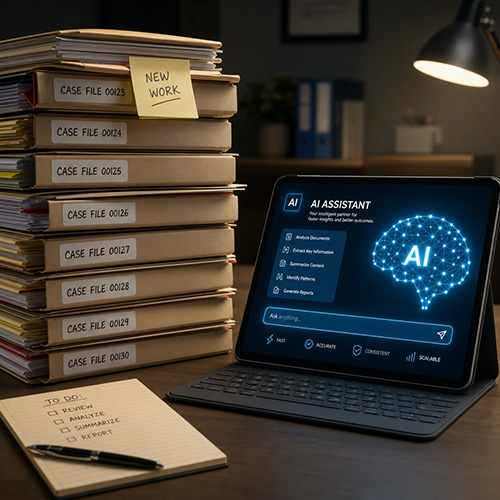
A good friend of mine asked me the other day whether his daughter should apply to law school. He is a thoughtful person who pays attention to where the world is going and he had heard what everyone has heard: that the artificial intelligence now loose in the world will, within a few years, make of the legal profession what Netflix made of Blockbuster. He did not want his daughter to be training for a career that might be obsolete by the time she was admitted to the bar.
It is a common worry and I understand it. I also think it is wrong.
I am reminded of Alfred Nobel, who, having invented dynamite, predicted confidently that it would put an end to war. His logic seemed airtight: once two armies could destroy one another in a single afternoon, no nation would ever again take the field. The 20th century--two world wars, a cold one and a long list of smaller conflicts--proved him wrong. Dynamite did not abolish war, it changed how it was fought.
The same is true of AI and the practice of law. To say that AI will replace litigators is like saying the rifle would replace the army. When firearms arrived, the swordsmiths grumbled and a few people predicted that battles would now be settled at a distance by gentlemen who never had to dirty their boots. Instead, armies grew larger, wars lasted longer and the demand for soldiering rose to heights the pikemen of the prior century could not have imagined. The tool transformed the work. It did not eliminate the worker.
Consider what AI actually does for the litigation business: Two things at once, the second of which no one is talking about.
The first is obvious: it makes lawyers far more productive. A motion that took 40 hours can now be drafted in a fraction of that. Document review that once required a small army of associates can be done by a machine that does not eat, sleep or bill for lunch. This is good news for clients, who will see the per-case cost of litigation fall, and reasonably good news for lawyers, who will do more in less time and, if they are smart, charge for the result rather than the hour.
The second thing is where the predictions of obsolescence go wrong.
AI is giving every aggrieved person in the country access to a patient, tireless, and deeply informed counselor--one that, for the cost of a monthly subscription, can explain every cause of action, theory of liability, and procedural nuance ever devised. The person who merely complained about a wrong can now sit at the kitchen table and turn that grievance into a clear, well-pleaded claim. By the time he reaches the courthouse, he may not just have a complaint; he may have one ready to file. Multiply that by 100 million people, set it against the fact that state bars tightly limit the number of lawyers admitted to practice, and the result is not a profession in decline. It is a profession under siege. Disputes will multiply. Lawsuits will proliferate. Companies and individuals alike will be overwhelmed, and they will learn, as people always do when the water rises, that they need help--and that the help, by law and by nature, must come from a licensed human being.
And here is the part the machines cannot touch, however clever they become. Litigation, at its core, is a human business. It is the pre-dispute phone call where a deal is saved or lost based on tone of voice. It is the meet-and-confer where two lawyers who know each other, and know the judge, settle in 20 minutes what a chatbot would spend 20 filings failing to resolve. It is the hearing, the conference in chambers, the cross-examination that turns on whether the witness blinks. It is the trial, where citizens decide whom to believe. No computer is going to look a federal judge in the eye and ask for an extension. No algorithm is going to read the room at a mediation and know when to push and when to hold. These are acts of advocacy, and advocacy has always been one human being persuading others on behalf of another.
So here is what I told my friend, and what I would tell anyone else who asks. Send your daughter to law school. The litigators of her generation will be more productive than any in history, will charge less per case than their predecessors did, and will be busier than any of us can presently imagine. AI is a powerful new tool in the lawyer's hand. It is not a replacement for the hand. The litigators are not going anywhere. They are about to have the busiest century of their lives.
In four guest articles that will follow, I will take up, in turn, the future of the boutique law firm in the age of AI, the effect of AI on the volume of disputes reaching the courthouse, the reckoning of the billable hour, and how legal training must evolve to produce the modern litigator.
True to my word, I enlisted Claude, Anthropic's AI assistant, to help me clean up some of this article and those in the rest of my series.
Submit your own column for publication to Diana Bosetti
For reprint rights or to order a copy of your photo:
Email
Jeremy_Ellis@dailyjournal.com
for prices.
Direct dial: 213-229-5424
Send a letter to the editor:
Email: letters@dailyjournal.com