


U.S. Supreme Court,
Torts/Personal Injury
Jul. 3, 2026
After Durnell, California's Roundup litigation model faces a federal reckoning
The U.S. Supreme Court's decision in Monsanto v. Durnell undermines the legal foundation of thousands of California Roundup lawsuits and foreshadows a critical test for the California Supreme Court in the pending Gilead Tenofovir cases.


Lauren Sheets Jarrell
Vice President & Counsel
American Tort Reform Association
Civil Justice Policy
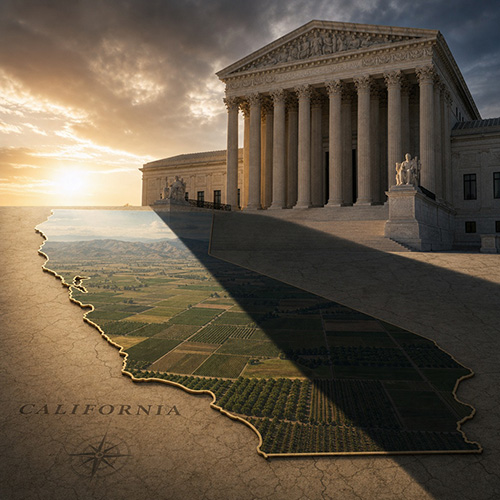
The Supreme Court's ruling last month in Monsanto v. Durnell put thousands of Roundup cases pending in California courts on notice--delivering a pointed rebuke not only to Missouri's state courts but to the plaintiff-friendly litigation model that has driven millions of dollars in California verdicts.
The case originated in Missouri with plaintiff John Durnell's 2019 allegation that his non-Hodgkin's lymphoma was caused by his use of the weedkiller Roundup, a widely used glyphosate-based product made by Monsanto. The plaintiff and his attorneys argued that the company failed to warn him and other consumers that using the product could cause cancer. In Missouri, a jury agreed and awarded him more than $1 million on a failure-to-warn theory, which the Missouri Court of Appeals later affirmed.
The problem? Adding that warning would have put Monsanto in violation of federal rules and regulations, because scientific evidence does not support the claim. The Supreme Court's reversal makes it clear: the Federal Insecticide, Fungicide, and Rodenticide Act expressly preempts state-law failure-to-warn claims that would require Monsanto to add a cancer warning "in addition to or different from" what the U.S. Environmental Protection Agency approves. The EPA says there are "no risks of concern to human health from current uses of glyphosate" and that there is "no evidence that glyphosate causes cancer in humans."
Allegations tying Roundup use to cancer are based on a single, controversial study from the International Agency for Research on Cancer that was advised by an "invited specialist," Christopher Portier, who had a six-figure contract with law firms suing over Roundup. Following Portier's participation and significant changes to the study, IARC ultimately declared glyphosate "probably carcinogenic."
Federal law bars manufacturers from unilaterally altering their EPA-approved labels. As the court observed, allowing Durnell's theory would "expose manufacturers to potentially massive tort liability for doing what EPA required them to do."
The ruling lands with particular force in California where the state's plaintiff-friendly courts helped build this litigation by routinely allowing liability theories that neither federal law nor basic product liability principles support. That pattern has contributed to millions in Roundup verdicts and to the state's distinction as a perennial Judicial Hellhole, with Los Angeles specifically topping last year's rankings.
California courts' willingness to rely on the disputed IARC classification gave rise to thousands of personal injury claims against Roundup, including a $332 million verdict ($325 million in punitive damages) against Bayer in 2023 in Dennis v. Monsanto. Federal courts stepped in to rein in state law in that case as well, with the 9th Circuit rejecting a Prop. 65 cancer warning for glyphosate on First Amendment grounds and finding that even an amended warning "still conveys the overall message that glyphosate is unsafe which is, at best, disputed."
While limited to FIFRA's specific preemption language, Durnell addresses the failure-to-warn theory directly and strips away the most compelling liability theory in this line of cases. However, it may not end the litigation. The court also rejected any reading of FIFRA's savings clause that would broadly preserve state tort suits challenging federally approved product labels--foreclosing a fallback argument the plaintiffs' bar has repeatedly tested. Without it, plaintiffs' counsel may pivot to alternative liability theories not governed by FIFRA's uniformity provision, potentially forcing a strategic recalibration across the entire docket.
Roundup litigation is not the only context in which California courts have pushed product liability past its logical limits. The California Supreme Court is now reviewing the 2024 Court of Appeal decision in Gilead Tenofovir Cases, Gilead Sciences v. Superior Court of the City and County of San Francisco, with a decision expected in the near future.
If allowed to stand, Gilead would impose a novel "duty to innovate"--holding manufacturers liable not for defective products, but for not releasing safer ones quickly enough. Like the Roundup failure-to-warn theory, it is liability manufactured well beyond what the law supports. The importance of Durnell extends beyond any single case: federal regulations create uniformity and predictability for manufacturers precisely so they are not forced to navigate 50 different standards, with 50 different jury pools deciding what warnings or innovations the law requires.
Durnell demonstrates that federal courts will draw limits on how far state courts can go in allowing liability theories related to federally regulated products to outrun both law and science.
The U.S. Supreme Court held the line. Now the question is whether the California Supreme Court will follow suit--or whether it will create an unprecedented "duty to innovate" and compound an already costly litigation environment further burdening the state's manufacturers, consumers and courts alike. The Gilead decision is California's test.
Submit your own column for publication to Diana Bosetti
For reprint rights or to order a copy of your photo:
Email
Jeremy_Ellis@dailyjournal.com
for prices.
Direct dial: 213-229-5424
Send a letter to the editor:
Email: letters@dailyjournal.com