


Aug. 31, 2026
When the Feeding Hand Bites the Dog
Insurance defense attorneys have long been on the front lines for their clients. Now they're facing a new threat: the carriers who hired them.


Defense attorneys are used to being on the defensive. For their clients. Not themselves. But those of us who traffic in legal malpractice litigation have observed a trend in recent years: Increasingly, insurance carriers are bringing malpractice claims against defense counsel who were appointed and paid to defend third-party claims. The days of cozy, long-standing relationships between insurance companies and their preferred defense firms appear to be over.
This raises interesting questions. Why is this happening? Are there identifiable, frequent triggers for these claims? And how can insurance defense firms avoid being bitten by hands that once only fed them?
What triggers these claims?
Many theories try to explain the trend. They range from external economic factors, including historic inflation and interest rates, to the pattern of much larger settlements and verdicts. All of which squeeze insurance industry profits and, apparently, have prompted carriers to find new ways to recoup losses. In other words, the carriers have taken to spreading some of the risk they insure onto their defense attorneys. Another theory is that insurance companies have become more data-driven. Anomalous litigation results are now easier to spot. Attorney performance is easier to measure. And more aggressive claims-management tools make law-firm performance easier to audit.
Unsurprisingly, defense attorneys, who suffer onerous claims-handling constraints every day, view the trend as attempts by insurers to shift responsibility for their own role in causing bad underlying results. But Heather Rosing, founding partner of Rosing Pott & Strohbehn LLP and a seasoned legal malpractice litigator, thinks the pursuit of these claims is a mistake by insurance companies, because doing so threatens the symbiotic relationships between carriers and insurance defense firms, who must agree to work at discounted rates. Regardless of the reasons for the trend, insurance defense attorneys are left with the same challenge -- staying out of the crossfire.
Litigators and mediators involved in this subspecies of malpractice claims confirm that possible triggers for these claims abound. A key affirmative defense wasn't pleaded. An essential expert was not designated. A settlement demand was not communicated. Another trigger is where insurance defense counsel fails to accurately evaluate and report liability exposure. For example, the reporting to the carrier may overlook or misevaluate the insured's potential responsibility in a multi-party case. If the carrier rejects a settlement demand without being warned of joint and several exposure, and the insured is held liable for a much larger amount -- perhaps beyond policy limits -- who should shoulder the loss? Increasingly, it is the insurance defense firm.
Mediators across California are seeing these claims. Professional liability dispute mediators Peter Thompson and Bill Munoz -- both based in Northern California -- agree that before this trend accelerated, the carriers would simply absorb a bad result and then find new panel counsel. But now they are also looking to the defense firms to make them whole. Thompson has seen two scenarios repeat. In one, carriers find out late in litigation that a claim could have been settled earlier for less. After settling for a larger amount late in the game, they look to the defense firm for the difference, perhaps an understandable claim. More troubling, he says, are cases in which insurers allege that a bad verdict would have been lower but for trial errors, such as the exclusion of a damages expert or key piece of evidence. Munoz attributes this trend to economics. "The value of legal malpractice claims has increased. We are seeing nuclear verdicts," he says. "And the carriers are concerned about bad faith exposure for handling of the underlying case where defense counsel erred. In order to recoup costs and mitigate exposure, they are now looking to defense counsel."
Bruce Friedman, a prominent Southern California mediator who is often called upon to assist with legal malpractice disputes, finds that these claims all too often arise from lapses in communication, and from the appointed defense attorneys mishandling the tripartite relationship. "These claims involve failure to communicate about opportunities to settle, failure to advise the insured to seek independent counsel with respect to insurance coverage issues, policy limits/excess limits exposure, and failure to communicate with the insurer regarding status, deadlines, and sanctions." He finds these claims "surprising," because "despite required continuing education in ethics, defense counsel communicate with the insurer as the only client and forget their duties to the insured," and this triggers "claims against the defense counsel both by the insured and the insurer."
Rosing, in her role as defense counsel, has also seen the sharp spike over the last decade in these claims. She has observed that these claims "are usually, though not always, in tandem with an allegation by the insured that the insurance company has extracontractual exposure for a judgment that far exceeds the policy limits." Calling this trend a departure from the "close partnerships" that once characterized the relationship between carriers and panel counsel, she believes it has "made insurance defense work much riskier than it used to be."
Is the tripartite relationship the real culprit?
That risk arises from the unique role an insurance defense attorney plays. The maxim "man can have but one master" is thought to be universal. But in California, an attorney retained by an insurance company to defend an insured has the pleasure of simultaneously representing two clients -- the insured and the insurer. This is the tripartite relationship. And the attorney owes professional and fiduciary duties to both clients. When the interests of the insurer and insured diverge, California law requires that the attorney's primary obligations run to the insured and not to the insurer. But that doesn't stop carriers from pursuing malpractice claims following a bad result. Perhaps it is surprising that the carriers have only recently begun to bring these claims.
It is no secret that defense firms that survive on these tripartite relationships -- especially those in California, with its extreme labor costs -- are expected to manage increasingly complex cases at hourly rates that rarely reflect the actual cost of doing the work. How to stay out of the crossfire? It's not easy. Draconian litigation guidelines often run contrary to doing a good job. Advance approval requirements for every step in the litigation process delay decisions that should be made quickly. Reporting cultures reward feigned defense confidence and brevity over nuance, foresight, and early bad news. None of that excuses incompetence. But it helps explain why mistakes occur. There is little doubt these types of malpractice claims could be reduced if carriers interfered less with defense counsel, and paid firms fairly for the work necessary to defend their insureds.
Should insurance companies blame themselves instead?
That point is worth making because the most interesting question in this area is not whether insurers ever have reason to sue panel counsel. Of course there are scenarios that warrant a claim. If appointed counsel misses a dispositive defense, blows an expert deadline or sleepwalks a case into an avoidable excess verdict, the carrier's desire to recover is understandable. A more troubling question is whether the very nature of modern insurance defense is causing these claims: The carrier is upset about a result, but the attorney says the carrier denied the tools needed to properly develop a defense.
Clearly, there are public policy and legal ethics aspects to this trend. Does the tripartite relationship, or its primary duty considerations, make the attorney more vulnerable to a malpractice claim by the carrier? Should defense counsel have to consider which of the two clients is more likely to bring a claim and make professional judgments with that in mind? That such possibilities even exist suggests unavoidable shortcomings of the tripartite relationship.
Defense attorneys must defend themselves
What can be done to control the risk? As it often is, documentation is key. Insurance defense attorneys know that basic legal research -- or even filing a responsive pleading -- typically requires advance written approval. Junior attorneys are expected to do most of the work. Carriers may refuse to pay for more than one partner to work on a file. None of that relieves defense counsel of their professional obligations. But when carriers refuse to authorize or pay for necessary work, defense attorneys have no choice but to push back and document those decisions in writing. Uncomfortable as it may be, when the claims adjuster refuses to pay for the research needed to fully evaluate the exposure, there has to be a written record of it, and it should be provided to both clients.
Another consideration: Appointed defense counsel cannot be reluctant to acknowledge coverage and conflict concerns. Once Cumis considerations arise, the carrier's ability to later sue defense counsel for a bad result gets murky fast. Other practical steps are straightforward: Be explicit with the insured defendant about the tripartite relationship at the outset, treat reporting as a key part of the professional service, not a marketing opportunity with the claims adjuster, address bad facts and witnesses early, vigilantly document settlement discussions and recommendations, and raise excess exposure warnings early and often. Rosing pointed out, too, that claims could be reduced with stronger commitments to open lines of communication between the carriers and defense counsel about risk assessment and claim resolution.
Economics versus ethics: Is it time for a change?
Bigger picture, perhaps the most important questions arising from the trend are these: Does the tripartite relationship still work? And is it fair for carriers to be able to raise claims against the very attorneys who they constrain and underpay to do less than all the necessary work? If the exception to the one-master rule must persist, then maybe there should be another exception, too. Perhaps, as a matter of public policy, only the primary client in the tripartite relationship -- the insured -- may sue for legal malpractice or breach of fiduciary duty. And that the duties owed to the carrier by appointed defense counsel are correspondingly different, perhaps limited to ones based only on contract law principles. The tripartite relationship is, at core, an ethical compromise dictated by the economic interests of insurance carriers and the carriers' contractual right to control a defense. But would it be unfair that a consequence of this compromise is a limitation on defense counsel's malpractice exposure to the carriers?
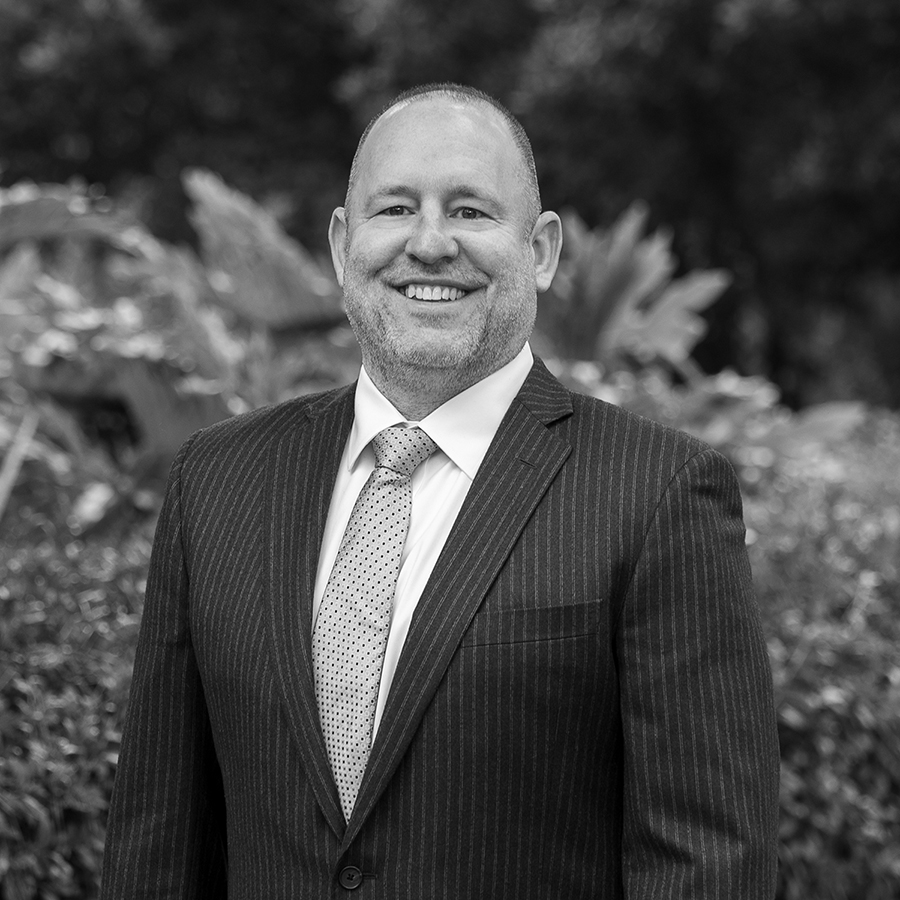
David D. Cardone, Esq. is a founding partner of Dunn DeSantis Walt & Kendrick whose practice focuses on complex, high-stakes professional liability matters. His recent work includes a $125,000,000+ legal malpractice recovery.
For reprint rights or to order a copy of your photo:
Email
Jeremy_Ellis@dailyjournal.com
for prices.
Direct dial: 213-229-5424
Send a letter to the editor:
Email: letters@dailyjournal.com